
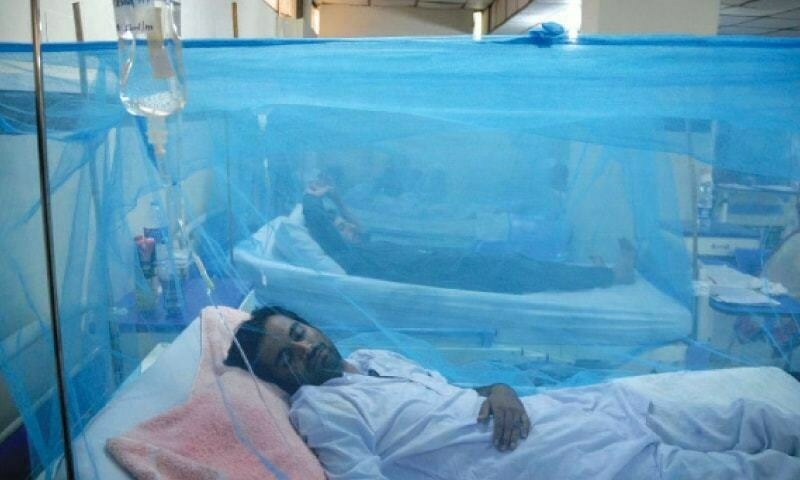
KARACHI, Aug 27 (APP): Caretaker Chief Minister Sindh Justice (Retd.) Maqbool Baqir, while taking notice of increasing malaria cases across the province here on Sunday, directed the Health Department and Local Government (LG) Department to take necessary measures to control the disease in a week.
He said that most of the cases were being reported from Hyderabad, Mirpurkhas, Larkana and Sukkur divisions.
The caretaker CM directed the Health Department to launch a campaign against the elimination of malaria.
Baqar also directed to make arrangements for the availability of malaria drugs and wards in all government hospitals.
He said that the LG department should start spraying mosquito killers in their respective areas.
He further said that the Solid Waste Management Board should improve sanitation.
Interim CM directs to control Malaria in a week
Soaring inflation fuels a wave of unprecedented migration
Caretaker minister assures Mengal no influence on polls
APHC urges people to assemble at Gilani’s graveyard on Friday
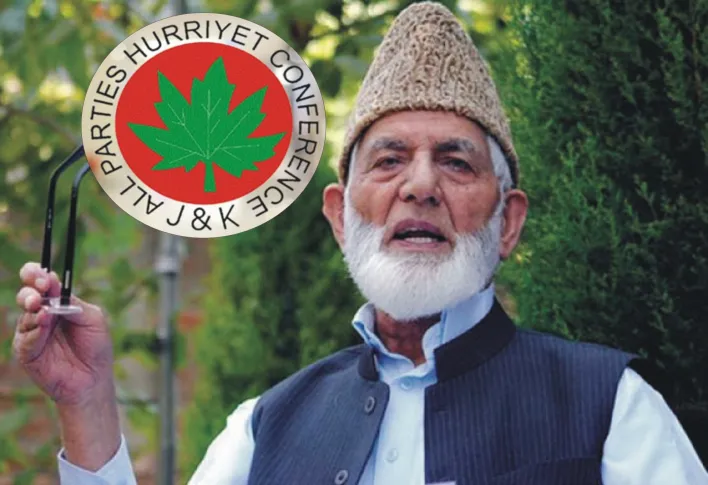
ISLAMABAD, Aug 27 (APP):The All Parties Hurriyat Conference has again appealed to the people of Kashmir to march towards Hyderpora in Srinagar on September 01 (Friday) to pay their tributes to the icon of Kashmir resistance movement, Syed Ali Gilani, on his 2nd martyrdom anniversary in Indian illegally occupied Jammu and Kashmir.
According to kashmir media service,Syed Ali Gilani embraced martyrdom in the custody of Indian police on September 01, 2021, at his Hyderpora residence in Srinagar where he was kept under continued house arrest for over a decade.
The All Parties Hurriyat Conference Spokesman in a statement in Srinagar has urged the people to visit the graveyard of Kashmir’s iconic liberation leader Syed Ali Gilani at Hyderpora in Srinagar on Friday for his pious sacrifice and stand for the resolution of the Jammu and Kashmir dispute.
The statement urged the people of Kashmir that it was high time to remember the heroes who lived and died for the freedom of Kashmir.
The posters also appeared in various parts of the occupied Jammu and Kashmir, urging the people to pay tributes to the icon leader, Syed Ali Gilani, on his second martyrdom anniversary on Friday.
The posters, pasted by the All Parties Hurriyat Conference (APHC) , Jammu and Kashmir Political Resistance Movement ,JK Justice and Peace Initiative, Nawjawanan-e-Hurriyet Jammu Kashmir, Jammu Kashmir Justice League Forum, Jammu and Kashmir Democratic Movement , Resistance Youth Forum Jammu Kashmir and other organizations on walls, pillars and electric poles in different areas of Srinagar, have also urged Imams, Khateebs, Ulema and people of mosques to hold special prayers for Syed Ali Gilani and other Kashmiri martyrs .
It is worth mentioning here that Indian forces’ personnel had shamelessly snatched away the body of Syed Ali Gilani and buried it at Hyderpora graveyard in the dark of night against his will. Syed Ali Gilani, according to his family, wanted to be buried at Martyrs Graveyard at Eidgah in Srinagar.
Traditional cultural dances keep alive in KP despite mushroom growth of social media
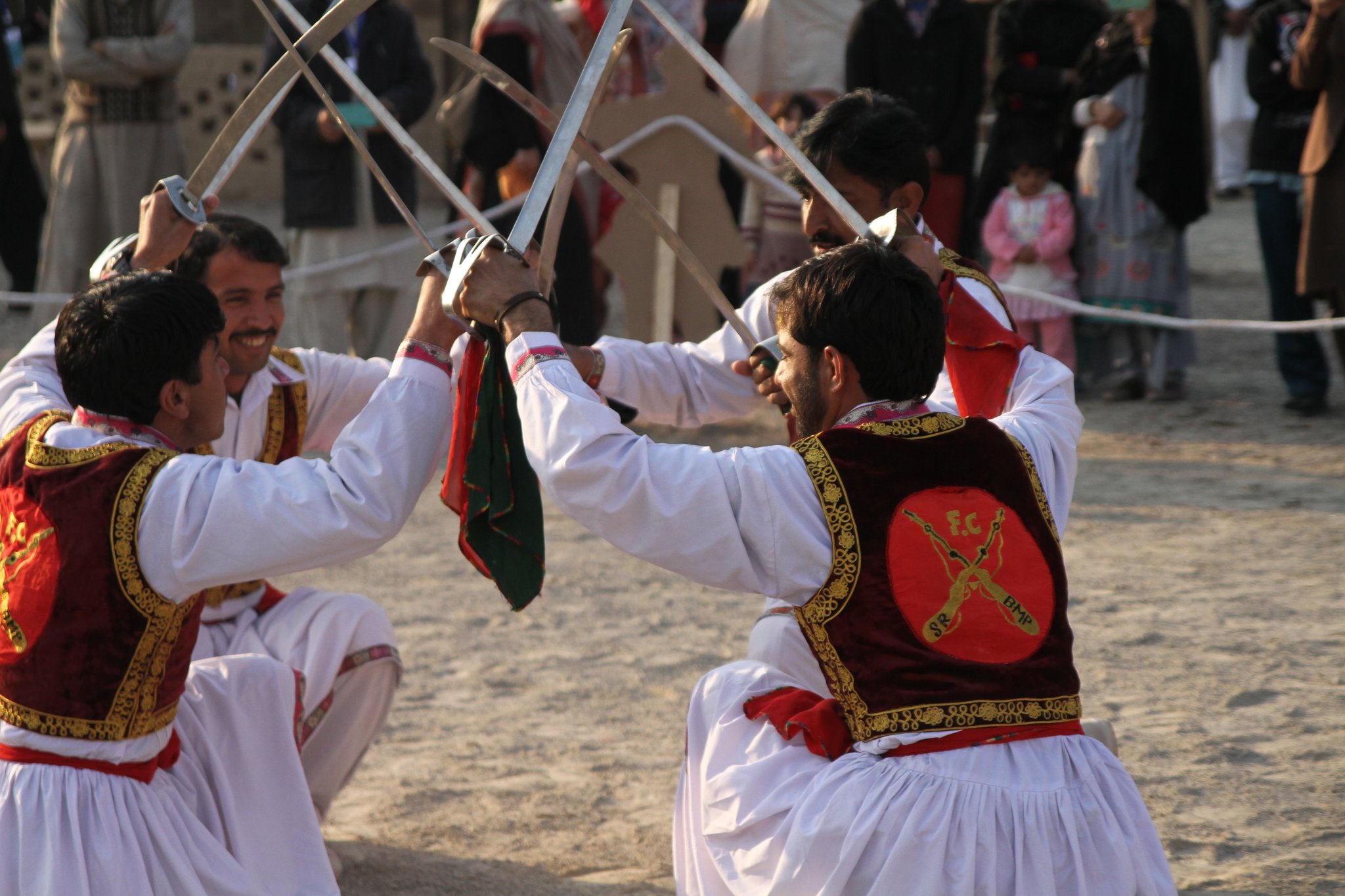
PESHAWAR, Aug 27 (APP):The centuries-old traditional dances of Khyber Pakhtunkhwa (KP), which were mostly used to infuse energy among tribesmen before going to the battlefield or achieving success, were kept alive in the province despite the mushroom growth of information technology and social media in Pakistan.
Mehsud, Khattak, and Yousafzai attains (dances) were used in the past to warm up tribesmen ahead of the start of a battle or war and get a psychological advantage over the warring tribe or external aggressor.
Despite the mushroom growth of information technology and social media in the last two decades in KP, these cultural dances are still being practiced by the professional dancers during happy occasions of marriages, Eid, birthday parties, and welcoming of VVP guests in the province including merged tribal districts.
“Mehsud dance, which is believed to have originated from South Waziristan centuries ago was mostly used by the Mehsud tribe in a bid to bring the warring tribe under pressure before the start of the battle in a bid to ensure their independence, protect lands, mines caves or settle disputes in case of unsuccessful negotiations by the peace jirga” said Bakhzada Khan, research officer, Archeology and Museum Department, while talking to APP.
He said Mehsud, Khaatak and Yousafzai tribesmen had also performed their traditional dances after achieving victory on the battlefield.
“In the Mehsud dance, the active members of the tribe equipped with guns gather and the loud gunfire by them creates an echo in the area that adds to the fierce and proud energy of the dance besides creating an inerasable imprint on the minds of the spectators.”
“In Mehsud dance, the male dancers with handkerchiefs mostly with long and lustrous hair flick it around while carrying guns on high beatsdrums. They fire with their weapons into the air as they kneel and the sound of the gunfire creates an echo that infused new energy and spirit among participants,” said Gohar Mehsud, an expert in Mehsud dance told APP on Sunday.
He said, “100 percent fitness is required to perform Mehsud dance.”
“The dancer performs the dance with high zeal like a hero and displays his supper fitness through speedy body movements while holding guns and firing simultaneously at the same time.”
Bakhtzada said the practice of Mehsud dance continued even in the colonial era in Waziristan where Mehsud, Ahmadzai Wazir, Bhittani, and other tribes known for their bravery had never allowed British to establish their rule in erstwhileFata.
Sir Olaf Caroe, who acted as the former Governor of the British Indian Frontier said, “The Masud tribe are a people who can never even think of submitting to a foreign power. From 1860 to 1937, the English forces had repeatedly attacked Mahsud positions, but never got a foothold in the area.
“In spite of the passing of many centuries, Mehsud dance is still able to withstand the change of times as its essence depicts the agility of a dancer, who performs at the thrilling beat of drums and from the core of their heart.”
“Like Mehsud dance, the subcontinent’s oldest and most popular Khattak dance was also being practiced in Khyber Pakhtunkhwa (KP) despite the mushroom growth of IT and social media.”
“Being the national dance of Pakistan, the Khattak dance introduced by Pashtun’s Khattak tribe in the 14th century is still being performed mostly on the occasions of weddings, births, and welcoming functions of VIPs in the province including merged tribal districts, leaving an indelible imprint on the minds of the spectators.”
Bakhtzada said, “The Khattak dance is as old as the history of the Khattak tribe in Khyber Pakhtunkhwa, which goes back to the fourteenth century.”
Khattak dance passed from one generation to another in the Khattak tribe and gave birth to many dances including braghoni, shahdola, bangra, balballah, chatrali, etc. that later made deep inroads in our society.
Khattaks mostly lived in Karak, Nowshera and other districts of KP had used to dance on the mesmerizing movement of swords as a warm-up exercise prior to taking on their rival tribes in a battlefield or achieving success against other warring tribes in wars.
“The dance was very popular during the Mughal and British eras, who recruited Khattaks in their respective armies for their heroic warfare skills on battlefields.”
The Mughal rulers were highly impressed with the bravery of Khattaks including freedom fighter Khushal Khan Khattak, who stood for the freedom and unity of Pakhtoons’, he said.
“Khattak dance is performed in a bright and colorful traditional ‘shalwar’ and custom-made frock like ‘Kamiz’ in addition to a red embroidered waistcoat with a large decorative scarf tied around the waist. The dancers wave glittering swords in the air and swirl to drumbeats and tunes of the surnai.”
“The dance is a five-step routine involving spins, with the swords crossed over their backs and elbows outward or swords out to sides and typically attains half spin in place leading to a full spin.”
“Depending on the rhythm of the beat, the spin was reversed in full synchronicity as the dance was being performed with musicians turning the beat to the technique of the performers.”
Irshad Gul, an expert in Khattak dance and local musician of Nowshera district said that Bhangarah is the first step where every member swirls while carrying swords as the prop followed by Derabi in which two youths at a time carrying one sword and handkerchief each in their hands start dance in front of a man with surnai and the rest of troupe members wait for their turn.”
Laila is the third step wherein a group of four performers holding two swords each while performing stunts moving in a circle.
He said Braghoni was the fastest and the most adventurous of all steps, which a single dancer performs with three swords.
“The performer very skillfully swings two swords in the air while holding the third in his mouth,” he said, adding it required supper fitness and skills,” Irshad said.
“Bulbullah is the last of the twelve steps, which is staged without swords.”
“The dancers normally sing a love song at a high pitch and at the end of the song, the drumbeat slightly increases and the dance goes on.”
The experts said the establishment of Rs 1 billion film fund, national film institute, and studio besides a post-production facility center for artists and musicians by the federal government would immensely benefit the artists’ community, musicians, and film industries in the country.
They said the promotion of art, music, cultural programs, and traditional dances was imperative to counter the rising intolerance in society besides providing quality entertainment to the people.
Pakistani mountaineer Naila Kiani aims to ascend Cho Oyu
Fuel price hike ignites struggle for affordable transportation

Partly cloudy weather forecast for city
Operation clean up launched for opening match of Asia cup in city

Pakistani mountaineer Naila Kiani aims to ascend Cho Oyu
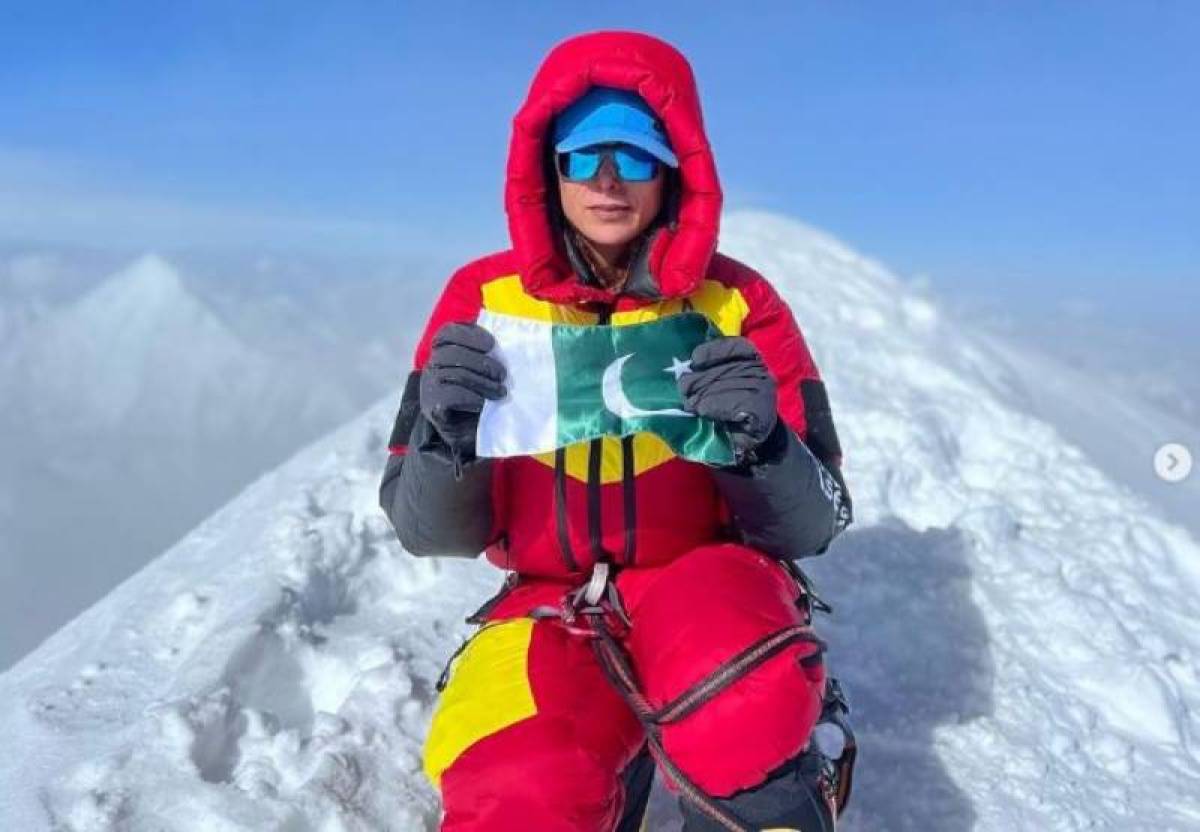
ISLAMABAD, Aug 27 (APP): Renowned Pakistani fastest and only female mountaineer Naila Kiani after conquering all 8000-meter peaks within Pakistan, is now setting her sights on Cho Oyu ascending this September.
Talking to APP here on Sunday, Naila Kiani said that Cho Oyu is the world’s 6th tallest mountain standing at an impressive 8188 meters above sea level. Next month, “I will be traveling to China and Nepal to take on my next targets,” she stated with conviction.
She underlined that Cho Oyu is 8188 meters above sea level, Manaslu is 8163 meters above sea level and Shishapangma is 8027 meters above sea level.
Addressing a tragic incident that occurred during the K-2 summit this year, Naila expressed that porter Muhammad Hassan might still be alive if climbers hadn’t been solely focused on achieving summit records.
She said that human life is more important than the records and climbers should have halted the hike to save a precious life.
Regarding the role of the Alpine Club, Naila noted its limitations saying that Pakistan urgently needs to enhance the rescue operation department for assisting mountaineers in difficult territories.
Such developments would not only boost tourism but also promote sports in the region, she said.
Sharing her ambitions Naila’s expressed her determination to achieve high-altitude peaks without relying on supplementary oxygen. “It’s easier for mountaineers from northern regions, as their lungs are adapted to low oxygen levels compared to those living in lower altitudes,” she explained.
Reflecting on her past experiences, Naila recalled her toughest climb – Gasherbrum-1 where unforgiving weather conditions made the ascent particularly challenging. Navigating narrow sections without a safety rope at 8000 meters was never an easy task, she added.
She attributed her achievements to the unwavering backing of her family and the Bilqees and Abdul-ur-Razzaq (BARQ) Foundation.