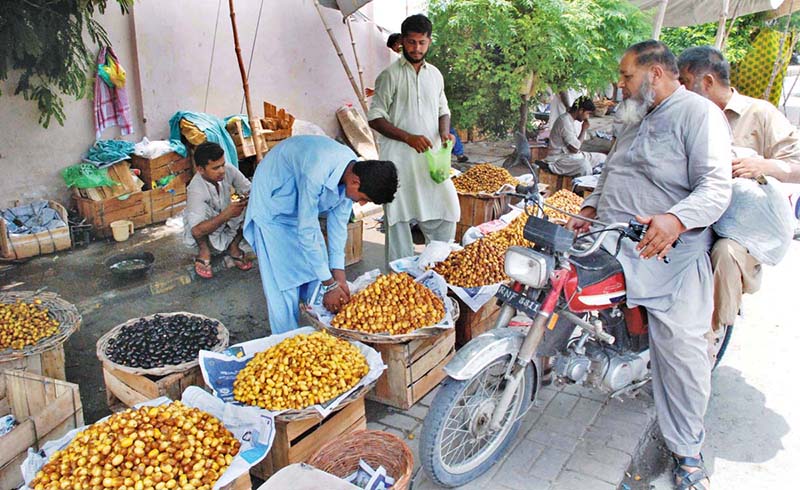
MULTAN: August 30 –


UNITED NATIONS, Aug 30 (APP): UN Secretary-General Antonio Guterres marked Wednesday’s International Day of the Victims of Enforced Disappearance by condemning the “atrocious crime” and urging all member states to hold those who perpetrate it accountable.
Enforced disappearance has regularly been used as a tool for instilling fear and exert control over a population, the UN chief pointed out. “The feeling of insecurity it generates is not limited to close relatives of the disappeared, but also their communities and society as a whole.”
In a tweet on social media platform X, the UN chief said enforced disappearance was “a serious human rights violation that has frequently been used to spread terror…I call on countries to help put an end to this atrocious crime”.
According to the UN human rights office (OHCHR), enforced disappearance can be defined as the arrest, detention, or abduction of an individual by the state or group acting with the authorization of the state, followed by concealment of the whereabouts of the disappeared person.
It is a crime under International Human Rights Law. Victims are frequently subjected to torture and live in perpetual fear for their lives. Their families, ignorant of the fate of their loved ones, are left wondering and waiting for news that may never come.
According to the UN, hundreds of thousands of people have vanished during conflicts or periods of repression in at least 85 countries around the world.
“For the families & friends of the disappeared, every day is a fight to know the fate & whereabouts of their loved ones. Truth & justice are essential,” said High Commissioner for Human Rights, Volker Turk, in a tweet on Wednesday.
“I call on states to guarantee protection, accountability, transparency & redress for all victims of enforced disappearances,” he added.
Enforced disappearance, once largely the product of military dictatorships, has become a global problem and is not restricted to a specific region of the world. It has been used frequently as a means of political repression.
At the same time as the UN General Assembly sanctioned the international day in December 2010, the same resolution adopted the International Convention for the Protection of All Persons from Enforced Disappearance and declared August 30 the International Day of the Victims of Enforced Disappearances, beginning in 2011.
OHCHR officials and a large group of UN-appointed regional human rights experts urged States to provide effective access to justice for victims who have suffered harm as the direct result of enforced disappearance, in a statement delivered on Tuesday.
They warned that ensuring adequate access to justice and proper accountability for perpetrators at all levels was critical.
“Access to justice must not be merely theoretical but guaranteed in practice through concrete measures that promote and fully value the genuine and meaningful participation of victims and their representatives throughout the process,” the experts said.
In the context of the 75th anniversary of the Universal Declaration of Human Rights, OHCHR officials and the group of UN-appointed human rights experts jointly called on all member states to make pledges to promote justice for all victims of enforced disappearances without delay, and to ratify international and regional instruments on enforced disappearances.
NEW YORK, Aug 30 (APP): Muslim leaders Wednesday warmly welcomed as a “historic moment” New York City Mayor Eric Adams announcement that mosques in the city will be able to amplify the Azaan at Jumma prayers and at iftar time during the holy month of Ramadan.
“We are eliminating bureaucracy and we are saying clearly that if you are at any service or place of worship, you do not need to apply for a permit to announce the Friday prayer call to prayer louder,” Adams said at a press conference in the presence of leaders of Muslim leaders.
Under the new rules, the mayor said, mosques would not need a special permit to publicly broadcast Azaan on Fridays and at sundown during the holy month of Ramazan.
“The police department’s community affairs bureau will work with mosques to communicate the new guidelines and ensure that devices used to broadcast the Azaan are set to appropriate decibel levels, Adams said. Houses of worship can broadcast up to 10 decibels over the ambient sound level,” the mayor’s office said.
“For too long, there has been a feeling that our communities were not allowed to amplify their calls to prayer,” Adams said. “Today, we are cutting red tape and saying clearly that mosques and houses of worship are free to amplify their call to prayer on Fridays and during Ramazan without a permit necessary.”
Flanked by Muslim leaders at a City Hall news conference, Adams said Muslim New Yorkers “will not live in the shadows of the American dream while I am the mayor of the city of New York.”
An Imam recited the Azaan on the occasion that echoed in the City Hall.
“The sound of the Azaan is not just a call to prayer; it is a call to unity, reflection, and community,” Afaf Nasher, the executive director of the New York chapter of the Council on American-Islamic Relations(CAIR), said in a statement.
“We believe that this action will contribute to greater understanding and appreciation of the Muslim community’s values and traditions.”
Ahsan Chughtai, a Pakistani who is a senior advisor to Mayor Adams, called it an “amazing movement”. “it’s a blessing — Alhamdolillah — this is what our community has been asking for.”
Adeel Rana, also a Pakistani who is a deputy inspector in the New York City Police Department (NYPD) and head of the Muslim Officers Society, welcomed it as a “historic day”.
Imam Talib Abdul Rasheed of Maajlis-e-Shura calld the Mayor’s decision a “good start” and said Muslims should learn to become “good neoghbours to their neighbours”.
Somaia Ferozi, principal of the Ideal Islamic School in Queens, said New York City’s new rules send a positive message to her students.
“Our children are reminded of who they are when they hear the Azaan ,” said Ferozi, who attended Adams’ news conference. “Having that echo in a New York City neighbourhood will make them feel part of a community that acknowledges them.”
Adams, a Democrat, enjoys close relationships with faith leaders from various traditions and has promoted the role of religion in public life.
ISLAMABAD, Aug 30 (APP): Minister for Religious Affairs and Interfaith Harmony Aneeq Ahmed, addressing the Interfaith Harmony Conference at the Pakistan National Council of the Arts on Wednesday, emphasized the need for unity among all faiths and condemned any attempts to tarnish the image of religions.
“Who are those individuals seeking to distort the essence of faith?” asked Aneeq, as he addressed a captivated audience. “We are brothers, and in our presence, any attack on a place of worship is a grave injustice.”
Reflecting on recent events such as the incident in Jaranwala, the minister stated that such incidents should never have occurred. However, he pointed out that there had been even worse atrocities against various communities in neighboring India.
“Those who lost their lives in India among the Christian brethren are not just Christians but also our brothers,” he passionately expressed.
He further reiterated that Pakistan was not merely a “State,” but an Islamic Republic. “We are the People of the Book, and we are supplicants of the One God,” he proclaimed.
Aneeq extended his message of inclusivity by highlighting the divine nature of all scriptures, including Torah, Psalms, Bible, and the Holy Quran. “These are all divine revelations, the final one being the Quran,” he affirmed.
Turning his attention to the tragic incident in Manipur, India, where over 150 Christians lost their lives, the minister clarified that no Christian had been harmed in Pakistan. “We believe that what happened in Jaranwala should never have happened,” he stated emphatically.
He applauded the collective stance of the nation alongside their Christian brethren in the face of the Jaranwala tragedy. “We are a resilient nation, and our protest speaks volumes,” he declared.
In his closing remarks, Aneeq urged that while any incident should be prevented, it must be handled through legal means. “We must not take the law into our own hands,” he emphasized, leaving the audience inspired and reflective.
Pakistan Ulema Council Chairman Hafiz Muhammad Tahir Mahmood Ashrafi, promoting the values of peace, tolerance, and unity, shed light on the pivotal message of Islam for a harmonious world.
Ashrafi who is also the President of International Interfaith Harmony Council, emphasizing the importance of interfaith religious cohesion, stressed that the teachings of Islam inherently advocate for peaceful coexistence among all communities.
He highlighted the noble character of Prophet Muhammad Peace Be Upon Him, underscoring how his life served as a beacon of guidance for individuals from all walks of life.
Expressing deep regret over the recent incident in Jaranwala, Ashrafi extended heartfelt apologies to the Christian community for any harm caused and personally met with Christian leaders to seek forgiveness and reaffirm the commitment to mutual respect and understanding.
Mufti Muneeb ur Rehman, emphasizing the need to discard the term ‘minorities’, asserted that “regardless of our religious affiliations, we all share a common identity as Pakistanis.”
He raised a crucial concern about the nomenclature of religious groups, highlighting that in Pakistan, Christians, Hindus and believers of other faiths were often referred to as minorities, while in India, despite being in the millions, Muslims were labelled the same. He urged the government to consider replacing this term with a more inclusive one.
He reminded them that the rights granted to Muslims by the Constitution were equally applicable to all Pakistanis, irrespective of their beliefs. He also stressed the importance of using appropriate terms, such as Christian for those who follow Jesus Christ and terms like Jewish, Sikh, Hindu, and Buddhist for followers of those respective faiths.
In line with the spirit of inclusivity, Mufti Muneeb suggested refraining from using the term ‘infidel’ if it carries negative connotations about certain groups. He posed a thought-provoking question, asking “if we remain unaffected by the countless incidents of terrorism, and asserted that terrorism is not tied to religion but stems from individual actions.”
Regarding terrorism, he underlined that attributing it to a specific faith was inappropriate; instead, it should be seen as the act of an individual. Furthermore, he emphasized that combating terrorism and corruption should be the nation’s priority, transcending linguistic debates.
Mufti Muneeb acknowledged the importance of unity when it comes to safeguarding the respect of religions and holy books. He called upon all adherents of different faiths to stand united against any disrespect towards sacred figures or scriptures.
He cautioned against providing refuge to individuals who commit blasphemy against revered personalities or holy texts, emphasizing that such acts should not be tolerated.
While recognizing the efforts of social reformers, including Siraj ul Haq, who work tirelessly to bring positive change, he urged a shift from mere talk of revolution to practical actions that yield real progress.
He advocated for resolving national issues by seeking solutions rather than casting blame and highlighted that constructive measures were more valuable than empty rhetoric.
In conclusion, he reminded everyone that words must translate into effective actions to create a harmonious and prosperous society.
The faith leaders and religious scholars including Dr. Abdul Qadir Haroon, Bishop Sarfaraz Peter, Maulana Abdul Rauf, Air Marshal (retd) Farhat Hussain Malik, Paster Emmanuel Khokar, Emil Darinoz Tekin, Sardar Santok Singh, Dr. Sarfaraz Awan, Bishop Nadeem Kamran, and others spoke on the occasion.
However, the conference was attended by a large number of members of the diplomatic community including the United Kingdom, United States of America, Japan, Austria, Italy, Germany, Poland, Turkiye, Indonesia, Turkmenistan, Sweden, Finland, Palestine, Jordan, Myanmar, Iraq, Switzerland, Mauritius, Kazakhstan, Norway and Maldives etc.
The attendees of the conference stood united in their pledge to foster an atmosphere of harmony and tolerance. Speakers and participants from diverse faith backgrounds unanimously echoed the sentiment that unity among religions was essential for Pakistan’s progress and global peace.
A collective effort was recognized as key to driving Pakistan forward. Representatives from various faiths emphasized the need to work together for the betterment of the nation, leaving aside differences and focusing on shared goals.
Among the conference’s key objectives was the protection of rights and laws for the Christian community and others. The speakers highlighted that safeguarding the rights of religious minorities was not just a legal obligation but a moral duty, aligned with the teachings of Islam.
As the conference concluded, a strong demand for accountability emerged, particularly concerning the Jaranwala incident.
Participants called for a thorough investigation and appropriate punishment for those found responsible. The sentiment was that justice must prevail, regardless of religious affiliations, to maintain social harmony and uphold the principles of justice.
MULTAN, Aug 30 (APP): Pakistan’s Skipper Babar Azam and Iftekhar Ahmed’s centuries and the record 214 runs fifth-wicket partnership played a vital role in team’s victory against Nepal in Asia Cup opening match with a huge margin of 238-runs here at Multan Cricket Stadium on Wednesday.
Pakistan elected to bat first and set a massive target of 343 runs for the rival team despite losing wickets in the early overs of the inning. Babar Azam while leading the team from the front scored a 151 runs inning and added 19th century in his record. Iftekhar Ahmed also played a vital role in setting massive target by contributing 109 runs (not out) marking a highest 214 runs fifth-wicket partnership with Babar Azam.
Pakistan crushed Nepal when Shaheen Shah Afridi struck twice in his first over with a combination of Naseem Shah, Haris Rauf, Shadab Khan and Muhammad Nawaz. The Nepal team was bowled out at 104 in 24th over of the second inning. Aarif Sheikh and Sompal Kami tried to delay the inevitable but Nepal was bundled out in 23.4 over with Shadab Khan’s tricky spell for 4/27, Shaheen Afridi 2/27 and Harif Rauf 2/16.
Babar Azam was declared man of match he said that when he came in, the ball was not coming on properly so he tried to build an inning with Rizwan. He said that Iftekhar Ahmed played a great inning as he was asked to play his natural game.
“The way pacers started the bowling and then the spinners we managed to restrict chasers at the lowest. He said that Pakistan-India matches were always played in high intensity but after winning over Nepal with huge margin has boosted the confidence of the boys.
Nepal Captain, Rohit Paudel said that the bowlers started well with the bowl but both set batters took the game away from Nepal.
He played better games earlier but we missed out today. Learning from the game, we need to improve bowling in the death, he added.
ISLAMABAD, Aug 30 (APP): The Turkish Embassy in Pakistan here on Wednesday celebrated the Turkish Victory Day. The event was attended by the political leaders, diplomats of various countries, media men and others in large numbers.
The Ambassador of Turkiye in Pakistan Dr. Mehmet Paçaci, on the occasion, readout the message of Turkish President Recep Tayyip Erdogan.
The president in his message said, “We reach the 101st anniversary of the Great Victory, I would like to congratulate the August 30 Victory Day of our honourable nation, of the Turkish Cypriots, and of more than 7 million Turkish citizens living all across the world.”
The August 30 Battle of the Commander-in-Chief is one of the most critical milestones in our nation’s centuries-long struggle for survival, he added.
The president said, in the words of Ghazi Mustafa Kemal Atatürk, the Great Victory is “a great achievement that once again exemplified in history the enormous might and heroism of the Turkish Army, Turkish Officers and Command Staff”.
The president in his message said, “With this victory, which is the “immortal monument of the Turkish Nation’s idea of freedom and independence”, our nation declared to the whole world that it would not let its will be subjugated and its independence and future compromised.”
He said, the love of freedom, which is the most distinguished characteristic of Turkey nation, still exists very strongly today.
He said, “The epic resistances, first and foremost, against the July 15 betrayal and the response of our nation to the attacks on our survival in recent years have repeatedly demonstrated how our will remains alive and strong.”
The same unwavering will is behind our determination to build the Century of Türkiye, which we announced at a time when the world was shaken by deep crises.
He said, “We created the infrastructure towards this end with the initiatives we brought to life in every field in the last 21 years, and provided our country with every capacity for this great ascent.”
The president said, “With the elections of May 14 and May 28, which were a full celebration of democracy, we passed another critical threshold on the path towards our goal.”
He said, in a result of the elections, where Türkiye once again witnessed the strong support of nation, the country expedited policy to provide more services and achievements.
“We will make Türkiye more powerful and raise it above the level of contemporary civilizations with the new steps we will be taking in the upcoming period. We will definitely turn our vision of the Century of Türkiye into reality. And we will achieve this as 85 million people coming together hand in hand and heart to heart “he added.
ISLAMABAD, Aug 30 (APP): Pakistan Electronic Media Regulatory Authority (PEMRA) has “prohibited broadcast/re-broadcast of drama serial ‘Hadsa’ immediately” under the relevant laws.
The objectionable content became the main reason for broadcast prohibition of the drama, said an official notification shared by the Authority on X (formerly known as Twitter).
“Barrister Khadija Siddiqi, Advocate High Court has lodged a complaint through Barrister Muhammad Ahmed Pansota, Advocate Supreme Court of Pakistan against the subject drama serial and prayed to take action under Section 27 of PEMRA Ordinance 2002 and other enabling provisions of law.”
It said PEMRA had also received numerous complaints from viewers with regard to “plot/theme of the drama serial on its Twitter Handle @reportpemra. Viewers are criticizing the plot/theme of drama serial “Hadsa” based on a real incident took place at Lahore-Sialkot Motorway.”
“Furthermore, public is of the opinion that portrayal of such heinous act will not only trigger the trauma of that unfortunate victim but would also tarnish country’s image globally and viewers abroad would perceive Pakistan as unsafe place for women.”
The Authority said the drama serial was monitored and its storyline/plot was “highly inappropriate, disturbing and not depicting a true picture of Pakistani society. This drama serial has created an uproar on social media as well as among the society and PEMRA being the regulator is being criticized for not taking action.”
Accordingly, the matter which based on the public outrage and sentiments was submitted to the Authority for consideration.
“Broadcast/re-broadcast of drama serial ‘Hadsa’ is hereby prohibited immediately under Section 27 of PEMRA Ordinance 2002 as amended by PEMRA (Amendment) Act 2007. The matter is further being referred to the Council of Complaints for appropriate recommendations to the Authority for final decision,” the notification concluded.
APP/nvd
ISLAMABAD, August 30 (APP): Caretaker Minister for Religious Affairs and Interfaith Harmony Aneeq Ahmed, addressing the Interfaith Harmony Conference at the Pakistan National Council of the Arts on Wednesday, emphasized the need for unity among all faiths and condemned any attempts to tarnish the image of religions.
“Who are those individuals seeking to distort the essence of faith?” asked Aneeq, as he addressed a captivated audience. “We are brothers, and in our presence, any attack on a place of worship is a grave injustice.”
Reflecting on recent events such as the incident in Jaranwala, the minister stated that such incidents should never have occurred. However, he pointed out that there had been even worse atrocities against various communities in neighboring India.
“Those who lost their lives in India among the Christian brethren are not just Christians but also our brothers,” he passionately expressed.
He further reiterated that Pakistan was not merely a “State,” but an Islamic Republic. “We are the People of the Book, and we are supplicants of the One God,” he proclaimed.
Aneeq extended his message of inclusivity by highlighting the divine nature of all scriptures, including Torah, Psalms, Bible, and the Holy Quran. “These are all divine revelations, the final one being the Quran,” he affirmed.
Turning his attention to the tragic incident in Manipur, India, where over 150 Christians lost their lives, the minister clarified that no Christian had been harmed in Pakistan. “We believe that what happened in Jaranwala should never have happened,” he stated emphatically.
He applauded the collective stance of the nation alongside their Christian brethren in the face of the Jaranwala tragedy. “We are a resilient nation, and our protest speaks volumes,” he declared.
In his closing remarks, Aneeq urged that while any incident should be prevented, it must be handled through legal means. “We must not take the law into our own hands,” he emphasized, leaving the audience inspired and reflective.