Home Blog Page 13295

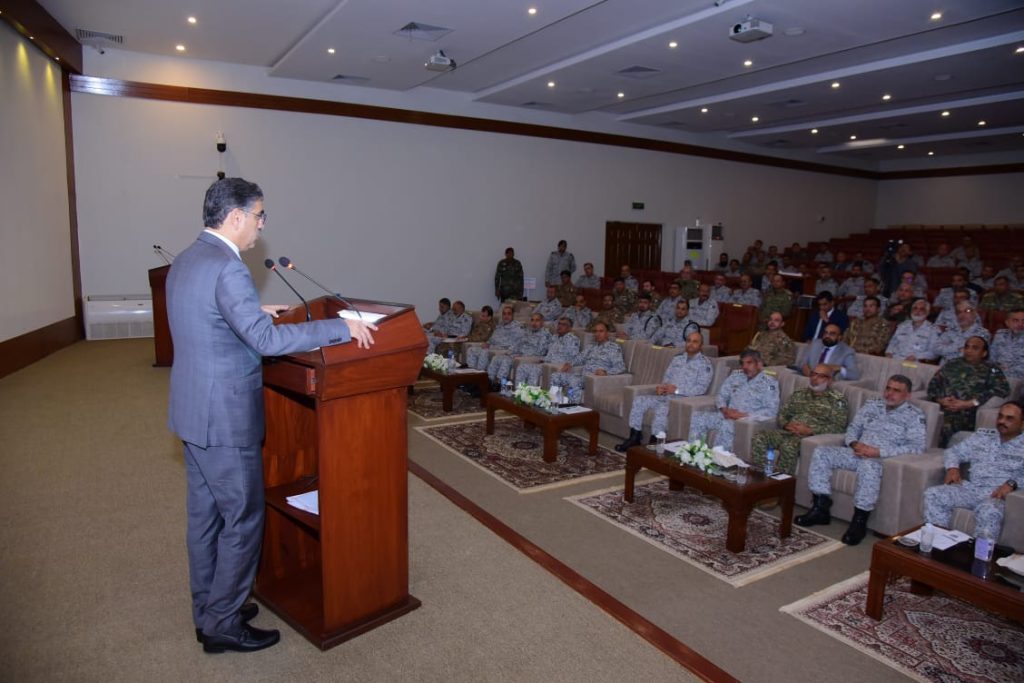
PM emphasizes significance of war games in validating naval war plans

0

KARACHI, Aug 30 (APP): Caretaker Prime Minister Anwaar-ul-Haq Kakar on Wednesday emphasized the significance of war games in validating naval war plans in sync with military and national security policy while also exploring operational concepts and refining deployment strategies.

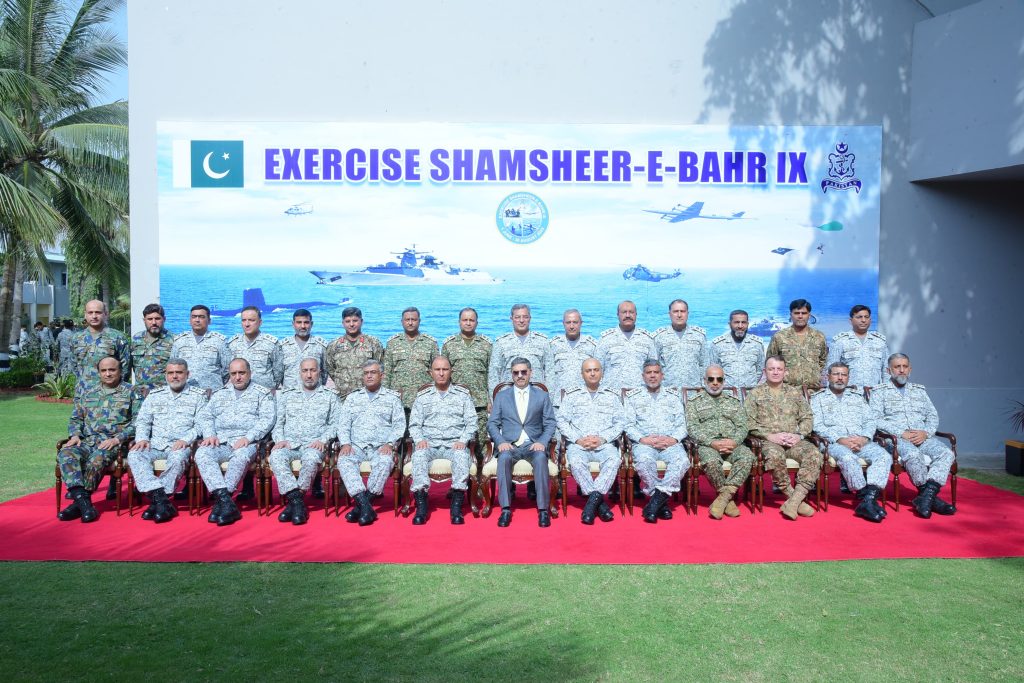
The prime minister, addressing the debrief session of Pakistan Navy’s war game Shamsheer-e-Bahr IX, lauded the well-deliberated plans of the force commanders and the insightful analysis of the war game, which would help crystallize operational plans for maritime security and seaward defence of Pakistan.

PM emphasizes significance of war games in validating naval war plans

He also highlighted the enhanced responsibilities of the Pakistan Navy in ensuring the security of China Pakistan Economic Corridor and Gwadar Port.

Prime Minister Kakar expressed complete confidence in the preparedness of the Pakistan Navy to meet all threats and challenges and reassured the government’s commitment to provide all available resources for its capacity building.

PM emphasizes significance of war games in validating naval war plans

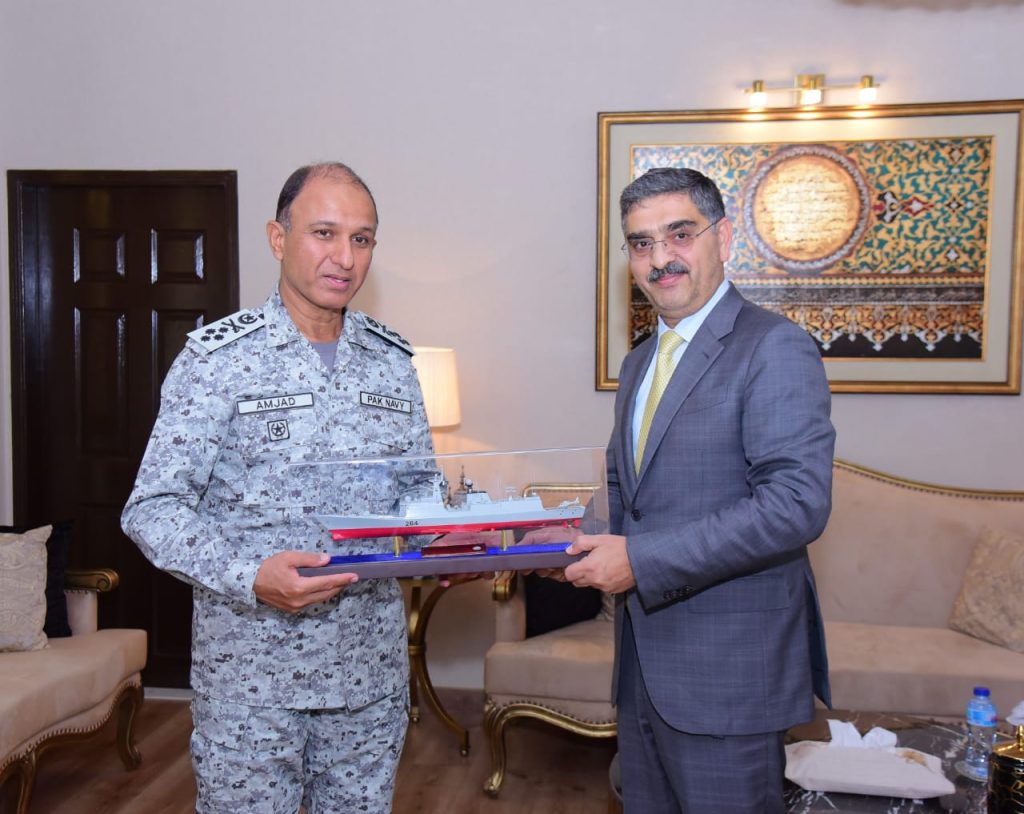
Upon arrival, the prime minister was received by Chief of the Naval Staff Admiral Muhammad Amjad Khan Niazi.

Earlier, while presenting the overview, Deputy Chief of Naval Staff (Operations) outlined the objectives of the war game which was conducted in a tri-service format with participants of relevant ministries and divisions as well.

PM emphasizes significance of war games in validating naval war plans

He highlighted various concepts tried during the war game and recommendations pertaining to Pakistan Navy deployment strategies.

The debrief of the exercise was attended by high-level government officials and senior officers from tri-services.

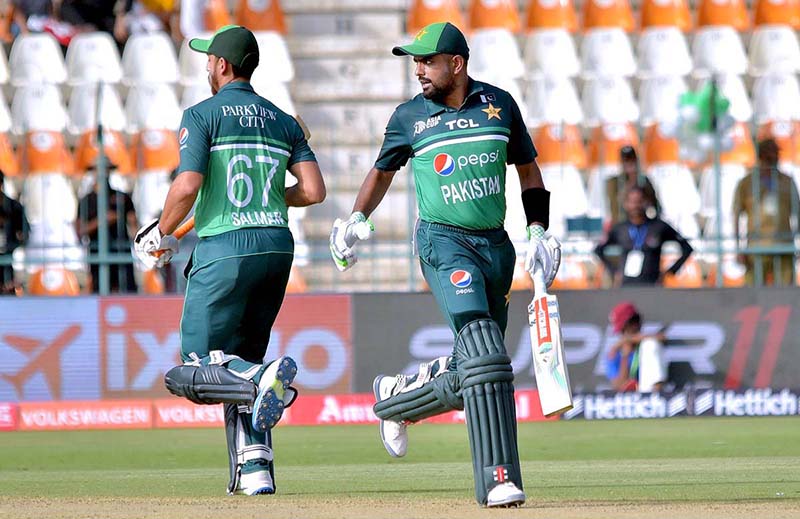
Pakistani player Babar Azam and Salman Ali Agha are running between the wicket during the First cricket match of Asia Cup 2023 between Pakistan and Nepal at Multan Cricket Stadium

0
Pakistani player Babar Azam and Salman Ali Agha are running between the wicket during the First cricket match of Asia Cup 2023 between Pakistan and Nepal at Multan Cricket Stadium
APP27-300823 MULTAN: August 30 - Pakistani player Babar Azam and Salman Ali Agha are running between the wicket during the First cricket match of Asia Cup 2023 between Pakistan and Nepal at Multan Cricket Stadium. APP/QSM/MAF/TZD/FHA
Pakistani player Babar Azam and Salman Ali Agha are running between the wicket during the First cricket match of Asia Cup 2023 between Pakistan and Nepal at Multan Cricket Stadium
APP27-300823
MULTAN: August 30 –
Pakistani player Babar Azam and Salman Ali Agha are running between the wicket during the First cricket match of Asia Cup 2023 between Pakistan and Nepal at Multan Cricket Stadium
APP28-300823
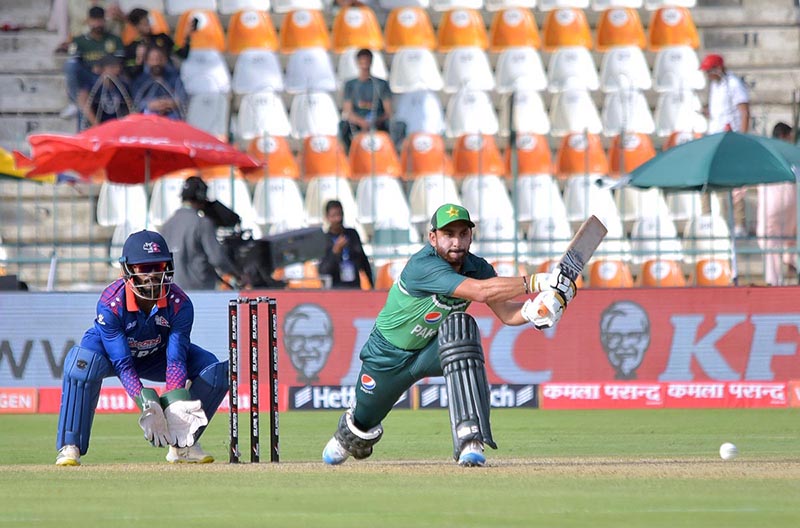
MULTAN: August 30 – Pakistani player Salman Ali Agha plays a shot during the First cricket match of Asia Cup 2023 between Pakistan and Nepal at Multan Cricket Stadium. APP/QSM/MAF/TZD/FHA

Pakistan down Bangladesh in Hockey5s Asia Cup

0

ISLAMABAD, Aug 30 (APP): Pakistan continued their winning streak at the Men’s Hockey5s Asia Cup 2023 as they downed Bangladesh 15-6 in their second match in Salalah, Oman on Wednesday.

According to information received here, Pakistan captain Rana Abdul Waheed Ashraf scored four goals, Arshad Liaquat and Muhammad Abdullah netted three goals each, Abdul Rehman scored two goals, while Ehtesham Aslam, Murtaza Yaqub and Zakaria Hayat scored one goal each.

Pakistan’s Arshad Liaquat was awarded the man of the match award for his standout performance.
In their opening match on Tuesday, Pakistan had defeated Japan 26-1.

T20 Wheelchair Cricket Asia Cup to be held in Nepal in October

0

ISLAMABAD, Aug 30 (APP): The second edition of the T20 Wheelchair Cricket Asia Cup 2023 will be held from October 2 to 8 at the neutral venue of Kathmandu, Nepal, Pakistan Wheelchair Cricket Council (PWCC) said on Wednesday.

“The event, being hosted by Pakistan was earlier scheduled to take place in July but was pushed to October due to the rainy season in Kathmandu,” President PWCC Rookhsana Rajpoot, who is in Kathmandu to oversee arrangements for the event told APP on the phone.

According to Rookhsana, the PWCC was all set to host the event in Pakistan but due to some travelling issues of the Indian team it was decided to shift it to Nepal.

She said every effort would be made to make the event a real success. “We’ll be trying to ensure that fans enjoy exciting contests during the event,” she said.

Teams from Pakistan, India, Nepal, Bangladesh and Sri Lanka will participate in the Asia Cup. The tournament will be played at Kathmandu’s Mulpani Cricket Ground.

She said geographically Nepal was the best destination for all the participating teams to arrive.

“The inaugural edition of the tournament was also held in Nepal in May 2019,” she said.

Pakistan are the reigning champions as they defeated India in the final to lift the trophy.

Rookhsana said the PWCC would be responsible for covering the event cost, while Nepal’s National Disability Sports for All Organization (NDSO) and Physically Challenged Cricket Association of Nepal (PCCAN) would provide logistic support.

ICCI, WFP discuss cooperation to address food insecurity issues

0
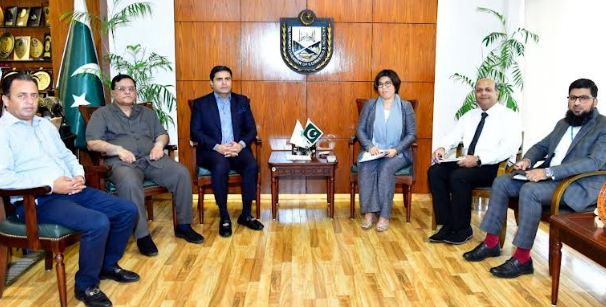
ICCI and WFP delegation meet
ISLAMABAD, Aug 30 (APP):Head of Supply Chain, World Food Programme (WFP) Ms. Rei Ishii on Wednesday visited Islamabad Chamber of Commerce & Industry (ICCI) and discussed areas of collaboration between WFP and ICCI to address the food insecurity issues in the region.
Ahsan Zafar Bakhtawari, President, ICCI welcomed the visiting guest and said that WFP is providing critical relief and nutrition support to vulnerable segments of society in Pakistan, which is commendable.
He assured that ICCI is ready to mobilize its member companies to join hands as partners with WFP in terms of suppliers and vendors in its efforts to strengthen the food and nutrition security for the vulnerable people of Pakistan.
He said that many member companies of ICCI from pharma and food sectors have outreach to communities and they can join hands with WFP in its efforts to provide prompt response in emergency situations like natural disasters and floods etc.
He also exchanged views with the visiting guest on many common areas of mutual cooperation.
Speaking on the occasion, Ms. Rei Ishii, Head of Supply Chain, World Food Program said that WFP has provided over 3.8 million flood-affected people with 80,000 metric ton of food and nutrition assistance and US$ 31 million in cash-based transfers since August 2022.
She said that Pakistan is confronted with substantial multidimensional risks that are obstructing its advancement towards achieving the Sustainable Development Goals (SDGs) and Vision 2025.
She said that WFP’s Country Strategic Plan 2023-27 supports Pakistan’s achievement of its national development priorities and the agenda for sustainable development, with a focus on zero hunger.
She said that WFP provides policy and advisory support to the Government of Pakistan to strengthen food systems in Pakistan.
She said that ICCI member companies have good outreach to the communities and their cooperation with WFP would strengthen its efforts to address food insecurity issues in Pakistan more effectively.
She said that their support as suppliers and vendors with WFP would be helpful in providing quality and nutritious food to the deprived segments of the society.

HEC organises orientation session

0
HEC

ISLAMABAD, Aug 30 (APP):The Higher Education Commission (HEC) held an orientation session for the first batch of 30 focal persons from 23 universities to provide them with a training on the Undergraduate Education Policy (UEP) V1.1.

Organised by HEC Curriculum Division, the training session was attended by Executive Director HEC Dr. Shaista Sohail as chief guest. Advisor (Academics & Curriculum) Engr. Muhammad Raza Chohan chaired the session.

In his briefing on the policy, Advisor (Academics & Curriculum) HEC highlighted the transformation process linking the previous policies and frameworks used by HEC for undergraduate degree programmes from 2002-2020.

He briefed about the participatory approach carried out in revamping the UEP 2020 by involving all the universities and relevant stakeholders including accreditation councils in the feedback process while finalising the UEP Ver 1.1.

Deputy Director HEC Hidayatullah Kasi shared a detailed presentation on the policy items related to admission, nomenclature of the degree programme, academic advisory to students, purpose and offerings of General Education courses, credits dedicated for Major, Inter-disciplinary and minor courses, degree offerings with Single Major, Single Major with One Minor, Single Major with Double Minor and Double Major, the mandatory components of Capstone project and credited field experience.

Besides, the structure of Associate Degrees and lateral entry in BS/equivalent programmes was discussed in detail.

Finally, the policy item related to Exit from four-year degree programs in the form of Associate Degree under certain circumstances were briefed to the participants.

The participants put forth their points to the team of Curriculum Division regarding different aspects of the policy for clarifications.

All the queries were addressed one by one after thorough discussion.

Director Curriculum, Ms. Dur e Shahwar briefed the house that a pool of Frequently Asked Questions has already been developed by HEC, which will be placed on HEC website for guidance of the Institutions, faculty, students, and employers.

The same shall be expended as and when new queries are received needing guidance from HEC. All the participants fully participated in the interactive session.

Addressing the closing ceremony, Dr. Shaista Sohail appreciated the role of all participating universities who provided their feedback while giving final shape to the UEP V1.1.

She particularly emphasised the fast-changing market demand in terms of skills and discussed how the undergraduate education policy could help the students in this regard.

She appreciated the efforts of all the participants and asked them to play their key role in implementing the policy across all departments in their respective universities.

Payment of electricity bills continued in KP as people reject protest against inflated charges

0
protest against billing
PESHAWAR, Aug 30 (APP):The payment of electricity bills on Wednesday continued in Khyber Pakhtunkhwa including Peshawar despite protest demonstrations against an inflated bills in some areas, and the consumers started clearance of their monthly dues to get uninterrupted power supply in the sizzling heat.
Rejecting the politically-motivated protest of handful of elements, the consumers of all districts of KP in substantial number were seen at banks and mobile franchise units besides post offices on Wednesday where they paid their electricity bills.
Besides many other consumers, Riazul Haq, a former PST teacher and a resident of Pabbi Nowshera district has also cleared his electricity bill of August charged by the Peshawar Electricity  Supply Company (PESCO).
“Payment of electricity bill is essential for providing uninterrupted power supply to the consumers,” he said, adding majority of his relatives had paid their electricity bills.
However, he said the burden of free units consumed by PESCO or Wapda employees and stolen electricity should not be shifted on law abiding consumers.
Misal Khan, a retired civil servant, who was paying his electricity bill at Post Office Mohib Banda Nowshera said,” I visited Pabbi PESCO Circle Office the other day and get relief by dividing my electricity bill for payment as an installment.”
“Burning or non-payment of electricity bill was no solution to the problem of inflated bills. We need to conserve energy by switching off an extra electricity appliances to cut our bills,” he said, adding we need to adopt the culture to save and protect electricity like the way we protect our lands, jewelry and other valuable.
However, he complained about trippings and fluctuations of transformers/power lines that were causing burning of electricity appliances and inflicting economic losses to poor people.
Demanding strict action against power stealers, he said Pakistan was confronting to the monster challenge of energy shortfall owing to non-construction of dams.
He said our past governments had failed to construct new dams after Turbella, which resulted an increase of load shedding, power circular debt and inflation that negatively impacting humans, agriculture and industrial consumers.
Professor Dr Muhammad Naeem of Swabi University told APP that protest against inflated bills were no solution rather we need to fully exploite KP hydel power potential by constructing new dams that would help reduce electricity cost and address problems of load shedding.
He said Pakistan had over 60,000 megawatt hydropower potential including 30,000MW of Khyber Pakhtunkhwa where construction of small, medium and large dams would help arrest load shedding and reduce cost of electricity units besides addressing power circular debt related problems.
He said in world including subcontinent countries, focus was being made on small and medium dams as it required less time and investment compare to large dams.
Dr Naeem said about 46,000 dams had been constructed across the globe including 22,104 dams by China, 5,334 by India, but unfortunately, Pakistan built only about 150 small and large dams since its inception, resulting increase of electricity cost units today.
He said small dams could easily be constructed in KP due to its better hydropower location on rivers in a short span of three years while big dams mostly require 10 to 15 years with more investment.
“Pakistan will require additional 76 MAF water by 2050 which was only possible by constructing small and medium dams to meet the growing water demand,” he added.
PESCO official told APP that increase of electricity’s unit cost was a policy matter, and the company was bound to implement  decision of the government.
He said KP was receiving about 1, 873MW electricity from the national grid while its demand was around 3,220 MW, facing a shortfall of 1,347 that was being fulfilled through scheduled load management besides gas, coal, solar and other renewable energy resources.
To bridge the demand-supply gap and counter power theft cases, the PESCO official said the load management was being carried out in high line losses feeders in Peshawar, Nowshera, Bannu, DI Khan, Karak, Lakki Marwat, Khyber, Bajaur, Waziristan and others tribal districts.
Uninterrupted power supply was being provided to all those areas where line looses were zero and financial recovery was 100pc, he said.
Tribal Electricity Supply Company (TESCO) spokesman said about 180 MW was being drawn from the express transmission line for merged tribal areas against 1,000 MW demand, adding the 820MW shortfall mainly occured due to power stealing through direct hocks.
The non-meterization and direct hocks in merged areas overload the power distribution system besides causing fluctuation and tripping of electricity that often caused burning of expansive electrical appliances of consumers.
Qaisar Khan, a retired PESCO employee told APP that every department provided facilities to its employees and free units to our employees was mainly due to their low wages and risky jobs.
Meanwhile, the Khyber Pakhtunkhwa Energy Department expedited work on 11.80MW Karora Hydropower Project (HPP) at Shangla.
As many 96.2 per cent work on the project having a total cost of Rs 4620.06 million completed and would be inagurated soon subject to contenious availability of the engineers at the site.
Engr Malik Luqman, Chief Planning Officer, KP Energy Department said that construction work on 40.8MW Koto HPP at Timergara Lower Dir costing Rs13,998.89 million has almost been completed and electricity would start after clearance of State Bank of Pakistan for the already imported/upcoming E&M equipment.
Asked about 10.2MW Jabori HPP,  Mansehra , the official said work on the project had been started at November 2014 with PC-1 cost of Rs2331 million. Later, its approved cost was revised to Rs 3798.26 million and up till now 99 pc work on the project completed.
He said that agreement would be required to purchase electricity from these projects for which the concerned authorities were approached.
The federal government has earmarked Rs 205.38 billion for HPP in the budget 2023-24 include 2,160 MW Dasu HPP
(Rs. 58,597 million), 1,410 MW Tarbela IV Extension (Rs  590 million), 969 MW Neelum Jhelum (Rs 4,828 million), and 1,530 MW Tarbela V Extension (Rs 4,449.463 million).
Major transmission projects such as CASA-1000 (Rs 16,099.255 million), Dasu Evacuation (Rs 5,667.094 million), Suki Kinari Evacuation (Rs 13,800 million), and AMI IESCO project in the distribution sector (Rs 3,000 million) were reflected in budget 2023-24.
Additionally, eight projects for supplying electricity to Spcial Economic Zones (SEZs) was allocated a total of
Rs 7,267.352 million and by the end of June 2024, the transmission sector is expected to have an additional capacity of 3,750 MVA on the 500kV grid and 6,900 MVA on the 220kV grid.
The transmission lines will be extended by 522 km on the 500kV level and 668 km on the 220kV level.
Resultantly, 6,985 villages would be electrified and 1,403,592 consumers for Distribution Companies (DISCOs) would be facilitated besides extending distribution lines of 132 kv by 1,843 km, and the capacity of 132 kv grids would be strengthened by 4,199 MVA.
WAPDA officials here said that 72 percent work on multipurpose Kurram Tangi (Stage-1) Bannu and North Waziristan has been completed and is expected to be inaugurated in November next year.
The design and feasibility studies of its stage-II is under process that would be completed with a loan assistance of the Asian Development Bank.
With the completion of Kurram Tangi dam, the official said 1.2 million acres feet water would be stored and 80.9MW electricity to be generated besides benefiting over three million people of southern districts of Khyber Pakthunkhwa.
Besides completion of 108MW Golen Gol dam in Chitral, work on Mohmand dam of 800MW with 1.293 MAF water storage capacity were speeded up that after completion would supplement/irrigate 160,000 acres of existing land and about 18,237 acres of new land with annual benefits of Rs2.23 billion.
Likewise, 300 million gallons water per day will also be provided to Peshawar for drinking purpose with benefits of Rs 957 million from Mohmand dam.
Mohmand dam would save Peshawar, Charsadda and Nowshera from floods having annual benefits in terms of flood mitigation was estimated at Rs1.467 billion besides producing 2.86 billion units of environment-friendly electricity to the National Grid every year with annual revenue of Rs 45.76 billion.
The overall annual benefits of the project stand at Rs. 51 billion.
The construction work on a high voltage direct current (HVDC) convertor station was in progress at Azakhel Bala Nowshera district under the CASA-1000 Project for transmission of 1300 MW inexpensive, clean, and environment-friendly electricity from Kyrgyzstan and Tajikistan via Afghanistan to Pakistan.
CASA-1000 Project carried a great example of mutual cooperation between the governments of Pakistan, Afghanistan, Kyrgyzstan, and Tajikistan aimed at harnessing clean energy trade and building a shared regional electricity market, fighting climate change, and increasing standard of living for their populations.
HVDC converter station Nowshera would be linked by an HVDC transmission line to efficiently transmit electricity from hydropower-rich Kyrgyzstan and Tajikistan via Afghanistan and onward via Torkhum to Afghanistan.
The experts said these projects after completion would not only address the issue of load shedding but help reduce electricity per unit cost besides bolstering agriculture and industrial growth in Pakistan.

Six out of ten deaths in Pakistan due to NCDs caused by sugary drinks: Experts

0
Seminar on Diabetics
ISLAMABAD, Aug 30 (APP):The experts on Wednesday said the country was suffering from a very high percentage of non-communicable diseases (NCDs), most of them caused by food and beverages that were not fit for human health and according to a 2016 World Health Organization (WHO) study, six out of ten deaths in Pakistan happen due to NCDs, including three out of ten deaths by cardiovascular diseases (CVDs).
Similarly, according to the National Diabetes Survey conducted in 2016-17, every 4th adult in Pakistan was suffering from Type-2 diabetes, whereas the International Diabetes Federation (IDF) estimated in 2021 that Pakistan had the 3rd highest burden of type-2 diabetes worldwide with more than 33 million cases with additional I0 million termed as pre-diabetic. Unhealthy food supply and consumption also contribute to the growing number of overweight people. It was especially worrying that the number of overweight children had doubled between 2011 and 2018, and the problem might have worsened in recent years due to a lack of effective regulations or their enforcement by respective authorities.
These disturbing statistics were shared by experts during a training workshop for journalists on “Understanding TFAs, Policy, Human Health, and Reporting”, which was organized by the Centre for Peace and Development Initiatives (CPDI) with the support of Global Health Advocacy Incubator (GHAI), a news release said.
The training was conducted by prominent health experts and journalists including Munawar Hussain from GHAI, Dr. Khawja Masood, National Coordinator, Food Fortification Alliance, Zeeshan Haider, and  Waqar Bhatti.
They informed the participants about the major dietary risk factors such as the high percentage of trans fatty acids (TFAs), sugar, and sodium in the food supply and dietary practices. For example, Pakistan’s TFA intake is estimated to be the 2nd highest in the WHO’s EMRO (Eastern Mediterranean) region, as it is about 6% of daily energy intake. The experts shared findings of numerous research studies, which highlight that the consumption of industrially produced trans-fatty acids (iTFAs) significantly contributes to the incidence of NCDs. It was also highlighted that inappropriate and unhealthy dietary practices, including higher consumption of TFAs, are responsible for increasing rates of NCDs such as diabetes, hypertension, cardiovascular diseases, cancers, and other chronic diseases in Pakistani population.
The participants were informed that the Government of Pakistan has recently taken steps to regulate production and supply of certain types of unhealthy food. For example, the Government has notifiedthat the limit of TFAs cannot be more than 2g per 100g of fat in Vanaspati, shortenings, bakery fats, bakery ware, rusk, and breads. It is a significant step forward, although certain gaps remain, as all types of food are still not covered by this regulation. It is also yet to be seen if the notified standard will be effectively implemented across Pakistan without any delay. More effective regulations and policy measures are also needed to reduce the consumption of sodium and sugar.
The workshop was attended by over 20 journalists from Islamabad, Rawalpindi, Karachi Quetta, Peshawar, and Lahore who got the opportunity to not only learn about the health-related challenges and the relevant major dietary risk factors but also about effective ways of reporting on such issues.
In his opening remarks, Executive Director of CPDI, Mukhtar Ahmed Ali emphasised the importance of more media attention to unprecedented health related challenges being faced by the people of Pakistan. He said that all stakeholders including media, government departments and civil society organizations must establish cooperative mechanisms to jointly work for public health, especially through public awareness, appropriate policies and regulations, and effective enforcement of food supply standards. Afshaar Iqbal from PYCA emphasized on the importance of local languages to communicate messages of TFA free food and good health. At the closing of the workshop,  Zaigham Khan said that journalists can influence attitudes on the one hand and policy on the other. They can also be a check on corporate greed”. “Therefore, they must remain alert about diseases and methods of prevention in the case of non-communicable diseases”.

Lyari gang commander arrested by Rangers

0

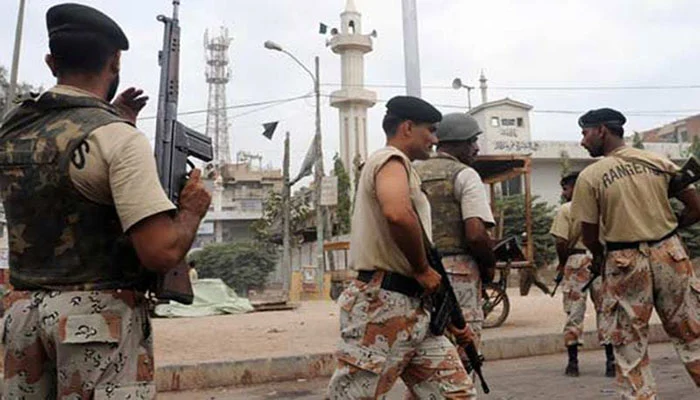
KARACHI, Aug 30 (APP): The Pakistan Rangers Sindh and Police in a joint intelligence based operation in Lyari area on Wednesday arrested an alleged commander of a Lyari Gang and recovered a hand grenade and arms, ammunition from his possession.

Arrested was identified as Muhammad Saleem alias Mullah Sohail, a most wanted gangster of Lyari, according to a news release.

The accused joined Uzair Baloch group in 2003 and in 2009 joined People’s Aman Committee.

He was involved in target killings, extortion collection, arms business and numerous police encounters.

He was continuously in touch with gang war commanders Ahmed Ali Magsi and Faisal Pathan who were in abroad.

The accused was enlisted in CTD’s Red Book.

During Karachi operation, the accused fled to interior Sindh and had returned Karachi to reorganize the gang on the instructions of Ali Ahmed Magsi.

The arrested along with recovered hand grenade, arms and ammunition had been handed over to police for further legal proceedings.

Newly appointed Iranian envoy calls on Planning minister

0
Iranian Ambassador

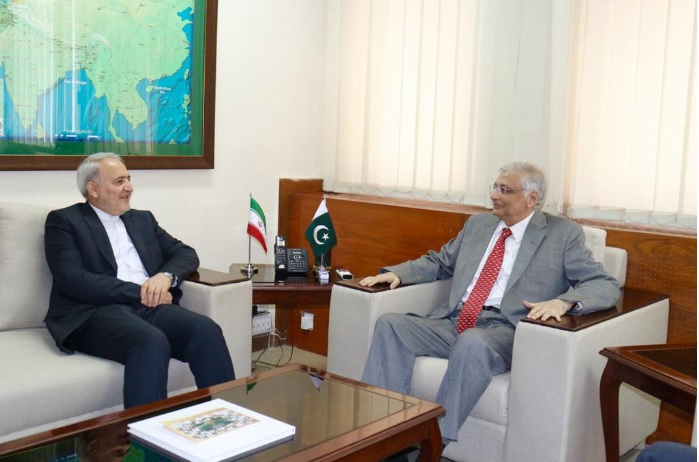
ISLAMABAD, Aug 30 (APP): Newly appointed Iranian ambassador to Pakistan Reza Amiri-Moghaddam paid a courtesy visit to Caretaker Minister for Planning, Development and Special Initiatives Sami Saeed here on Wednesday.

Chief Economist Dr Nadeem Javaid and Senior Joint Secretary Muazzam Ali also attended the meeting, a news release said.

During the meeting, the both sides discussed various avenues of collaboration between the two nations including bilateral trade, the China-Pakistan Economic Corridor (CPEC), cooperation in energy and economic sectors.

Minister Saeed warmly welcomed the envoy and felicitated him on assuming responsibilities as the Iranian Ambassador to Pakistan.

He emphasized the importance of the long-standing friendship between Pakistan and Iran and reiterated the commitment to further strengthening bilateral ties.

Both sides emphasized the need to enhance trade and connectivity between the two nations, expressing a mutual desire to boost the bilateral trade volume.

Ambassador Amiri-Moghaddam, during the talks, offered his country’s cooperation in the energy sector, acknowledging Pakistan’s energy security needs.

Minister Saeed appreciated this gesture and expressed his eagerness to explore opportunities for collaboration in this critical area.

He commended the existing border markets between Pakistan and Iran; and suggested exploring additional areas of mutual interest and collaboration.

The minister also proposed evolving a mechanism to facilitate smoother trade transactions.

The meeting also discussed the eastern and western corridors, with both sides exploring strategies to enhance trade through these channels.

The meeting concluded on a positive note, with both Ambassador Amiri-Moghaddam and Minister Saeed expressing commitment to work closely towards realizing the shared goals of increased trade, connectivity, and cooperation between Pakistan and Iran.

The potential collaboration in the energy sector was highlighted as a significant step in this direction.