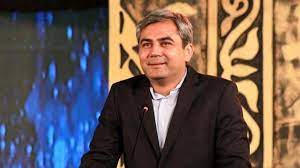
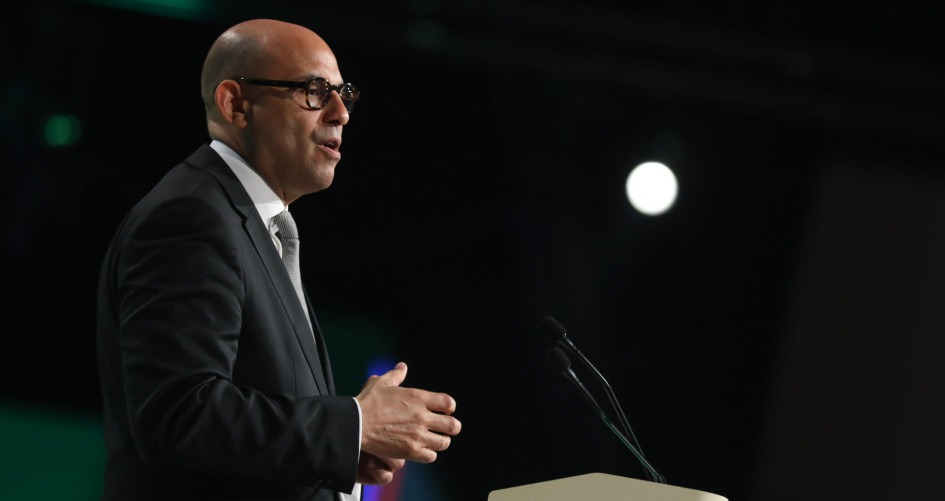
SIFC effective forum for economic stability, timely decisions of public interest: Dr Umar Saif
Pak, China discussed transfer of Chinese technology to Pakistan’s SEZs
ISLAMABAD, Dec 16 (APP): Caretaker Federal Minister for Commerce, Dr Gohar Ejaz has discussed exploring the transfer of Chinese technology to Pakistan’s Special Economic Zones (SEZs) in China tour.
The minister along with a high-profile delegation, has concluded a visit to China. The comprehensive tour spanned three key Chinese cities, providing a platform for fostering collaborations across diverse sectors, said a press release issued here Saturday.
The delegation actively participated in the China-Pakistan Textile Summit, a pivotal event that brought together industry leaders from both nations. Engaging in insightful discussions, the delegates aimed to fortify bilateral trade relations and explore avenues for increased cooperation.
A significant milestone during the visit was the signing of a Memorandum of Understanding (MoU) between the China Chambers of Commerce and the All Pakistan Textile Mills Association (APTMA). This agreement marks a commitment to enhance collaboration and promote mutual interests in the textile sector.
The delegation comprised businessmen, seized the opportunity to engage in fruitful Business-to-Business (B2B) meetings with their Chinese counterparts. The focus was on enhancing textile imports and exports, with the ultimate goal of strengthening economic ties between the two countries.
Exploring possibilities beyond textiles, the delegates delved into discussions on potential joint ventures across multiple sectors.
This exemplifies the collaborative spirit and shared vision for business growth between Pakistan and China.
Emphasizing the importance of joint efforts, the delegates underscored the need for collaboration among business individuals from both nations. Discussions included the application of advanced Chinese technology to enhance value addition in Pakistan’s industries.
The delegates engaged in detailed discussions on how this transfer could drive innovation and economic development in Pakistan.
Highlighting the positive impact of increased Chinese investments on Pakistan’s GDP growth, the delegation emphasized the strategic opportunity for Chinese exporters to reach markets in the Gulf Cooperation Council (GCC) and Africa through Pakistan.
Wang Yi meets with Saudi, Iranian deputy foreign ministers in Beijing
Gold rates decline by Rs.1,800 to Rs.216,800 per tola
ISLAMABAD, Dec 16 (APP): The per tola price of 24 karat gold decreased by Rs1,800 and was sold at Rs 216,800 on Saturday compared to its sale at Rs 218,600 on last trading day.
The price of 10 grams of 24 karat gold also decreased by Rs 1,543 to Rs 185,871from Rs 187,414 whereas the prices of 10 gram 22 karat gold went down to Rs 170,382 from Rs 171,796, the All Sindh Sarafa Jewellers Association reported.
The price of per tola and ten gram Silver remained stagnant at Rs 2,670 and 2,289.09 respectively.
The price of gold in the international market decreased by $15 to $2,040 from $.2,055, the Association reported.
Business community stands firm with Pakistani forces, hails economic rejuvenation
ISLAMABAD, Dec 16 (APP): In a resounding show of unity, Pakistan’s Business Forum (PBF) has pledged unwavering support for the country’s armed forces, hailing their crucial role in restoring peace and paving the way for economic rejuvenation.
“This unified front sends a clear message as Pakistan stands united against terrorism and external threats, while simultaneously fostering a business-friendly environment for sustainable growth,” said a press release issued here Saturday.
PBF President Mian Muhammad Usman led the charge, praising the military’s relentless pursuit of terror eradication.
Vice President (VP) Jahan Ara Wattoo, Chaudhry Ahmad Jawad and Provincial Chairmen Atif Ikram Sheikh, Muhammad Naseer Malik, Khawaja Mahboob ul Rehman, Ashafque Paracha, Daroo Khan Achakzai and Shabnum Zafar in a collective message said, “We are proud of our armed forces for successfully flushing out terrorists from their hideouts and stamping out the menace of terrorism in the region paving way for complete restoration of peace in the country, a pre-requisite for economic growth and development in the country.”
They said, “We are immensely proud of our armed forces for their valiant efforts in flushing out terrorists and restoring peace in the region.”
This sentiment resonated throughout the forum, with vice presidents and provincial chairmen adding their voices to the chorus of appreciation.
The commitment of Chief of Army Staff (COAS) Gen Asim Munir to prioritize security as a cornerstone of economic prosperity was met with particular enthusiasm.
PBF officials lauded his leadership, confident that his vision would propel the nation towards rapid economic expansion.
They also expressed unwavering faith in Pakistan’s resilience, stating, “With the grace of Allah, our nation will overcome all challenges and emerge stronger than ever.”
The forum’s gratitude extended to the Inter-Services Public Relations (ISPR) for its instrumental role in showcasing the sacrifices of the armed forces and countering hybrid warfare tactics. PBF acknowledged the positive impact of these efforts, citing a renewed influx of foreign investment and a gradual economic upswing.
The China-Pakistan Economic Corridor (CPEC) was hailed as a potential game-changer, poised to accelerate economic activity not only in Pakistan but across the region.
Amidst these positive developments, the PBF emphasized the vital role of a business-friendly environment in fostering export growth and rapid industrialization. They reiterated their unwavering support for the armed forces, declaring, “We stand united as one nation, under one flag, to protect our beloved Pakistan and its valiant defenders.”
The PBF’s message transcends mere economic concerns. It paints a powerful picture of a nation unified in purpose, resolutely forging a path towards peace and prosperity. The business community’s unwavering support for the armed forces serves as a testament to the inextricable link between national security and economic well-being.
This is a story of resilience, of a nation rising above its challenges, and of a future brimming with promise.
KSrelief distributes 350 food packages among residents of Broghil Valley
Pak Ambassador welcomes Governor Sindh on his arrival
ISLAMABAD, Dec 16 (APP): Ambassador of Pakistan in Tehran Mudassir Tipu on Saturday welcomed Governor Sindh Kamran Khan Tessori who had earlier arrived Iran on a four-day visit.
The Governor Sindh has arrived in Mashhad on December 13 on the first flight of recently inaugurated airline between Karachi and Mashhad, a press release of Pakistan Embassy said.

Ambassador Mudassir also hosted a reception in the honour of the Governor Sindh and his delegation.
https://x.com/MuhammadMu85183/status/1735648097512878346?s=20
Separately, on X, Pakistan ambassador posted that he received Governor Sindh Kamran Tessori at airport in Tehran .
The governor is visiting Iran to inaugurate recent air flight between Karachi and Mashhad and to promote trade and cultural ties between the two brotherly countries .
Pakistan voices concern over regional instability fueled by ‘generous’ arms supply to India
UNITED NATIONS, Dec 16 (APP): Pakistan has expressed its concern over the “generous” supply of conventional weapons to “one state” in South Asia —
an obvious reference to India, saying it was fueling instability and jeopardizing the delicate balance in the tension-ridden region.
“The policy of double standards towards South Asia, based on narrow strategic, political and commercial considerations, must be eschewed,” Ambassador Muhammad Usman Iqbal Jadoon, the deputy permanent representative of Pakistan to the UN, told the UN Security Council here late Friday.
He was speaking in a debate on ‘addressing the threat posed by diversion, illicit trafficking and misuse of small arms and light weapons and their ammunition to peace and security’, in which over 60 countries took part.
During the day-long debate, the speakers highlighted the threats posed by those weapons to global and regional security, as well as the nexus between those firearms, terrorism and organized crime.
They sounded the alarm about their uncontrolled spread and easy availability, which, they said, undermine human security and impact a range of areas including development and fulfillment of basic human rights.
In his remarks, Ambassador Jadoon regretted that the goal of limiting and gradual reducing conventional weapons has not been realized. “Instead, we find ourselves amidst a persistent increase in global military expenditures.”
“Many destabilizing developments are evident in South Asia where one State’s military spending vastly outnumbers that of all others,” the Pakistani envoy told the 15-member Council.
“The generous supply of conventional weaponry to this state, together with its strategic capabilities, is fueling instability, jeopardizing the delicate regional balance, hindering resolution of longstanding disputes, reinforcing its sense of impunity and hegemonic designs and impeding the realization of durable peace and sustainable development in the region.
“This conventional imbalance can also lead to outbreak of conflict between nuclear-armed states due to the inherent danger of escalation”, the Pakistani envoy added.
Pakistan, he said, was committed to the establishment of a strategic restraint regime in South Asia, which includes an element of conventional force balance.
“Pakistan neither wants, nor is engaged in an arms race in the region,” Ambassador Jadoon said.
Pakistan, he added, was of firm view that peace and stability in South Asia can only be achieved through the resolution of disputes in accordance with Security Council resolutions and the maintenance of a balance of conventional and strategic military forces.
The Pakistani envoy also called for a stronger commitment from the international community to support developing countries with eliminating the scourge of illicit weapons proliferation.
Recalling a recent attack on Pakistan’s security forces’ post by terrorist group Tehreek-e-Jihad Pakistan, he expressed concern about the group’s possession of modern and sophisticated arms, calling for an investigation into how these weapons were acquired.
“While we successfully neutralized all of those involved, the possession of sophisticated weaponry by these terrorists, none of which they have the capability to manufacture, indicates a bigger problem today.
“It is the responsibility of all States, this Council and the United Nations to take measures to prevent illicit trade, transfer and diversion of these arms,” Ambassador Jadoon added.
Urging to expand the scope of arms control to cover conventional weapons, he pointed to the accumulation of conventional capabilities in cyber and outer space, which creates dangerous imbalances and can trigger conflicts.
Opening the debate, UN’s High Representative for Disarmament Affairs, Izumi Nakamitsu, noted that the Security Council began its biennial consideration of small arms in 2007 and has since recognized that their illicit transfer, destabilizing accumulation and misuse threaten international peace and security.
“Small arms and light weapons are the weapons of choice in initiating, sustaining and exacerbating conflict, armed violence, terrorism and other forms of organized crime,” she said, warning that their misuse facilitates human rights violations and gender-based violence.
In 2021 alone, 260,000 people were killed by small arms, amounting to 45 per cent of all violent deaths — more than 700 people a day, or one every two minutes.