Home Blog Page 11916

Net Metering – an impending source of relief for consumers

0
Net Metering
By Raziq Ali Shah
ISLAMABAD, Dec 17 (APP):In an era of escalating power prices, selling power to national grid would definitely be a source of relief for consumers as alternate energy systems installed at houses would make them earn money instead of simply being the consumers.
Yes, the Net Metering system that now enables them to sell extra electricity to Power Distribution Companies (DISCOs) generated easily through their solar and wind systems for years, just after one time spending.
Thousands have already converted to this system as power distribution companies are now providing them with this modern facility of selling extra electricity to concerned distribution company.
This novel facility of selling extra electricity has already started functioning with certain companies including K-Electric awarding net-metering connections to purchase surplus electricity.
“Instead of just keep paying as consumers, the clients of power distribution companies are now becoming sellers by selling their extra electricity,” said Chief Executive Officer of Islamabad Electric Supply Company (IESCO) Dr. Muhammad Amjad.
He said following successful models of several western and eastern countries, the government ultimately introduced this technology to facilitate power-producing customers.
“Net metering is also an innovative and immediate solution to current power shortage in the country,” Dr Amjad stated and informed that IESCO was country’s first power distribution company facilitating both commercial and domestic customers to generate electricity through solar panels and sell their surplus electricity to IESCO.
Net-metering project was launched countrywide in 2016, allowing any domestic, commercial, industrial and other consumers to have at least a three-phase meter connection to avail this facility.
Under the arrangement, such a consumer could sell additional energy to respective power distribution companies and make stocktaking (calculations) with it at the end of a month.
Since the system allows the consumers to generate electricity from one kilowatt to one megawatt, NEPRA issues license to applicants seeking generation above 25kW in the service area jurisdiction of all distribution companies.
“We got extremely encouraging response from public. The IESCO has installed 21,218 net metering connections with a total generation capacity of 229.09 megawatts (MW) in its jurisdiction from January 2016 to October 2023,” informed Manager Public Relations IESCO Asim Nazir Raja.
He said the company had received 22,174 applications for net metering connections worth 244.77 MW and so far licenses have been issued to 22,114 consumers with an accumulative capacity of 242.33 MW.
“The import and export of billing units had started from 18,310 net metering connections with a total capacity of 201.09 MW,” he informed. “Total exports and imports from these connections stood at 254,454,591 units and 411,934,674 units respectively.”
Asim said the company had paid an amount of Rs 2,995,823 to connections’ holders till March 2023. “IESCO is mandated to issue licenses up to 25 kilowatts (KW) while beyond this capacity, NENPRA issues licenses for net metering connections.”
He informed that all customers having three phase connections can avail this facility through our one window system where customers can register their applications to get free net-metering connection in just three to four weeks.
The federal government has issued ‘Net Metering Regulations’ to establish flexible regulatory regime where any consumer can install solar panels and sell excess electricity to concerned distribution company by following a short, simple and easy process.
“The system will help bridge power generation gap, also resulting in reduced load-shedding,” remarked Chairman National Electric Power Regulatory Authority (NEPRA), Waseem Mukhtar. “It promotes cleaner, renewable and environment friendly power generation and is also a priority of the government.”
Any consumer who fulfills requirements can submit application to Distribution Company along with necessary documents and DISCO would acknowledge its receipt and inform whether the application is complete in all respects.
If the Distribution Company is satisfied with consumer’s qualification as Distributed Generator, it will enter into a standard Agreement as approved by the Authority. The Distribution Company would send a copy of Agreement to the Authority within seven days.
This facility has five steps including, Submission of Application by the Consumer, Technical Review of Application by DISCO, Signing of Net Metering Agreement, Payment of Interconnection Charges by the Consumer and Sale/Purchase of Electricity.
“Many countries including USA, Germany, Australia, Brazil, UK, Japan, India, China and Thailand are now generating electricity in bulk through solar system,” said an energy expert Gul Hassan Bhutto.
“Pakistan receives one of the best solar irradiation in the world with a potential to generate over 2.324 million megawatts electricity annually through solar thermal and photovoltaic systems. But, this potential is yet to be tapped,” Bhutto said.
Solar irradiation in Pakistan and India stands at 1,900 Kwh/m2 against China’s 1,500 and Germany’s 1,200 Kwh/m2. China, Germany and India have already installed solar power projects of thousands megawatts capacity.
According to estimates a 5KW system costing around Rs 800,000 to Rs 1,000,000 could generate 600 units per month and if a consumer uses an average 400 units, he can still sell 200 units.
Therefore, it is urgently required to facilitate maximum consumers to install more and more systems for their personal usage as well as help steering country out of power crisis.

Trophy hunting – a valuable source of earning

0
Trophy hunting

By Sultan Shoaib

GILGIT-BALTISTAN, Dec 17 (APP): Utilizing natural resources and species for common good had long been practiced across the globe with many nation adopting sustainable policies to ensure both – the safety of wildlife and socio-economic uplift of remote communities.

Such a unique mechanism is also in vogue in Gilgit-Baltistan region of Pakistan in the name of “Community-Based Trophy Hunting,” wherein people fond of hunting deposit money to hunt a specific species and in response communities protect these animals for trophy hunting.

Introduced in 1990, this program has now become a vital source of income for local communities with GB government earning millions of dollars since then for the common good of local communities.

Markhor is the most precious trophy hunting animal attracting around US$ five million since 1990 of which major chunk was spent on ameliorating the lot of common people.

“From 1990 till 2023, around US$ five million were generated through trophy hunting of markhor alone, of which US$ 4.3 million has been invested in social, economic and environmental development of local communities,” informed Rashid Minhas a GB based conservationist.

“Using about 30% of revenue, local communities grow fodder and plants, vaccinate livestock to prevent disease transmission from domestic to wild animals, conduct cattle breeding campaigns, maintain joint watch-and-ward systems for wildlife protection against poaching and improve design of corrals in pastures,” he revealed.

Remaining 70%, he said, is spent on socio-economic development like repairing irrigation channels to community school buildings, basic health units, educational stipends and scholarships, soft loans to women for micro businesses, and improving farm-to-market connectivity.

Rashid Minhas suggested a transparent auditing process and private sector involvement to enhance effectiveness and ensure sustainability to nail the criticism regarding management issues.

Three decades ago a complete ban was imposed on hunting in Gilgit Baltistan to conserve species like Markhor leading to positive results.

Later on recognizing the need for a balanced approach Syed Yahya Shah a local political leader proposed community-based trophy-hunting program seeking comments from experts and organizations like IUCN and WWF-Pakistan.

These International bodies unveiled a government regulated proposal in 1989 that finally gave birth to first community-based trophy hunting program in Gilgit-Baltistan.

Implemented by Gilgit Baltistan Parks and Wildlife Department, the program significantly reduced poaching, increased markhor, blue sheeps and ibex populations and designated over 30% land as community conservation areas.

The hunting season is carefully regulated from November to April under specific rules of Gilgit Baltistan Wildlife Act 1975.
For 2023-24 season, the government auctioned permits for four Astor markhors, 12 blue sheep and 88 ibexes with second-highest markhor permit sold for US$181,000, followed by another at US$177,000.

Additionally, eight international permits for blue sheep were auctioned between US$26,000 to US$35,000. Local hunters also participated with the highest price for a blue sheep permit being Rs 1,800,000 ($6,440) and Rs 1,100,000 ($3,935) for hunting an ibex

“The success of well-managed trophy hunting programs worldwide highlights their positive impact on wildlife management,” remarked Dr. Raja Abid Ali, a known conservationist and head of Central Karakorum National Park(CKNP). “By promoting positive attitudes toward wildlife and preventing poaching, conservation can go hand-in-hand with responsible hunting.”

He said as the program goes on, the call for transparent management, private sector involvement and equitable benefit-sharing remains crucial. “We emphasize protection of local livelihoods by ensuring that benefits of these initiatives reach the communities who are aimed to protect.”

It is evident that trophy hunting has become a crucial source of revenue for “Community Managed Conservation Areas” and the supervising government department. By now there are more than 50 designated community conservation areas, covering 30% land (around 21,750 sq km) of total area of Gilgit-Baltistan.

This mutually beneficial trophy-hunting program exemplifies that how much sustainable can be the use of natural resources if any program is executed with communities involvement for a common good.

Community-based trophy hunting initiative has emerged as a pioneering model, successfully intertwining conservation efforts with sustainable development. Spearheaded by local leaders and supported by international organizations, this program has revived wildlife population also becoming a crucial economic lifeline for communities involved.

Dr. Mayoor Ahmad, a famous conservationist who worked for conservation of Astore Markhor and other endangered species in Gilgit Baltistan also acknowledged positive impact of trophy hunting that earned living for local people and raised awareness for protecting endangered animals.

“The story of community-based trophy hunting in GB serves as an inspiring example as to how conservation and livelihoods could coexist for the benefit of people and nature,” he stated.

Dr. Mayoor Ahmad said that major chunk of trophy hunting funds go to local communities who utilize this money for education, health and development projects.

Auctioning of hunting permits, as seen in 2023-24 season, underscores its economic significance with the revenues flowing to communities and the government for use in developmental projects ranging from education and healthcare to infrastructure and wildlife protection.

By implementing strict regulations like hunting mature animals, the initiative effectively curbed poaching and contributed to flourishing of species like Markhor, blue sheep and ibex.

This saga serves as an inspirational testament to harmonious coexistence of conservation and livelihoods proving that careful management of natural resources can benefit both the people and the nature.

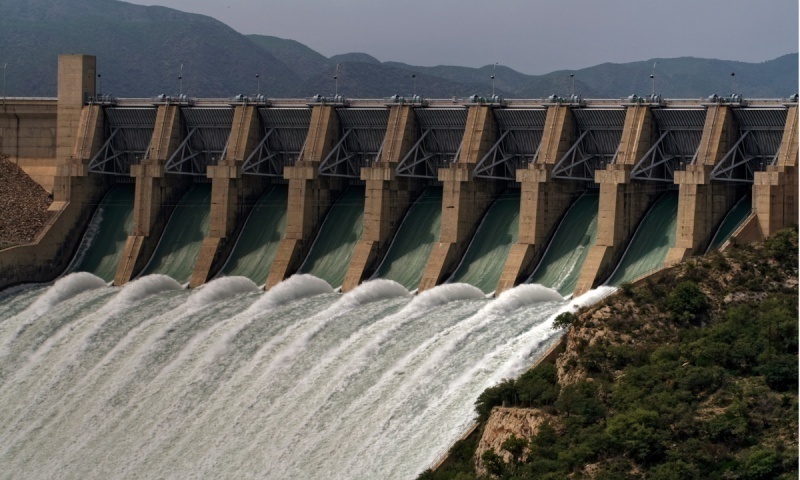
IRSA releases 85,300 cusecs water

0
IRSA
ISLAMABAD, Dec 17 (APP):Indus River System Authority (IRSA) on Sunday released 85,300 cusecs water from various rim stations with inflow of 37,700 cusecs.
According to the data released by IRSA, water level in River Indus at Tarbela Dam was 1478.85 feet and was 78.85 feet higher than its dead level of 1,398 feet. Water inflow and outflow in the dam was recorded as 19,900 cusecs and 45,000 cusecs respectively.
The water level in River Jhelum at Mangla Dam was 1161.40 feet, which was 111.40 feet higher than its dead level of 1,050 feet. The inflow and outflow of water was recorded 4,800 cusecs and 26,000 cusecs respectively.
The release of water at Kalabagh, Taunsa , Guddu and Sukkur was recorded as 61,800, 32,900, 28,000 and 1,800 cusecs respectively.
Similarly, from River Kabul, a total of 7,100 cusecs of water released at Nowshera and 2,000 cusecs released from River Chenab at Marala.

Dry weather likely to persist in city

0
BAHAWALPUR, Dec 17 (APP):The local Met Office Sunday predicted a dry weather for city for the next 24 hours.
The maximum and minimum temperatures recorded were 21degrees centigrade and the 08 degrees centigrade during last 24 hours.
Dry weather has also been forecast for rest of the region.

No permanent peace in S. Asia without Kashmir solution: report

0
Kashmir

ISLAMABAD, Dec 17 (APP): There can be no permanent peace in South Asia without settlement of the lingering Kashmir dispute in accordance with the United Nations resolutions and aspirations of the Kashmiri people.

A report released by Kashmir Media Service on Sunday, said regional peace is hinged on settlement of the Kashmir dispute but India has been impeding the way for just solution of the dispute for the last over seven decades.

It said Kashmir dispute is a reality and its disputed nature is recognized by the United Nation, adding the Modi regime cannot suppress the Kashmiris’ struggle to secure their inalienable right to self-determination.

The report said the Modi regime’s brutal actions in Kashmir are posing a grave threat to regional peace and stability and the Kashmiris have the right to seek the resolution of the Kashmir dispute as per their wishes and aspirations.

India must remember that its policy of repression is bound to fail in occupied Jammu and Kashmir, it said, urging the United Nations to play its rightful role to help resolve the long-pending Kashmir dispute as per its resolutions.

The report said the world community has a responsibility towards helping resolve the Kashmir dispute for durable peace in South Asia and India must be asked to fulfill its pledges made before the UN to settle the Kashmir dispute.

Punjab, Jiangxi Universities ink collaboration agreements on Chinese language education

0
pak china
BEIJING, Dec 17 (APP): Punjab University, Pakistan, and Jiangxi University of Science and Technology (JXUST), China, signed the Implementation Agreement of the Council of Confucius Institute at Punjab University and the Agreement on Program for Undergraduate Students Majoring in International Chinese Language Education.
According to the program agreement, “The course will be completed in four years. The first two years will be studied at the Confucius Institute at Punjab University, and after meeting the requirements of the mid-term assessment, the last two years will be completed at JXUST,” local media reported.
Eligible students can apply for the International Chinese Language Teacher Scholarship from the Center for Language Education and Cooperation of the Ministry of Education.
Over the past eight years, the two universities have maintained extensive and in-depth cooperation.
The two sides also discussed expanding exchanges and cooperation in such areas as faculty and student exchanges, joint scientific research, cooperative education, and people-to-people exchanges.
The two sides hoped to enhance cooperation and exchanges on an existing basis and further promote the construction of the Confucius Institute at Punjab University and the launch of new projects.

Actor Kamal Ahmed Rizvi remembered on his 8th death anniversary

0
Actor Kamal Ahmed Rizvi

ISLAMABAD, Dec 17 (APP): The eighth death anniversary of a renowned PTV, theater and playwright actor Kamal Ahmed Rizvi is being observed on Sunday.

Born on this day in 1930 in the Indian state of Bihar, Kamal Ahmed Rizvi’s legacy transcends borders and his contributions continue to resonate in the hearts of fans. His family migrated to Karachi after the creation of Pakistan in 1947.

Kamal Ahmed Rizvi, celebrated for his multifaceted talents as a director, actor, translator and playwright, rose to prominence through his iconic portrayal of ‘Alif Noon’ in the Pakistan Television (PTV) drama series.

His journey in the performing arts began in 1958, with an early focus on theater, eventually leading to his pivotal role in establishing the Lahore Studio of PTV in 1965.

The groundbreaking ‘Alif Noon’ series, where Rizvi played the unforgettable character ‘Allan,’ became a cultural phenomenon from 1965 to 1986. Audiences eagerly awaited each episode and the show’s impact was palpable, with streets seemingly deserted during its broadcast.

In addition to ‘Alif Noon,’ Rizvi lent his talent to numerous other TV and theater productions, including ‘Mr. Shaitan,’ ‘Adhi Baat,’ ‘Balaqi Badzat,’ ‘Badshahat Ka Khatima,’ ‘Julius Caesar,’ ‘Khoya Hua Aadmi,’ ‘Khwabon Ke Musafir,’ ‘Sahib Bi Bi Ghulam,’ ‘Chor Machaye Shor,’ ‘Hum Sab Pagal Hain,’ and ‘Aap Ka Mukhlis.’

Beyond his acting prowess, Kamal Ahmed Rizvi contributed significantly to literature as the editor of esteemed literary digests such as ‘Tehzeeb,’ ‘Aaina,’ and ‘Shama.’ He authored literature for children and took charge of the publications ‘Bachon Ki Duniya’ and ‘Taleem-o-Tarbiyat.’ Rizvi even launched a monthly magazine called ‘Phoolwari.’

His engagement with BBC Urdu Service added an international dimension to his illustrious career.

After a valiant battle with a prolonged illness, Kamal Ahmed Rizvi departed on December 17, 2015, leaving an indelible mark on the entertainment and literary landscape of Pakistan.

His final resting place is the ‘Gizri Graveyard’ in Karachi.

Pakistan strongly condemns terrorist attack at Rask Police HQ, Iran

0
MOFA

ISLAMABAD, Dec 17 (APP): Pakistan on Sunday strongly condemned the terrorist attack at Rask Police Headquarters in the Southeastern region of Iran, which killed 11 Iranian officials and injuring several others.

“Pakistan stands in full solidarity with the Government and brotherly people of Iran in this hour of unspeakable tragedy,” Foreign Office Spokesperson said in a press statement.

The spokesperson said that they extended heartfelt condolences to the families of the victims and prayed for the swift recovery of the injured.

Terrorism was a threat to regional as well as global peace and security and it needed to be confronted by all means including through bilateral and regional co-operation, it was added.

‘Illegal betting is number one factor fueling corruption in sports’, UN

0
UN

UNITED NATIONS, Dec 16 (APP): The global problem of illegal sports betting, the fraudulent manipulation of competitions, and the involvement of organized crime in the sporting world has been tackled at a UN conference in the US city of Atlanta.

The discussions at the international anti-corruption conference, convened in Atlanta by the UN Office on Drugs and Crime (UNODC), held between 11 and 15 December, built on the ground-breaking Global Report on Corruption in Sport, produced by the UNODC in 2021, which pointed to a dramatic increase in illegal betting, fueled by the billions of dollars flowing through professional sports, as well as globalization, and technological advances, according to a UN press release issued at UN Headquarters in New York.

UNODC, which is at the forefront of international efforts to support governments and sports organizations in preventing and punishing offences in sport through its Programme to Protect Sport from Corruption and Economic Crime, estimates that up to $1.7 trillion is wagered on illicit betting markets controlled by organized crime.

Speaking at a session on sport and corruption at the conference, James Porteous, Research Head of the Asian Racing Federation Council on Anti-Illegal Betting and Related Financial Crime, said that illegal betting is now the “number one factor fuelling corruption in sports,” and pointed out that many of the regulations were drafted in the 19th century and are not fit for the internet world.

Humaid Al Ameemi, Coordinator of the Anti-Corruption Unit of INTERPOL (the International Criminal Police Organization, an intergovernmental body), explained that manipulation of sporting competitions, colloquially known as match-fixing, is a highly organized crime involving money laundering and other illegal activities, and called for improved data sharing.

Al Ameemi described the manipulation of competitions as a “gateway to crime”: Joseph Gillespie, Chief of the Transnational Organized Crime Threats Unit at the FBI (the USA’s Federal Bureau of Investigation), expanded on the theme, emphasizing that the Bureau has a keen interest in addressing corruption in sport, as it provides organized crime with opportunities to make profit through extortion, illegal betting, and other unlawful activities.

INTERPOL, UNODC and the International Olympic Committee (IOC) have collaborated on a guide for policymakers, to help them to address, and effectively investigate competition manipulation.

Anita DeFrantz, a member of the IOC and a medal winner at the 1976 Games in Montreal, underlined the importance of strong collaboration between sporting organizations and law enforcement agencies in ensuring integrity and credibility, and highlighted the role of the International Partnership Against Corruption in Sport (IPACS), which includes international sports organizations, governments, and inter-governmental bodies including UNODC.

As the world’s most popular sport, awash with huge sums of money, football is particularly prone to corruption. Even the sport’s world governing body, FIFA, has faced criminal accusations and scandals, most notably in 2015, when several FIFA officials were arrested at a prominent Swiss hotel.

Following the investigation by the US Department of Justice into corruption in FIFA in 2016, the international community’s attention on corruption and crime in sports has increased significantly, along with calls to act.

The current FIFA President, Gianni Infantino, delivered a video message to the conference, in which he said that protecting football from corruption and ensuring sporting justice is the most important topic for the organization.

“Football is a multi-billion dollar global industry which makes it a potential target for corruption and other kinds of criminal activity and that is something that we should avoid and combat to ensure that the playing field is always level,” said Mr. Infantino.

A renewed Memorandum of Understanding between FIFA and UNODC has, he said, been beneficial in developing over 60 projects linked to anti-corruption, notably the Global Integrity Programme addressing match-fixing, “a platform that facilitates important information exchange between all those combating corruption in all walks of life.”

In the wake of the Programme, which involved training over 400 Football Integrity Officers and government officials and tackling competition manipulation, UNODC took part in the Qatar FIFA World Cup Integrity Task Force, to monitor 64 matches for match manipulation (no threats were flagged to the Task Force).

Jawad advocates Pakistani workforce during ministerial roundtable of GLMC

0
Jawad Sohrab

ISLAMABAD, Dec 16 (APP): In a historic moment, Special Assistant to Prime Minister (SAPM) on Overseas Pakistanis and Human Resource Development, Jawad Sohrab Malik, represented the voice of the Government of Pakistan at the world’s first Global
Labour Market Conference (GLMC) hosted at the King Abdul Aziz International Convention Centre in Riyadh by the Ministry of Human Resources and Social Development Saudi Arabia.

Jawad Sohrab Malik was warmly received and hosted by Saudi Minister of Human Resources and Social Development, Ahmad bin Sulaiman Al-Rajhi, throughout GLMC which was attended by over 6,000 participants and representatives from 40 countries, received a press release here Saturday.

Addressing labour ministers from 26 countries during the ministerial roundtable conference, SAPM Jawad Sohrab Malik stressed that Pakistan possesses a vast pool of unskilled, semi-skilled, and highly skilled labour ready to meet the demands and requirements of the global job market.

He underscored the importance for both the participants of the ministerial roundtable conference and foreign employers to recognize the mutual benefits of engaging the highly competitive Pakistani workforce for employment.

SAPM also unveiled strategies aimed at preparing the Pakistani workforce for the future. These strategies encompass the revitalization of STEM education, enhancement of digital literacy, and the establishment of public-private partnerships for practical tech exposure. The overarching goal is to enhance labour market productivity through regulatory reforms, increased labour mobility, and a delicate balance between automation and job preservation.

Additionally, Malik proposed comprehensive social protection measures, including unemployment insurance, healthcare, pensions, career support, and family-oriented services, all geared towards fostering a technologically proficient workforce ready to meet global labour market demands.

Jawad Sohrab Malik reaffirmed his nation’s commitment to developing skilled workers and fostering international partnerships in the labour sector. As a key exporter of manpower, particularly to Saudi Arabia, SAPM served as a crucial bridge between nations, highlighting the Pakistani government’s priority of equipping its workforce with the skills demanded by the evolving global labour market.

During the GLMC, Jawad Sohrab Malik actively participated in key sessions featuring knowledge-sharing plenary sessions and focused breakout discussions with speakers from around the globe. These sessions covered diverse themes, from navigating automation to promoting diversity and inclusion in the workplace.

In discussions with reporters, SAPM praised Saudi Arabia for leading efforts to improve international job markets to adapt to constant changes. He highlighted the evolving nature of today’s job market, emphasizing the need for new skills for future jobs and the emergence of new professions.

On the sidelines of GLMC, SAPM Jawad Sohrab Malik is scheduled to hold separate meetings with labour ministers from United Arab Emirates, Greece, and Oman to discuss employment opportunities for the Pakistani workforce and matters of mutual interest. Meetings are also planned with Ambassador Paula Narvez, President ECOSOC and Permanent Representative of Chile to the United Nations, and H.E Gilbert Houngbo, Director-General of ILO.

The Global Labor Market Conference (GLMC) serves as a vital platform for experts, specialists, and labor market stakeholders to engage in discussions about current and future international market challenges, propose innovative solutions. Launched in Riyadh by the Ministry of Human Resources and Social Development of the Kingdom of Saudi Arabia, GLMC attracted participation from prominent entities, including Takamol, Ministry of Human Resources and Social Development, Human Resources Development Fund, Riyadh Air, NEOM, Riyadh Airports Company, Saudi Investment Bank, National Council for Safety and Health, BAE Systems Saudi Arabia, Oracle, Authority for the Care of Persons with Disabilities, Mudad, Al-Rajhi Bank, Bank Albilad, Riyad Bank, and many others.

Jawad Sohrabq Malik’s dynamic presence at GLMC underlines Pakistan’s commitment to developing skilled workers and forging strategic partnerships in the global labour sector. His active engagement throughout the conference resonates as a powerful testament to Pakistan’s proactive role in shaping the future of work.