Home Blog Page 11088

Naila summits Makalu to become first Pak woman to ascend 11 8,000m peaks

0

ISLAMABAD, May 05 (APP): Pakistan’s Naila Kiani has achieved another historic milestone when on Sunday she successfully summitted Makalu, the 5th highest peak in the world at 8,485 meters.

According to information received here,  Naila ascended the peak at approximately 8:50 am Pakistan time.

This remarkable feat also makes her the first Pakistani woman to have summited this incredibly difficult mountain.

Naila in a statement thanked all the nation for the prayers and good wishes. She also thanked Sherpa Gelgen Dai from Imagine Nepal, who supported her every step of the way, making the achievement possible.

This latest success highlights Naila’s exceptional endurance and determination.

Naila is a remarkable Pakistani woman, known for her achievements as a high-altitude mountaineer. She holds the distinction of being the first Pakistani woman to climb eleven of the world’s highest peaks, all of which are above 8,000 meters. Notably, she achieved this feat in less than six months, making her one of only ten mountaineers worldwide and the sole Pakistani to have climbed multiple peaks (seven) over 8,000 meters in such a short timeframe. Additionally, Kiani holds the record as the fastest years.

Beyond her mountaineering prowess, Kiani has excelled in various fields. She is an aerospace engineer, having studied at the University of London, and has held a prominent position as an Associate Vice President at HSBC bank. She is also a competitive boxer and a dedicated mother of two toddlers. Despite her busy life, she continues to push boundaries by scaling some of the world’s most challenging peaks.

Kiani is a role model and a goodwill ambassador for several organizations supporting women’s education and youth empowerment through sports. Her contributions to mountaineering and her commitment to social causes have been recognized by the government of Pakistan, which awarded her the Sitara-i-Imtiaz, the highest civilian honour for a female athlete in the country.

Deputy PM, Turkish FM discuss bilateral ties between two countries

0

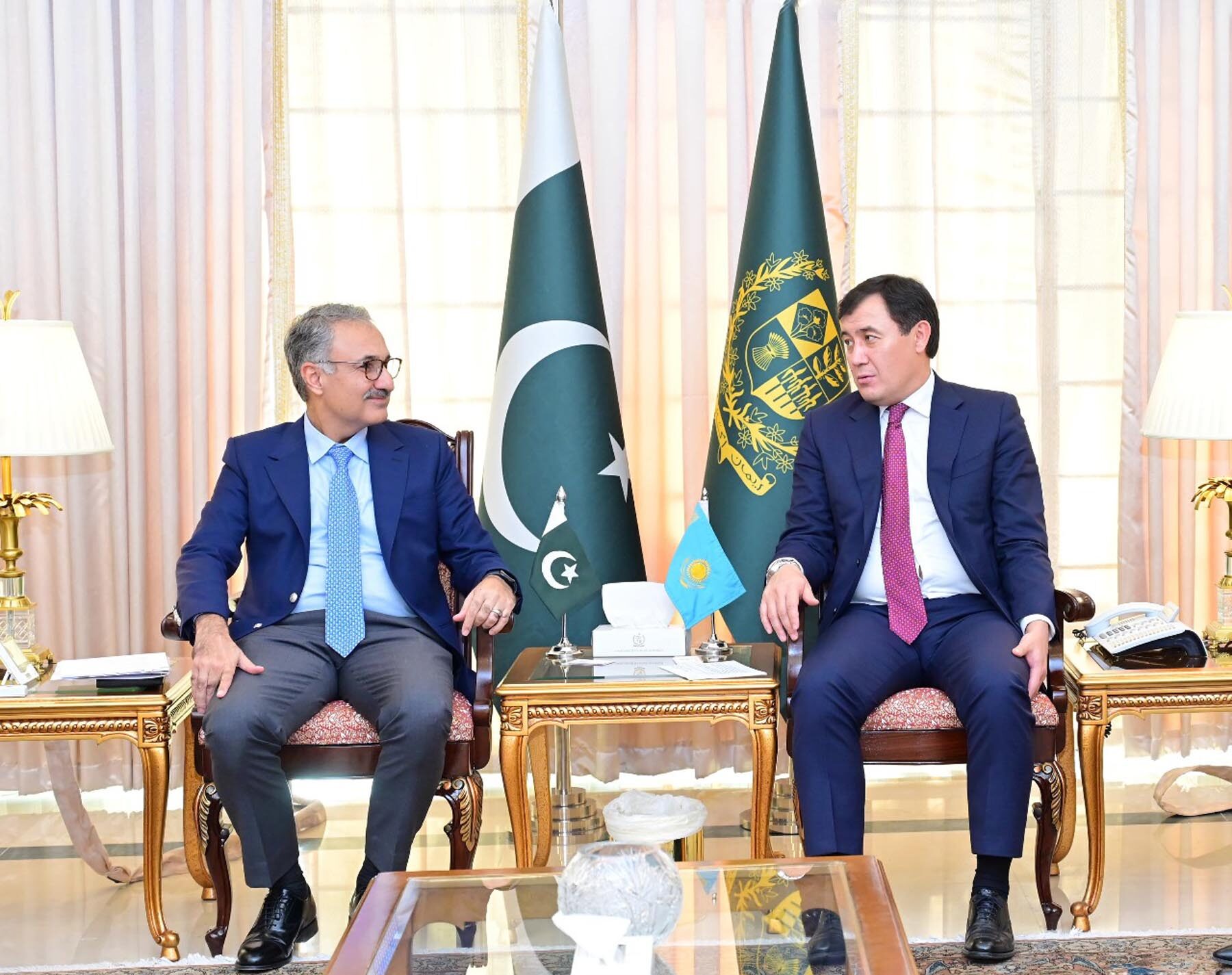
ISLAMABAD, May 05 (APP): Deputy Prime Minister and Foreign Minister Senator Mohammad Ishaq Dar and Turkish Foreign Minister Hakan Fidan on Sunday reviewed the state of bilateral relations and emphasized the exceptional bilateral relations and the strong bonds of friendship between Pakistan and Turkiye.

The two leaders met on the sidelines of the 15th OIC Islamic Summit Conference in Banjul, The Gambia, Foreign Office Spokesperson said in a press release.

“Expressing satisfaction with the positive momentum in bilateral relations, they reiterated their resolve to further deepen bilateral cooperation, with a particular focus on economic, trade, and defence sectors,” it was added.

Ambassador Amna presides over a poetry recital event in Brussels, emphasizes upon cultural exchangesAmbassador Amna presides over a poetry recital event in Brussels, emphasizes upon cultural exchanges

0
ISLAMABAD, May 05 (APP):Ambassador of Pakistan to the European Union, Belgium, and Luxembourg, Amna Baloch has presided over a captivating poetry recital event in Brussels.
The event organized by the Pakistan Press Club Belgium, was held to commemorate the second death anniversary of the late Pakistani veteran journalist Khalid Hameed Farooqi.
Ambassador Amna Baloch commended the initiative, emphasizing the importance of cultural exchanges and expressing her hope for more such events in the future.
The poetry recital served as a beautiful tribute to the memory of Khalid Hameed Farooqi, celebrating the rich literary heritage shared between Pakistan and Europe.
The event, known as Mehfil-e-Mushaira, drew poets from Belgium, Germany, and various parts of Europe, who showcased their talent in Urdu and Punjabi poetry, a press release said on Sunday.

Deputy PM Dar, Bayramov resolve to further deepen Pak-Azerbaijan cooperation

0

ISLAMABAD, May 05 (APP): Deputy Prime Minister and Foreign Minister Senator Mohammad Ishaq Dar and Foreign Minister of Republic of Azerbaijan Jeyhun Bayramov on Sunday exchanged views on bilateral relations and resolved to further deepen bilateral cooperation in diverse fields including trade, connectivity, energy and people-to-people contacts.

In a bilateral meeting on the sidelines of the 15th OIC Islamic Summit Conference in Banjul, the Gambia, the two sides also noted the importance of deepening dialogue and engagement, especially at the political level, Foreign Office Spokesperson said in a press release.

Deputy Prime Minister Dar congratulated Azerbaijan on winning the bid to host COP 29 in the city of Baku in November 2024 and expressed Pakistan’s interest in enhanced cooperation and experience sharing in combating climate change.

He also appreciated Azerbaijan’s firm and principled position on the just cause of the people of Indian Illegally Occupied Jammu and Kashmir (IIOJ&K).

PM felicitates Sadiq Khan on his re-election as Mayor of London

0

ISLAMABAD, May 05 (APP): Prime Minister Muhammad Shehbaz Sharif on Sunday congratulated Sadiq Khan on his election as Mayor of London for the third consecutive term.

The prime minister offered his heartiest felicitation to the newly elected Mayor Sadiq Khan ‘on his hat trick’, PM Office Media Wing said in a press release.

As a hard-working British Pakistani, he not only raised the head of his parents high but also made every Pakistani to rejoice his victory with pride, he further observed.

The prime minister further said that his re-election for the third term also indicated his popularity and his devotion to public welfare.

He also expressed his best wishes for the future success of Sadiq Khan.

Revamping health sector, a gigantic task ahead

0

FAISALABAD, May 5 (APP): As most of state run organizations witnessed deterioration in recent years, health sector was also one of the poorly performing sectors especially in remote and rural areas.
Dutifulness, punctuality, availability of equipment and medicines as well as the administrative structure needed overall revamping as people pin great hopes from the newly sworn in government of Pakistan Muslim League-Nawaz.
Although the PTI government led by Imran Khan had carried out the legacy of past PML-N government on introducing health cards, yet its un-prudent usage not only exerted extra burden on national kitty but also made way for private hospitals to earn money massively.
As billions of rupees were going to private hospitals, a skeletal budget was allocated for public sector health institutions that left in miserable condition with sagas of poor treatment and non-availability of facilities roaming all around.
“What I experienced during ailment of grandson is painful. I had to run from pillar to post in pain and agony to get the child treated. But, even after relentless efforts, we could not save him,” remarked Rana Munawar Khan, a Faisalabad based social activist.
He narrated that his 8-year-old grandson was admitted to Children Hospital due to high fever. After a few days doctors told that the patient was in critical condition and needed a ventilator. “And I was astonished when the doctors told there was no ventilator at the Children Hospital and asked to shift him to another hospital.”
“So we approached Allied Hospital and after much effort we secured a slot on an overloaded ventilator where already two patients were under treatment,” he said. “But another painful situation awaited us when we started searching doctor’s prescribed injections.”
“We could not get injections full doze at any of nearby private medical stores. Only five injections out of 20 could be managed at hospital’s store. But amidst all this hassle the child expired,” he said.
“I understand that death is a reality and everybody going to a hospital is not bound to recover. But, my contention is proper treatment and facilities at our health centers,” he added.
Now, when important facilities like Allied Hospital-I lacked medicines and proper facilities, how taxing the task of revamping healthcare system could be. Despite that Pakistan was already facing multiple healthcare issues, the previous government could not erect even a single facility during its four years tenure.
According to the World Health Organization, Pakistan was badly hit by hypertension, cardiac, diabetic, hepatitis and gastroenteritis diseases and its healthcare infrastructure and overloaded hospitals were seemingly inadequate to cope with this situation. Severe financial crunch is another hindrance on way to providing health facilities at masses doorstep.
“Our government hospitals are over loaded. Per capita hospitals availability figure is alarming supplemented by dearth of resources and experts,” remarked health specialist, Dr. Anas Khan. “Although the governments try to improve this system, yet lack of finances hampers their efforts.”
He said when staff and medicines are not available at rural healthcare centers, even patients suffering from minor diseases had to approach the city hospitals that enhances load at these facilities.
“Therefore, we need to make fully vibrant, our primary, secondary and tertiary healthcare system by providing professionals, basic treatment and testing facilities,” he urged.
The available data shows 333 BHUs, 238 Dispensaries, 37 RHCs, 14 THQ, 5 DHQ and 6 Teaching Hospitals in Faisalabad division and the number of patients visiting in emergency was increasing at 27.34% at DHQ, 47.31% at THQ and 6.14% at Teaching Hospitals annually. Therefore, revival of BHUs and RHCs can also help a lot to reduce load on main facilities.
“The provincial government and health department are fully cognizant of this situation and taking all possible steps to better health facilities,” stated a spokesman of the health department.
“The government has initiated revamping of hospitals and this project was being completed on war-footing,” he said. “In the next phase, the treatment facilities would be enhanced by adding new machinery and equipment in addition to expanding capacity of hospitals, dispensaries, RHCs and BHUs.”
The challenges of healthcare system direly need actionable strategies for collaborative transformation and removing infrastructure discrepancies between urban and rural areas to divide patients load and ensure better healthcare.
“We need a holistic approach to reform this sector by ensuring ample funding, infrastructure development and adequate trained workforce,” recommended Dr. Sumera Riaz, Associate Professor Community Medicine at The University of Faisalabad (TUF).
“Technological gap is another problem due to uneven integration of digital health solutions that hampers advancement in telemedicine, electronic health records and data analytics,” she said. “Then we also need massive awareness campaigns on better health initiatives and effective regulatory frameworks for quality assurance.”
She proposed public private collaboration for resource mobilization, enhance service delivery and broaden coverage besides partnerships with global health organizations and donor agencies for funding, technical expertise and best practices in healthcare management.
Since the challenge is enormous, a collective and coordinated approach was imperative to transform and strengthen our healthcare. We can forge a resilient and responsive healthcare ecosystem by enhancing financial sustainability, managing infrastructure gaps, improving regulatory system and raising awareness on importance of healthcare.

APP/iah/maz (APP Feature Service)

Land degradation: A threat to food security

0

By Fakhar-e-Alam

PESHAWAR, May 5 (APP): As the sunrays bath village Mohib Banda in Nowshera district, Hussain Ali (28) – a poor farmer starts his tractor to level his farmland after it turned bumpy by the recent heavy torrential rains and flash floods in River Kabul.
Awakened early in the morning, Hussain after checking diesel in a tractor moved towards his agriculture fields that were rendered uncultivable by the gushing water in River Kabul and became busy in its leveling.
“First the 2010 and 2022 devastative floods generated from Swat, Dir and Chitral in River Kabul, had swallowed my two acre lands and now the recent flash flood made my five acres land unproductive,” said Hussain with sobbing eyes, fearing of less wheat production this year after his crop was inundated by the flood water.
“Land degradation and desertification mostly caused by climate change-weather patterns emerged as big challenge before regional countries including Pakistan and it was the collective duty of developed countries to financially support countries which are highly susceptible to the climate change and desertification,” said Diyar Khan, project director, billion trees project while talking to APP.
Declaring land degradation is a growing threat to food security to regional countries including Pakistan, he said that every year it make around six million hectares land unproductive and cause about USD 42 billion economic losses globally that may lead to starvation and hunger due to water scarcity in next few decades if not controlled properly.
The United Nations Convention to Combat Desertification (UNCCD) report revealed that more than 3.2 billion people, or two in every five, are affected by land degradation and desertification and up to 143 million could move within their countries by 2050 to escape water scarcity and falling crop productivity mainly caused by climate change.
Also, UN Intergovernmental Panel on Climate Change (IPCC) disclosed that the planet would reach a 1.5C increase in temperatures by 2030, leading to extreme drought, food shortage and floods.
Diyar Khan said about 45 percent of food consumed globally comes from the world’s drylands and falling of agriculture productivity, food shortages and water scarcity in South Asia were likely to create food insecurity and warned that about 20 percent more productive land were likely to be degraded in South Asia in next few decades if desertification and floods were not controlled.
Professor Dr Muhammad Nafees of Environmental Sciences Department, University of Peshawar said that Pakistan was among 110 countries in the world where about two-third of agricultural land and around 80 percent of arid and semi-arid lands affected by land-degradation, desertification and drought.
He said Pakistan’s population was increasing with over two percent growth rate that started exerting pressure on agriculture, houses and other socioeconomic sectors. He feared that thte country might face food’s insecurity challenges in next few decades if the existing population was not controlled and climate change issue was not addressed.
The Sustainable Land Management Program (SLMP-Phase II), a project of Ministry of Climate Change revealed that around 1.5 to 2.5 million hectares of irrigated land, 3.5 to 4 million hectares of rain-fed agricultural, and 35 million hectares of rangelands were either becoming barren or non-productive due to desertification, land degradation and drought per year.
The underground water resources in the western dry mountains of Sindh and Balochistan are shrinking due to heavy exploitation of aquifer without any natural recharge besides excessive car washing pumping.
Dr Nafees said the lowing laying areas in Balochistan, Sindh, Khyber Pakhtunkhwa and Punjab located directly on banks of rivers were facing increased problems of land degradation due to climate change impacts, floods, improper land use practices, over-grazing, deforestation and excessive removal of vegetation for fuel.
He said damages of land degradation and desertification could be seen in Swabi, Mardan and Nowshera districts on Peshawar-Islamabad Motorway and Kohat, Karak, Lakki Marwat and DI Khan districts on Indus Highway where trees were uprooted.
“The unlawful cuttings of forests by local communities for domestic consumption, timber mafia and conversion of agriculture land into residential colonies have aggravated the problem of desertification and land degradation in KP,” he added.
He said the rate of deforestation in national level was about 27,000 hectare per year especially in community owned natural forests of KP and Gilgit-Baltistan resulting an increase in dry-land areas and conversion of agricultural lands into deserts.
To combat desertification, land degradation and drought, the federal government has launched SLMP Phase-I in nine dry-land districts of Pakistan where over 12,000 hectares of degraded rangeland were rehabilitated though reseeding and community based restoration of the grazing management system.
Similarly, around 8,000 hectares of additional land were brought under sustainable rain-fed agriculture and water conservation measures. Following successful implementation of SLMP Phase-I, the project was later extended to 14 desertification prone districts under SLMP Phase-II in 2015 to protect the fertile land from being converted into deserts.
The project was implemented in high desertification and land degradation prone areas of Chakwal, Bhakkar, Khushab, Layyah in Punjab, Tharparkar, Omarkot, Sanghar in Sindh, DI Khan, Lakki Marwat in KP, Pashin, Kila Saifullah, Mastung, Katch and Lasbella in Balochistan.
Project Director, billion trees project said to counter land degradation, desertification and drought on basis of scientific management, KP’s first Range Management Policy “REDD+” (Reducing Emissions from Deforestation and Degradation) strategy and Green Growth Initiative (GGI) was implemented, which are showing tangible results.
APP/fam/taj (APP Feature Service)

Concerted efforts urged to ease traffic flow on city roads

0

By Wasif Chaudhary

RAWALPINDI, May 5 (APP): Mounting population pressure in Rawalpindi, one of the busiest cities in country had resulted in unprecedented increase in vehicles number with the city dwellers experiencing frequent traffic jams in old city and busy commercial areas.
Mass movement of populace from other cities to Rawalpindi and its unusual expansion had overburdened the existing roads infrastructure with main arteries accommodating millions of vehicles daily.
Subsequently the phenomenon resulted in frequent traffic snarls irking commuters who undergo long waits and bear extra fuel expenses with experts seeing multiple factors contributing to this dilemma.
This trend is not unique to Rawalpindi, as many world cities experience similar situation in the growth and development process. But, their sensible population and efficient traffic managers reduce this severity to ease out masses.
“No doubt that vehicle number increased massively resulting traffic jams on busy roads. But, we do our bit to facilitate commuters,” stated City Traffic Officer (CTO), Taimoor Khan. “Over 1,100 traffic wardens perform duties to maintain flow of traffic and penalize violators and encroachers.”
He mentioned to encroachments as the major cause of road mess at Raja Bazaar, Kohati Bazaar, Naz Cinema, College Road, Bara Market, Bohar Bazaar, Fowara Chowk, Bani Chowk, Circular Road, Jamia Masjid Road, Ganjmandi and some other areas.
“Marrir Chowk and Liaquat Bagh were previously the busiest spots on Murree Road. But, making it signal free had reduced the burden,” he stated. “Although Murree Road is now signal free from Faizabad to Saddar yet still Qasr-e-Shireen, Committee Chowk underpass, Chandni Chowk and Waris Khan were the troubling points.”
Unnecessary travelling during rush hours and violation of traffic laws is main reason behind such jams, he said. “We deal with them accordingly and issued them 11,419 fine tickets last month. The CTP also lodged 42 FIRs against violators and encroachers at various police stations.
“But, we should remember that it is a shared responsibility of different organs of district administration, commuters, vendors as well as traders to address this problem,” he added.
Amidst the claims of strict action against violators, the problem still exists due to multiple reasons like insufficient roads infrastructure, rising population, unchecked encroachment, increasing vehicles number and rampant violations.
Residents believe that providing alternate routes, implementing designated road lines mechanism and completing projects like Ring Road would surely address the traffic jam issue at main arteries and branch roads.
“We hope, the Rawalpindi Ring Road project would be helpful in mitigating traffic load on Peshawar Road and Sri Nagar Highway,” remarked a commuter Muhammad Altaf. “But, as the population and traffic load is continuously on rise, we also need to revamp Rawalpindi master plan on modern lines keeping in view these factors.”
Another commuter Muhammad Ashraf, a school teacher cited that inadequate public transportation system in Rawalpindi was also one of the reasons for traffic jams. “Limited availability of modern public transport was also resulting in rush on city roads. Therefore, we need more transport like Metro bus to reduce burden of private vehicles on busy roads.”
He also pleaded proper urban planning to avoid such congestion in urban areas as keeping up cities road infrastructure with the requirements of rising urban population could mitigate masses sufferings.
“Traffic congestion leads to increased travel times, reduce productivity and increase air pollution resulting in winter smog and multiple diseases to city dwellers,” he remarked.
The traders have also expressed distress on increasing traffic load and encroachments demanding from district administration to launch a grand operation against encroachers.
“Illegal parking of vehicles, rickshaws, motorbikes and even carts is rampant in different commercial areas of city creating massive traffic jams,” stated President, Central Anjuman-e-Tajran, Shahid Ghafoor Paracha. “Astonishingly, it happens in some areas unchecked and even traffic wardens seem helpless due to massive traffic load.”
He specifically mentioned to Moti bazaar, Raja bazaar, China market, Bara bazaar, Bani Market, Circular Road, Jhota Bazar and Tench Bhatta for illegal parking that makes even pedestrians movement difficult.
“We took up this issue with Deputy Commissioner Rawalpindi who assured to clear the city from encroachers. But, we still wait a result oriented action,” Shahid said.
Other shopkeepers like Waleed and Altaf in Waris Khan areas have urged construction of parking plazas in city markets and take strict action against violators and encroachers.
They have proposed to shift wholesale markets out of city and specify place for vendors who had blocked roads by placing tables, counters and hand carts in front of their shops.
Responding to the problem, a Commissioner Office spokesman said that administration was working on different projects to help ease traffic load on city roads.
He said in her recent visit, Punjab Chief Minister Maryam Nawaz, besides other measures, had also directed to complete Rawalpindi Ring Road by December.
“We are briskly moving forward to complying her orders. This project is important for easing transportation as industrial zones proposed on Ring Road would lessen traffic load in main city,” he added.
The spokesman hoped to complete the Ring Road project within the deadline and take multiple measures to mitigate masses problems in line with the policies of the Punjab government.

APP/mw/taj/maz (APP Feature Service)

Pb Govt seeks to simplify birth registration process

0
RAWALPINDI, May 05 (APP):Special Secretary Local Government Asiya Gul on Saturday chaired the first meeting of the Working Group on Child Registration and reviewed the challenges faced regarding child registration across Punjab.
According to the Focal Person Media LG&CD Punjab, Dr Abdullah Tabassum, the Punjab government was taking decisive action to ensure every child in the province is properly registered at birth.
He said that the new working group met for discussion how to achieve a 100% child registration rate, a crucial step in safeguarding children’s rights and providing them with essential services.
The group’s goal was to create a smooth and effective system that makes birth registration accessible to all citizens, he added.
Representatives from the Department of Primary and Secondary Health Care, the Education Department, UNICEF, and others will collaborate to overcome obstacles to child registration.
In addition, the Director General of Local Government has been asked to provide data on current birth registration rates at the next meeting.
By bringing these stakeholders together, Punjab government aimed at to streamline birth registration and improve online access for parents. This effort not only helps individual families but also strengthens the province’s ability to plan and provide public services.
DG Local Government, DG PITB, Sajid Latif, Deputy Director Nadra Rizwan Ali Bhatti, Director Operations Yasir Saeed, Representative National Commission of Children’s Rights, Deputy Secretary Regulations Local Government Arslan Ali, Deputy Director Community Development Shahzad Akram Representative DG Health and Section Officer Regulations Zohaib participated in the meeting.
The working group will meet regularly to monitor progress and address any issues that arise.

US moves military planes to Qatar after UAE bans use of a base for attacks: WSJ

0

NEW YORK, May 04 (APP): The United States is moving its fighter jets, unmanned aerial vehicles and other military aircraft to Qatar after United Arab Emirates (UAE) officials warned they would not allow Washington to use their territory for attacks in West Asia, according to The Wall Street Journal (WSJ).

Emirati officials informed the US in February that they would no longer allow US warplanes and drones based at Al Dhafra air base to carry out attacks in Yemen and Iraq without notifying them in advance, the newspaper said.

“Restrictions have been imposed on strike missions against targets in Iraq and Yemen,” a UAE official told WSJ. “These restrictions are based on self-protection.”

Al Dhafra air base is located approximately 32 kilometers south of the capital Abu Dhabi.

U.S. officials said the move prompted U.S. commanders to send the additional planes to Al Udeid as Qatar has not imposed similar restrictions.

A decision of this kind highlights the existing tensions between the US and the Persian Gulf countries, the WSJ report noted.

APP/ift