Home Blog Page 10943

Allied hospital’s surgical emergency opened after revamp

0
FAISALABAD, Feb 16 (APP):The Allied Hospital’s surgical emergency after revamping has been made functional for patient’s treatment.
The emergency block has been designed according to modern medical requirements and the patients will feel more comfortable from the environment of the emergency ward, said Sara Qamar, XEN Building Department here on Friday.
She said that remodeling of the OPD and Dental Section was also near to completion.
Medical Superintendent Dr Faheem Yousuf said that several measures were in the pipeline for provision of best treatment facilities to patients at the hospital.

Large industry grows 3.43 percent in December

0

ISLAMABAD, Feb 16 (APP):The production of Large Scale Manufacturing Industries (LSMI) increased by 3.43 percent on Year-on-Year (YoY) basis during the month of December 2023 compared to the output of the same month of last year, Pakistan Bureau of Statistics (PBS) reported.

On Month-on-Month (MoM) basis, the large industry grew by 15.69 percent in December 2023 compared to November 2023, PBS reported.

However, the industry witnessed negative growth of 0.39 percent during the first half of the current fiscal year as compared to the corresponding period of last year.

The provisional quantum indices of Large Scale Manufacturing Industries (LSMI) for October 2023 with the base year 2015-16 have been developed based on the latest data supplied by the source agencies.

The main contributors towards overall growth of -0.39% during July-December 2023-24 included, food (0.76), tobacco (-0.73), textile (-2.05) garments (2.26), paper & board (-0.12), petroleum products (0.55), chemicals (0.30), pharmaceuticals (1.43), cement (0.12), iron and steel products (-0.07), electrical equipment (-0.38) ,automobiles (-1.70) and furniture (-1.05).

Large industry grows 3.43 percent in December

The production in July-December 2023-24 as compared to July-December 2022-23 has increased in food, beverages, wearing apparel, coke and petroleum products, chemicals, fertilizers, pharmaceuticals, non metallic mineral products, machinery and equipment and other manufacturing (football) while it decreased in tobacco, textile, iron and steel products, electrical equipment, automobiles, other transport equipment and furniture.


Gold rates up by Rs.1,300 to Rs.212,400 per tola

0

ISLAMABAD, Feb 16 (APP): The per tola price of 24 karat gold increased by Rs.1,300 and was sold at Rs.212,400 in the local market on Friday against its sale at Rs.211,100 on last trading day.

The price of 10 grams of 24 karat also increased by Rs.1,115 to Rs.182,099 from Rs 180,984 whereas that of 10 gram 22 karat gold went up to Rs.166,924 from Rs. 165,902, the All Sindh Sarafa Jewellers Association reported.

The price of per tola and ten gram silver remained unchanged at Rs2,580 and Rs.2,211.93 respectively.

The price of gold in the international market increased by $12 to $2,025 against its sale at $2,013 the previous day, the Association reported.

KP Govt decides establishment of EZs in tribal districts

0
PESHAWAR, Feb 16 (APP):Caretaker KP Minister for Industries, Commerce, Technical Education and Newly Merged Districts Affairs, Dr Syed Amer Abdullah has directed the establishment of economic zones at tribal districts Kurram and South Waziristan and initiated work on all necessary processes in this regard.
He issued these directives while presiding over a meeting regarding the establishment of economic zones in the newly merged districts of the erstwhile Federally Administered Tribal Area (FATA) here at Civil Secretary, said an official press release issued here on Friday.
Besides, Special Secretary Industries and Commerce, Mohammad Anwar Khan, Chief Executive Officer (CEO), Khyber Pakhtunkhwa Economic Zones Development and Management Company (KP-EZDMC), Javed Iqbal Khattak and Manager Business Facilitation Centre (Board of Investment & Trade), Iqbal Sarwar, representatives of HA Consultant and other concerned authorities attended the meeting.
The meeting reviewed different aspects of the selected suitable sites for the establishment of economic zones.
The participants of the meeting were given a meticulous briefing on the feasibilities prepared by the consultants for the establishment of new economic zones in the newly merged districts and shared sketches, possibilities and utilities of the establishment of new zones.
Keeping in view various priorities, the meeting agreed on the establishment of two zones in two districts and decided that new zones should be established in such areas where there is no industrial estate of the Small Industries Development Board (SIDB) or no economic zone of the economic zones development company to provide maximum benefits to the local population of the area.

Kerb currency market

0
KARACHI, Feb 16 (APP):Following were the Opening Rates of foreign currencies in kerb market issued by the Exchange Companies Association
of Pakistan, here on Friday.
F.C.                                               BUYING        SELLING
INTER BANK                                  279.25         279.30
USD                                                279.25         282.05
EURO                                            299.50         302.50
GBP                                                350.20          353.70
JPY                                                 1.84          1.92
AED                                                76.05          76.80
SAR                                                  74.25             75.00
CAD                                              205.50         208.00
AUD                                          180.00        182.50

Pakistan rejects a UNSC reform proposal seeking increase in permanent, non-permanent seats

0

ISLAMABAD, Feb 16 (APP): Pakistan has reaffirmed its opposition to adding new permanent members on the UN Security Council, stressing that any increase in permanent seats will compound the 15-member body’s paralysis, and prevent the majority of small and medium-sized states from serving on it.

“The expansion of the Security Council should promote ‘equitable representation’ not create new historic injustice, ”Ambassador Munir Akram told delegates at the deadlocked Inter-Governmental Negotiations (IGN) aimed at reforming the Council on Thursday,

The Pakistani envoy was participating in a discussion on a proposal — called “L69 Model” — from a group of Asian, African, Latin American, the Caribbean, and the Pacific Island states is aimed at restructuring the Council.

The group argues for an expansion of the Council, in both permanent (6 additional seats, bringing the total to 11) and non-permanent (5 additional seats, bringing the total to 15) categories of membership, with equitable geographical representation. The group introduced a document, L69, in 2007–2008 that served as the impetus for the IGN process.

“Our fundamental problem with the L.69 model is the proposed expansion of permanent seats,” Ambassador Akram said, underlining that permanent membership is the reason for the bouts of paralysis is in the Security Council.

“The problem cannot be the solution,” the Pakistani envoy added.

Full-scale negotiations to reform the Security Council began in the General Assembly in February 2009 on five key areas — the categories of membership, the question of veto, regional representation, size of an enlarged Security Council, and working methods of the council and its relationship with the General Assembly.

Despite a general agreement on enlarging the Council, as part of the UN reform process, member states remain divided over the details, as diplomats representing various groups push for their respective proposals.

India, Brazil, Germany and Japan — known as the Group of Four — are campaigning for permanent seats as they seek expansion of the Council by 10 seats, with six additional permanent and four non-permanent members.

On the other hand, the Italy/Pakistan-led Uniting for Consensus (UfC) group has proposed a new category of members — not permanent members — with longer duration in terms and a possibility to get re-elected.

On the other hand, the Italy/Pakistan-led Uniting for Consensus (UfC) group, which firmly opposes additional permanent members, has proposed a new category of members — not permanent members — with a longer duration in terms and a possibility to get re-elected.

The Security Council is currently composed of five permanent members — Britain, China, France, Russia and the United States — and 10 non-permanent members elected to serve for two years.

In opposing “L69 Model” which, among other elements, seeks more permanent members on the Council, Ambassador Akram suggested that any country seeking a more frequent presence on the UNSC should do so through the democratic process of periodic election by the General Assembly.

“The model would create more permanent seats (accommodating 6 States) but create only 5 non-permanent seats to be available to the 182 remaining countries not included among the 11 old and new ‘permanent’ members,” he noted.

Noting that one of the elements in the L69 model seeks removal of items from the UNSC’s after a certain period of time, Ambassador Akram said that this could reward those states which manage to block formal discussions of those items.

Dry weather predicts across northern Sindh

0
SUKKUR, Feb 16 (APP):The Pakistan Meteorological Department (PMD) has predicted dry weather for Sukkur and its adjoining areas on Friday evening/night and the next two days.
Under these conditions, dry weather is expected across the northern Sindh on Saturday and Sunday.
Sukkur’s minimum temperatures will likely remain between 24-30 C on Saturday and Sunday.

Seminar on ‘Intricacies of vegetable seed production’ held:

0
SARGODHA, Feb 16 (APP):The Department of Plant Breeding and Genetics at College of Agriculture University of Sargodha organized a seminar focusing on the intricacies of vegetable seed production.
According to a press release issued by UoS here on Friday, the seminar provided a platform to experts, scholars, and a large number of students to delve into the challenges and prospects associated with the agriculture sector.
Dr. Amir Shakeel, Associate Professor PBG, University of Agriculture Faisalabad, emphasized the crucial role of innovation and technology in overcoming the challenges faced in vegetable seed production.
The issue of limited access to high-quality seeds was brought to the forefront.
The Chief Guest stressed the importance of investing in research and development to breed improved varieties that were resistant to pests, diseases and adverse environmental conditions
Dr. Khurram Zia, Associate Professor, Institute of Horticultural Sciences, University of Agriculture Faisalabad and Prof. Dr. Ijaz Rasool Noorka Chairman Department of Plant Breeding and Genetics also spoke on the occasion.
Later,Prof. Dr. Zafar Hayyat, Principal college of Agriculture presented shields of appreciation to the esteemed guests, symbolizing gratitude for their invaluable contribution to the event.

PHC asks ECP to scrutinize forms 45, 47; address grievances of candidates

0
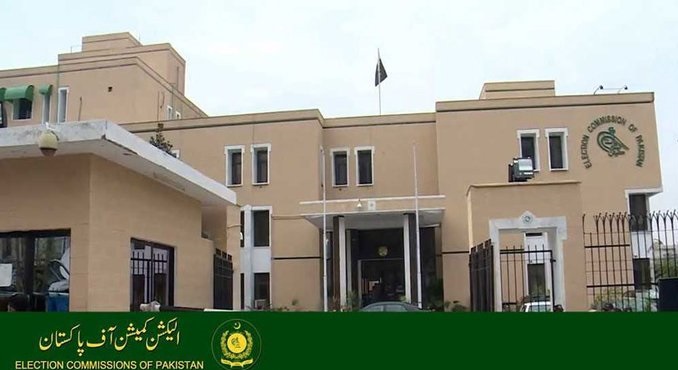
PESHAWAR, Feb 16 (APP):Peshawar High Court (PHC) on Friday issued a detailed judgment in a case filed by independent candidates challenging the alleged discrepancies in forms 45 and 47 of the general elections.
The three-page judgment written by Justice Shakeel Ahmed asked the Election Commission of Pakistan (ECP) to look into the reservations of the petitioners as per law and should fully scrutinize the forms 45 and 47 and the forms 45 available with the applicants.
It further said that the Returning Officers should allow the petitioners to compile the results as per Section 95 of the Election Act, 2017.
It said that if the ROs have already compiled the results, then the applicants should contact the appropriate forum i.e. Election Commission.
The court asked the election commission to allow the petitioners and hear them as per law, and take decision before issuance of the official gazette notification.
It said that the contentions of the petitioners were similar and that there was a discrepancy in forms 45 and 47 results.
It said that the petitioners had complained that there had been a flagrant violation of Sections 92 and 95 of the Election Act while compiling the results.

Pakistan rejects a UNSC reform proposal seeking increase in permanent, non-permanent seats

0

UNITED NATIONS, Feb 16 (APP): Pakistan has reaffirmed its opposition to adding new permanent members on the UN Security Council, stressing that any increase in permanent seats will compound the 15-member body’s paralysis, and prevent the majority of small and medium-sized states from serving on it.

“The expansion of the Security Council should promote ‘equitable representation’ not create new historic injustice, ”Ambassador Munir Akram told delegates at the deadlocked Inter-Governmental Negotiations (IGN) aimed at reforming the Council on Thursday,

The Pakistani envoy was participating in a discussion on a proposal — called “L69 Model” — from a group of Asian, African, Latin American, the Caribbean, and Pacific Island states aimed at restructuring the Council.

The group argues for an expansion of the Council, in both permanent (6 additional seats, bringing the total to 11) and non-permanent (5 additional seats, bringing the total to 15) categories of membership, with equitable geographical representation. The group introduced a document, L69, in 2007–2008 that served as the impetus for the IGN process.

“Our fundamental problem with the L.69 model is the proposed expansion of permanent seats,” Ambassador Akram said, underlining that permanent membership is the reason for the bouts of paralysis is in the Security Council.

“The problem cannot be the solution,” the Pakistani envoy added.

Full-scale negotiations to reform the Security Council began in the General Assembly in February 2009 on five key areas — the categories of membership, the question of veto, regional representation, size of an enlarged Security Council, and working methods of the council and its relationship with the General Assembly.

Despite a general agreement on enlarging the Council, as part of the UN reform process, member states remain divided over the details, as diplomats representing various groups push for their respective proposals.

India, Brazil, Germany and Japan — known as the Group of Four — are campaigning for permanent seats as they seek expansion of the Council by 10 seats, with six additional permanent and four non-permanent members.

On the other hand, the Italy/Pakistan-led Uniting for Consensus (UfC) group has proposed a new category of members — not permanent members — with longer duration in terms and a possibility to get re-elected.

On the other hand, the Italy/Pakistan-led Uniting for Consensus (UfC) group, which firmly opposes additional permanent members, has proposed a new category of members — not permanent members — with longer duration in terms and a possibility to get re-elected.

The Security Council is currently composed of five permanent members — Britain, China, France, Russia and the United States — and 10 non-permanent members elected to serve for two years.

In opposing “L69 Model” which, among other elements, seeks more permanent members on the Council, Ambassador Akram suggested that any country seeking a more frequent presence on the UNSC should do so through democratic process of periodic election by the General Assembly.

“The model would create more permanent seats (accommodating 6 States) but create only 5 non-permanent seats to be available to the 182 remaining countries not included among the 11 old and new ‘permanent’ members,” he noted.

Noting that one of the elements in the L69 model seeks removal of items from the UNSC’s after a certain period of time, Ambassador Akram said that this could reward those states which manage to block formal discussions of those items.

“What needs to review is whether the dispute/conflict has been resolved or not,” he said, adding, “If this have, the Security Council can decide to remove the item. “But, if not, the Security Council should not adopt a resolution or whenever the Council resolution exist, act under Article 25, to secure their implementation.”

In conclusion, Ambassador Akram highlighted UfC’ proposal, saying it provides the most pragmatic way to make the Security Council more representative of, and accountable, to the general membership of the United Nations.