ISLAMABAD, Dec 18 (APP):The Standing Committee on Federal Education and Professional Training expressed concerns over multiple pending issues in administrative and academic institutions that are hindering their smooth functioning.
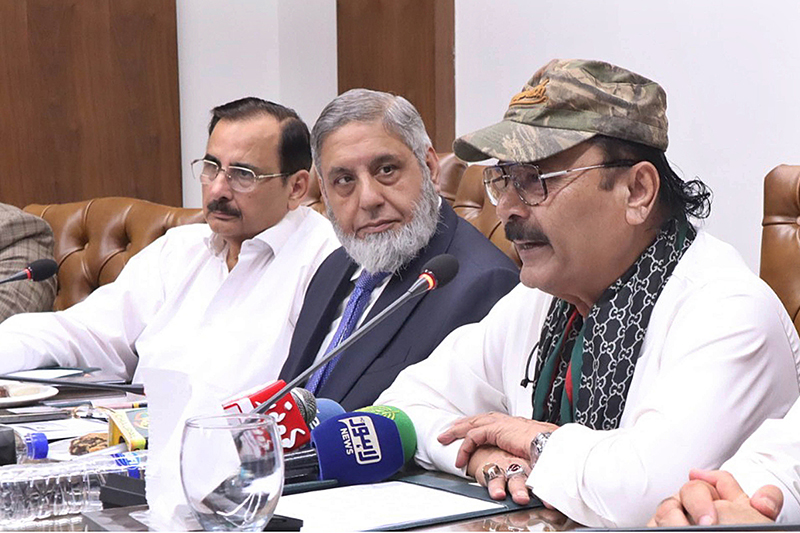
The 19th meeting of National Assembly Standing Committee on Federal Education and Professional Training was held on Thursday under the Convenorship of Dr Shazia Sobia Aslam Soomro at conference room of National Vocational and Technical Training Commission (NAVTTC).
The Standing Committee expressed serious concerns over the worsening governance situation at the Federal Urdu University of Arts, Sciences & Technology (FUUAST), Islamabad.
The Committee noted with concern that the university administration has persistently failed to adequately address officially reported grievances, indicating significant shortcomings in accountability, transparency, and effective institutional oversight.
In view of these serious irregularities and the apparent inaction on part of the university management, the Committee took strong notice of the matter and resolved to visit the university and convene a formal meeting on the premises of FUUAST.
The purpose of the visit will be to directly examine the issues, engage with the relevant stakeholders, and initiate appropriate measures for the prompt redressal of the grievances.
The Committee underscored that continued delays, non-compliance with established procedures, or failure to implement corrective measures would be viewed with utmost seriousness.
It was emphasized that the Committee would not hesitate to recommend stringent action to ensure adherence to principles of good governance, transparency, and institutional integrity, and to safeguard the academic and administrative interests of the university.
The Committee took serious notice of the unexplained absence of the Executive Director (ED), NAVTTC, from the Committee meeting.
The Committee expressed strong displeasure that the ED NAVTTC neither attended the meeting nor formally informed the Committee in advance about any prior official engagement, reflecting a clear disregard for parliamentary oversight and established protocols.
In view of the absence of the principal officer, the Committee unanimously decided not to take up or proceed with the agenda related to NAVTTC, emphasizing that effective scrutiny and meaningful deliberations are not possible without the presence of the head of the organization.
While the Committee was subsequently informed that the ED NAVTTC was engaged in a meeting at the Prime Minister’s Office, Members questioned the veracity of this claim and underscored that any misrepresentation or provision of incorrect information to the Committee would be treated as a serious breach.
The Committee categorically said that if the stated reason for absence is found to be inaccurate or misleading, strict action will be initiated for displaying non-seriousness, lack of respect for the Committee, and failure to fulfill statutory obligations.
The Committee reiterated that attendance before parliamentary committees is not optional and that accountability, discipline, and respect for parliamentary processes must be upheld at all times.
The Standing Committee took notice of the recurring increase in fees charged by private schools, terming the situation exploitative and deeply concerning for parents.
The Committee emphasized that the Private Educational Institutions Regulatory Authority (PIERA) must be fully empowered to effectively regulate private schools, particularly with regard to fee structures, transparency in charges, and compliance with approved curricula.
In this regard, the Committee stressed the urgent need to strengthen PIERA through the provision of adequate and qualified human resources, technical capacity, and enforcement powers, enabling it to ensure meaningful accountability of private educational institutions.
The Committee further expressed serious concern over the mushroom growth of privately run schools operating in residential streets, often consisting of only two to three rooms and lacking basic educational infrastructure. Such institutions, the Committee noted, raise serious questions about the quality of education, safety standards, and overall learning environment being provided to students.
The Committee took notice of the continuing leadership vacuum in key education regulatory and administrative bodies.
During the meeting, the Committee was informed that the Chairperson of the Private Educational Institutions Regulatory Authority (PIERA) has resigned.
The Convenor of the committee highlighted the Higher Education Commission (HEC) has yet to appoint its Chairman, the post of Director General of the Federal Directorate of Education (FDE) remains unfilled, and now the resignation of the PIERA Chairperson has added another serious gap in leadership.
The Committee observed that the absence of permanent leadership in these pivotal institutions reflects prolonged administrative inertia and a lack of priority accorded to the education sector.
The Convenor of the committee expressed reservations over the Ministry’s failure to implement the Convention on the Rights of the Child (CRC) in its true letter and spirit.
During the proceedings, the Convenor highlighted key articles of the CRC and underscored that, despite Pakistan’s international commitments, the Ministry has not shown satisfactory compliance to these obligations.
The meeting was attended by MNA’s including Mr. Anjum Aqeel Khan, Raja Khurram Shahzad Nawaz, Mr. Zulfiqar Ali Bhatti, Ms. Zeb Jaffar, Ms. Farah Naz Akbar (Parliamentary Secretary), Ms. Musarrat Asif Khwaja, Dr. Shazia Sobia Aslam Soomro, Ms. Mussarat Rafique Mahesar, Mr. Abdul Aleem Khan, Ms. Sabheen Ghoury and Ms. Zahra Wadood Fatemi. The meeting was also attended by Secretary and officials of the Ministry of Federal Education and Professional Training, officials of Higher Education Commission HEC and other officers concerned.