President of the Centre for China and Globalization (CCG), Victor Gao, on Tuesday called for full respect of the Indus Waters Treaty (IWT), proposed expanding the agreement into a trilateral framework by including China, and urged regional countries to develop an internationally supported code of conduct for the management of transboundary rivers.
Victor Gao calls for full respect of Indus Waters Treaty, proposes China’s inclusion in pact
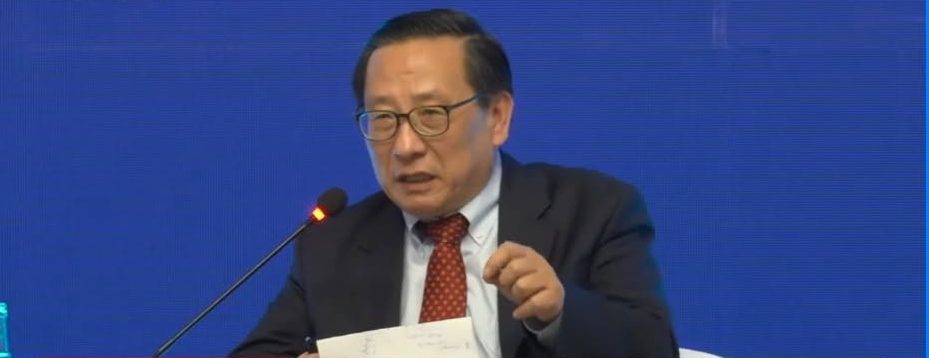
ISLAMABAD, Jun 30 (APP): President of the Centre for China and Globalization (CCG), Victor Gao, on Tuesday called for full respect of the Indus Waters Treaty (IWT), proposed expanding the agreement into a trilateral framework by including China, and urged regional countries to develop an internationally supported code of conduct for the management of transboundary rivers.
Addressing a seminar on the Indus Waters Treaty in here Tuesday, Gao recalled that when Indian Prime Minister Narendra Modi had warned last year of stopping the flow of water to Pakistan, he had publicly opposed such a move during interviews with leading Indian television channels.
He said he had argued that threatening to stop water flowing to a country of millions during peacetime would constitute “a crime against humanity,” while doing so during wartime would amount to “a war crime.”
Gao said he had urged India not to pursue such a course, adding that although Pakistan is the downstream country, India itself is not the ultimate upstream state because the Indus River originates in the Himalayan region. He said no country should take actions that it would not accept if another country acted similarly against it.
Recalling one of the television interviews, Gao said the anchor had asked whether he was threatening India. He replied that he was merely repeating the wisdom of the ancient Chinese philosopher Confucius: “Do not do unto others what you would not want done unto yourself.” Gao said he had repeated the saying three times during the interview and reiterated the same message to India at the seminar.
He stressed that the relationship between China and Pakistan, founded on mutual respect, required full observance of the Indus Waters Treaty.
Expressing satisfaction over the discussions at the seminar, Gao said he agreed with most of the views presented and offered a few additional suggestions. He said every possible effort should be made to prevent any violation of the treaty and called for close cooperation between China and Pakistan on the issue.
He proposed that China be included in the Indus Waters Treaty, making it a trilateral agreement, and said uninterrupted flow of water in the Indus River system should be ensured in accordance with the treaty’s provisions.
Gao said his own assessment showed that at least eight countries depend on water originating from the Tibetan Plateau. Therefore, he said, all of those countries should collectively consider the issue and work together to formulate a comprehensive code of conduct for the management of transboundary water resources, with the support of the United Nations and the international community.
Referring to recent regional tensions, Gao said the Strait of Hormuz had recently been at the centre of a conflict but was now open following a peace agreement between the United States and Iran.