Vice Chancellors, Rectors and Heads of higher education institutions have signed a landmark Charter for Tobacco and Nicotine-Free Campuses to protect Pakistani youth from tobacco and nicotine addiction.
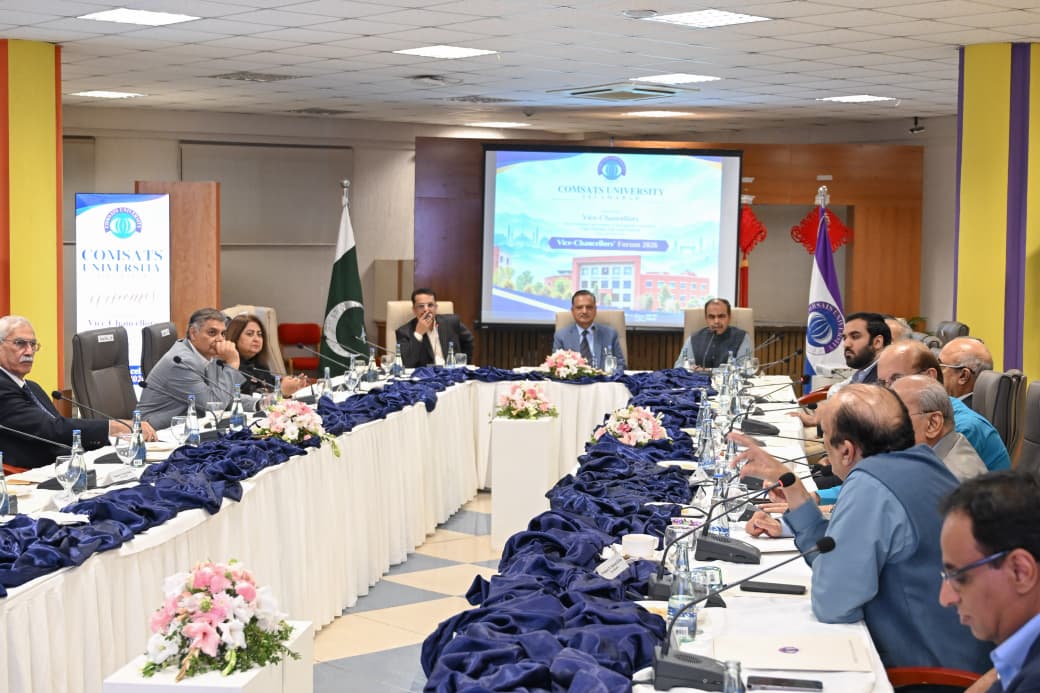
ISLAMABAD, Oct 09 (APP): Vice Chancellors, Rectors and Heads of higher education institutions have signed a landmark Charter for Tobacco and Nicotine-Free Campuses to protect Pakistani youth from tobacco and nicotine addiction.

The Charter was adopted during the Fifth Monthly Meeting of the Vice Chancellors and Rectors Forum, hosted by COMSATS University Islamabad (CUI) at its Islamabad Campus.
The meeting held at CUI Central Library brought together university leaders and representatives of higher education institutions from Islamabad, Rawalpindi, Gilgit Baltistan and Azad Jammu and Kashmir to deliberate on pressing challenges facing the higher education sector.
The Charter establishes a collective framework for achieving 100 percent tobacco, smoke, vape and recreational nicotine-free university campuses, covering conventional tobacco products as well as emerging products including electronic cigarettes, vaping devices, heated tobacco products and nicotine pouches.
Under the Charter, participating universities have committed to progressively eliminating tobacco and recreational nicotine use from their campuses and promote student-led awareness campaigns, research, institutional monitoring and annual assessment of progress.
The Forum further agreed that a joint letter along with the signed Charter would be forwarded to the Prime Minister through the Chairman Higher Education Commission (HEC) seeking national-level policy intervention.
Welcoming the participants, Rector COMSATS University Islamabad Prof. Dr. Raheel Qamar emphasized the responsibilities of university leadership in responding to rapidly changing societal and technological challenges.
He highlighted the transformative implications of artificial intelligence and its convergence with emerging technologies including quantum computing for scientific discovery and future of higher education.
The Forum also held extensive deliberations on major academic, regulatory and financial challenges confronting universities.
The meeting concluded with a renewed commitment to institutional cooperation, evidence-based policymaking and collective advocacy for higher education reforms.