ISLAMABAD, Sep 22 (APP):A broad group of religious scholars and leaders on Tuesday called for a collective and unwavering commitment to the protection and sanctity of the Haramain Sharifain, stressing that the security of Baitullah and Roza-e-Rasool (Peace Be Upon Him) is a matter of faith and a shared concern of the entire Muslim Ummah rather than a sectarian issue. The Ulema and Mashaikh - Pakistan Ulema Council Chairman and …
Ulema, Mashaikh call for collective resolve to protect Haramain Sharifain, uphold Muslim unity
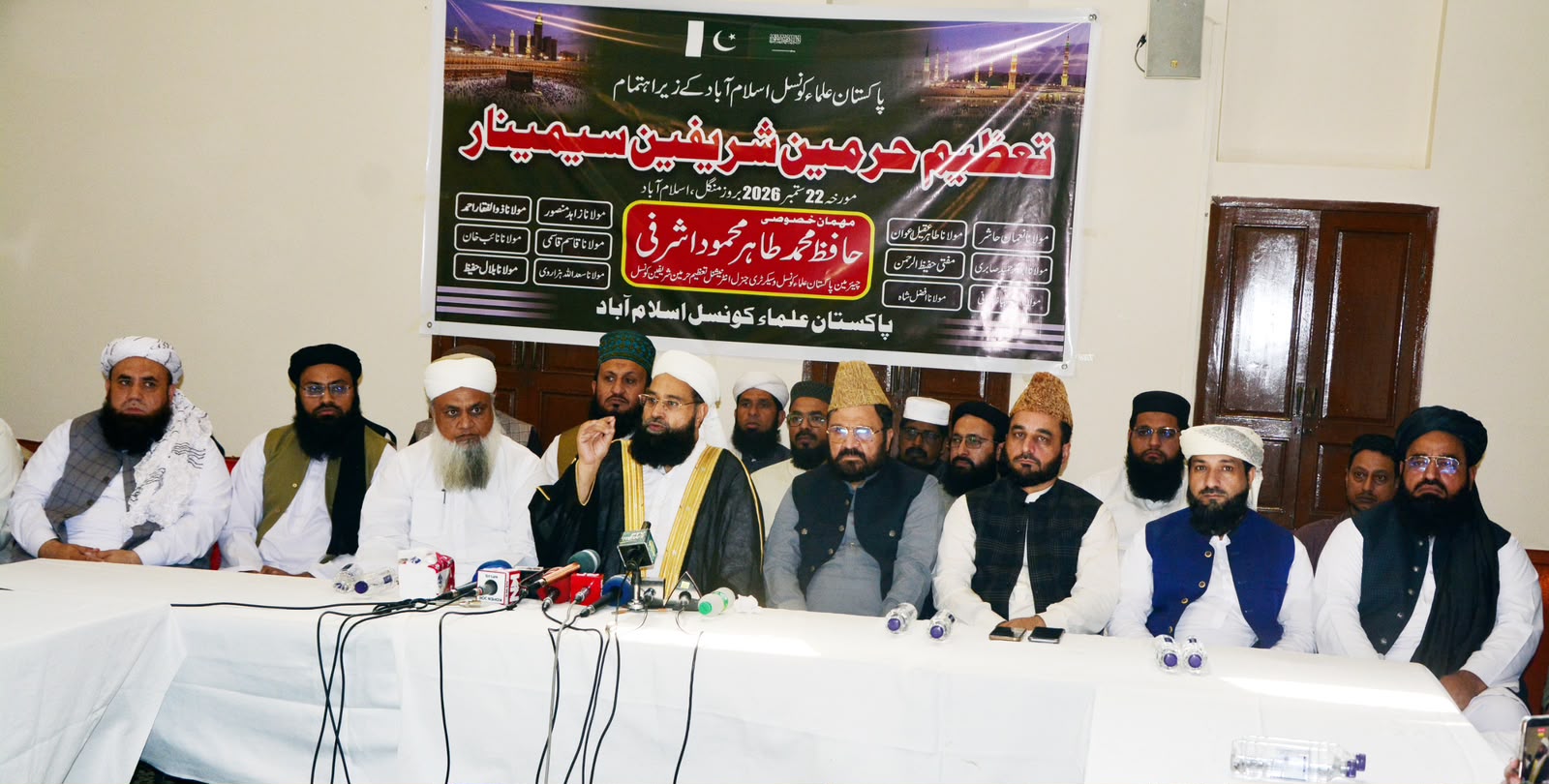
ISLAMABAD, Sep 22 (APP):A broad group of religious scholars and leaders on Tuesday called for a collective and unwavering commitment to the protection and sanctity of the Haramain Sharifain, stressing that the security of Baitullah and Roza-e-Rasool (Peace Be Upon Him) is a matter of faith and a shared concern of the entire Muslim Ummah rather than a sectarian issue.
The Ulema and Mashaikh – Pakistan Ulema Council Chairman and National Paigham-e-Aman Committee Coordinator, Hafiz Muhammad Tahir Mehmood Ashrafi, Syed Ziaullah Shah Bukhari, Dr Asif Mir, Maulana Zahid Mansoor, Maulana Zubair Fahim, Maulana Zulfiqar Ahmed, Maulana Qasim Qasmi, Maulana Tahir Aqeel Awan, Maulana Abu Bakr Sabri, Maulana Shahbaz, Maulana Muhammad Afzal Shah, Naib Khan Subhani, Maulana Hafeez ur Rehman, Maulana Aurangzeb, Maulana Anis ur Rehman, Maulana Siddiq Siddiqui, Maulana Bakht Zaman, Maulana Shahbaz Naumani, Mufti Hafeez ur Rehman, Mufti Shakil and Hafiz Syed Ammar Shah – said the sanctity and protection of the holy sites transcended sectarian and political considerations.
Speaking at the “Tazeem-e-Haramain Sharifain Seminar” organized by the Pakistan Ulema Council here in Jamea Masjid Bilal, they said Pakistan was established on the basis of the Kalima, while the relationship between Pakistan and Saudi Arabia was also rooted in faith and a deep bond with the sacred places of Islam.
The scholars stressed that their attachment to Saudi Arabia was not based on economic interests or oil, but on their love for the Holy Prophet Muhammad (Peace Be Upon Him), Baitullah and the sacred places of Islam.
They said the Muslim community had demonstrated unity whenever the sanctity of the Haramain Sharifain was threatened, emphasizing that Shia, Sunni, Barelvi and other schools of thought were united on the protection of Baitullah and Roza-e-Rasool (Peace Be Upon Him).
The scholars strongly condemned any threat or attempt to target Makkah al Mukarramah or Madinah al Munawwarah and said any person or group contemplating an attack on Baitullah would face a united response from the Muslim Ummah.
They maintained that any religious decree or justification for an attack on Baitullah was unacceptable and required a clear religious response, stressing that the sanctity of the Kaaba could not be compromised under any circumstances.
They also issued a Fatwa against those planning to attack on Kaaba on the basis of lame excuses and said it is against the spirit of Shariah and Islam warning that they have to face the dire consequences from the entire Muslim world if they go for any misadventure.
The religious leaders urged Houthis to exercise restraint and cease attacks on Makkah al Mukarramah and the holy sites in Saudi Arabia. They emphasized that Pakistan had previously played a role in preventing conflict within the Muslim Ummah and continued to seek avenues to prevent further confrontation.
They said the people of Yemen were also part of the Muslim Ummah and that the situation should not be allowed to develop into a wider sectarian conflict. They also warned against attempts by any elements to create divisions among Muslims or exploit the situation for the benefit of Israel.
The scholars said Pakistan, Türkiye and Saudi Arabia remained in contact and would play their respective roles when necessary. They also appreciated the positive role played by Pakistani Shia leadership in maintaining national unity and safeguarding inter-sectarian harmony.
They stressed that the issue of Palestine remained a matter of collective concern for Pakistan and the Muslim Ummah, saying that Pakistan had stood with the Palestinian people from the outset and that assistance for the people of Gaza continued to be provided.
The religious leaders further emphasized that Saudi Arabia had never encouraged sectarianism in Pakistan and called for responsible discourse from the pulpit and religious platforms. They urged religious figures to avoid statements that could undermine inter-sectarian harmony or create misunderstanding among Muslims.
They also cautioned against the possibility of Muslims being manipulated through sectarian narratives, stressing that the Ummah should remain vigilant against attempts to turn Muslim against Muslim while external forces benefit from internal divisions.
The scholars welcomed developments regarding the opening of bank accounts for religious seminaries under the government’s policy, saying that improved access to formal banking channels would help religious institutions operate with greater transparency.
They said religious seminaries had previously faced difficulties in opening bank accounts, whereas the situation was now changing and banks were facilitating the opening of accounts for seminaries.
The Ulema and Mashaikh said the protection of Haramain Sharifain, solidarity among Muslims, peace, restraint and inter-sectarian harmony must remain the central priorities at this critical juncture.
They reiterated that Baitullah and Roza-e-Rasool (Peace Be Upon Him ) belonged to the entire Muslim Ummah and that their sanctity united Muslims beyond political, national and sectarian differences.