
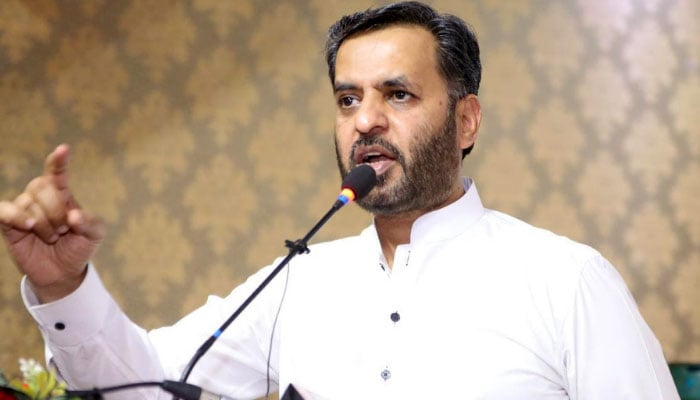

ISLAMABAD, Dec 16 (APP):Federal Minister for Health Syed Mustafa Kamal on Tuesday said that achieving Universal Health Coverage (UHC) was a cornerstone of the government’s national development strategy, as Pakistan stood at a critical and challenging demographic juncture.
The Minister emphasized that policy commitments must be translated into tangible and measurable health outcomes for all Pakistanis.
He was chairing a joint meeting of the Inter-Ministerial Health and Population Council and the Universal Health Coverage Country Platform, organized by the Ministry of National Health Services, Regulations and Coordination with the support of the British High Commission and the World Health Organization (WHO).
The meeting aimed to harmonize national, provincial and development partner investments, with a focus on evidence-informed strategic and programmatic reforms, while ensuring coherence across health and population programmes and initiatives.
The minister said the prevailing demographic situation was impacting every aspect of national development, particularly the health and population sectors.
He said the upcoming National Health and Population Policy (2026–2035) would serve as a strategic compass to guide reforms and policy implementation.
“Health is not merely a sectoral issue, it is a foundational investment in human capital and economic stability,” he stated, adding that the policy provided a practical, evidence-based and action-oriented roadmap for the future.
Syed Mustafa Kamal said the policy charted a clear path toward a healthier, more empowered and resilient population, while reflecting Pakistan’s national commitment to demographic resilience, gender equality and social justice.
He stressed the need for sustained political will and collaborative action to ensure effective implementation.
Speaking on the occasion, Minister of State for National Health Services Dr Mukhtar Bharath said that local vaccine production was a strategic investment in national health security and a critical step toward self-reliance and sustainable development.
He said achieving the World Health Organization’s Maturity Level-3 was essential to ensure regulatory systems met global standards of quality, safety and efficacy, enabling locally produced vaccines to gain international confidence and market access.
Dr Mukhtar Bharath further stated that drafting a National Health Insurance Act with provincial consensus was imperative to guarantee equitable access to life-saving products, strengthen pooled healthcare financing and ensure the long-term sustainability of the health system. He said these measures would protect the population, reduce dependence on imports and position Pakistan as a credible contributor to global health resilience.
Punjab Health and Population Minister Khawaja Imran Nazir said population dynamics were closely linked to sustainable development, adding that managing population growth was not merely a demographic goal but a critical determinant of health, education and economic prosperity.
He said addressing health and population priorities was essential to achieving equitable and sustainable development for all segments of society.
Khyber Pakhtunkhwa Health Minister Khaleeq ur Rehman said health was the foundation of a prosperous and peaceful society, stressing the need to strengthen primary healthcare infrastructure, expand digital health services in remote areas and increase investment in the health workforce to ensure no citizen was left behind.
The meeting was attended by provincial and federating area health and population ministers and secretaries, along with health development partners, representatives of UN agencies, academia, regulatory entities and other health and population stakeholders.
The meeting concluded with a collective reaffirmation to deepen collaboration, synchronize resources and accelerate reforms under the overarching vision of the National Health and Population Policy, with participants stressing the need to ensure access to quality and affordable healthcare for every citizen without financial hardship.