By: Shams Abbasi ISLAMABAD, Nov 06 (APP):Turkmenistan is marking the 35th anniversary of its independence in 2026 with a renewed focus on national development, international diplomacy, economic cooperation and regional connectivity, reflecting its growing role in promoting peace, stability and prosperity across Central Asia and beyond. The year is being celebrated under the national theme, “Independent, Permanently Neutral Turkmenistan, Homeland of Purposeful Heavenly Horses,” highlighting the country's national identity, cultural …
Turkmenistan marks 35 years of independence with major achievements, global diplomacy, regional connectivity
By: Shams Abbasi
ISLAMABAD, Nov 06 (APP):Turkmenistan is marking the 35th anniversary of its independence in 2026 with a renewed focus on national development, international diplomacy, economic cooperation and regional connectivity, reflecting its growing role in promoting peace, stability and prosperity across Central Asia and beyond.
The year is being celebrated under the national theme, “Independent, Permanently Neutral Turkmenistan, Homeland of Purposeful Heavenly Horses,” highlighting the country’s national identity, cultural heritage, development achievements and commitment to its internationally recognised policy of permanent neutrality.
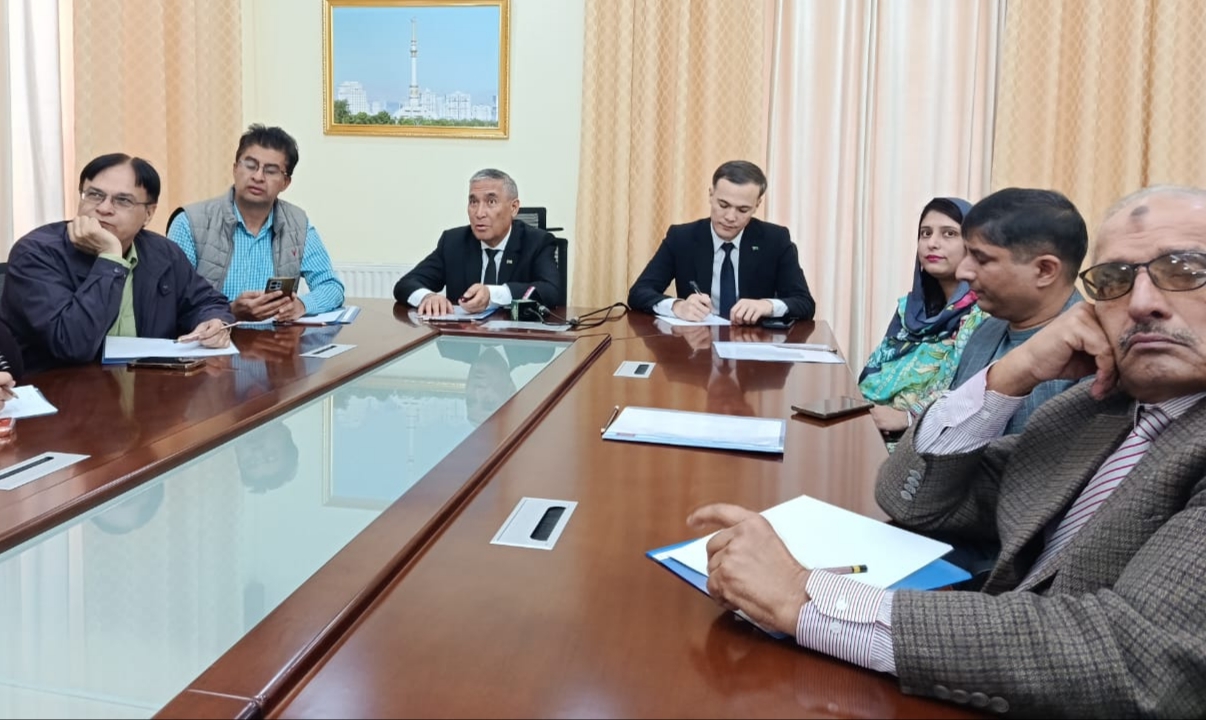
Sharing an overview of the country’s achievements and major developments during a press briefing for local media at the Embassy of Turkmenistan in Islamabad, Ambassador of Turkmenistan to Pakistan and Dean of the Diplomatic Corps in Islamabad, H.E. Atadjan Movlamov, described 2026 as a landmark year in the country’s history.
He said Turkmenistan had continued to strengthen its international partnerships through high-level diplomatic engagements, economic forums, cultural activities and regional initiatives, bringing together world leaders, diplomats, investors, business representatives and international experts.
Among the year’s prominent cultural events was the First World Championship of Equestrian Sports and Beauty among Ahal-Teke Horses, held in the Netherlands from September 4 to 6. The event showcased the distinctive Ahal-Teke horses, internationally recognised as one of the most treasured symbols of Turkmenistan’s national identity, cultural heritage and centuries-old equestrian traditions.
The Ambassador also highlighted the September 23 meeting of the Halk Maslahaty (People’s Council) in Ashgabat, chaired by National Leader Gurbanguly Berdimuhamedov. The gathering reviewed the country’s achievements and approved several important strategic documents, including the National Strategy for Industrial Development for 2030–2045, the national concept on International Law and Neutrality, and the State Programme on Youth Policy up to 2031.
Turkmenistan also made significant progress in attracting foreign investment through the Turkmenistan Investment Forum 2026, held in Ashgabat on October 1 and 2. The forum brought together more than 800 delegates representing over 200 companies from more than 40 countries, including Pakistan, providing an important platform for investment agreements, commercial contracts and international business partnerships.
October proved particularly significant for Turkmenistan’s diplomatic engagement and regional cooperation, with several major international gatherings held in the National Tourist Zone of Avaza. These included meetings of the CIS Council of Foreign Ministers and Heads of State, a high-level Central Asian meeting on the rational use of the Amu Darya and Syr Darya water resources, and an International Women’s Dialogue focusing on peace and sustainable development.
A major regional development was the Eighth Consultative Meeting of the Heads of State of Central Asian Countries and Azerbaijan on October 8. Azerbaijan’s participation as a full-fledged member marked an important step towards expanding regional cooperation and strengthening political and economic ties.
The following day’s CIS Heads of State meeting provided an opportunity to discuss political, economic and cultural cooperation, with 2029 declared the Year of CIS Transport Connectivity. The First Caspian Environmental Summit, also held in Avaza on October 9, highlighted the need for coordinated international efforts to protect the Caspian Sea and preserve its surrounding ecosystem.
Energy cooperation remained another major focus of Turkmenistan’s international engagement. The 31st International Conference and Exhibition Oil and Gas of Turkmenistan 2026 attracted more than 1,500 delegates from 75 countries and approximately 450 companies. Discussions centred on the development of the Galkynysh gas field, diversification of energy export routes, gas processing, petrochemical industries and progress on the Turkmenistan–Afghanistan–Pakistan–India (TAPI) gas pipeline.
The conference also resulted in the signing of five bilateral agreements with international partners from China, Malaysia, Kazakhstan and Uzbekistan, reflecting growing interest in Turkmenistan’s energy sector and its potential as a regional energy supplier.
Further opportunities for international investment and technological collaboration emerged through the CIET 2026 International Conference and Exhibition, held in Ashgabat from November 3 to 5. The event focused on construction, industrial modernisation, energy, transport infrastructure, digitalisation and smart technologies, reinforcing the country’s efforts to diversify its economy and attract international expertise.
Turning to Turkmenistan’s relations with Pakistan, Ambassador Movlamov placed particular emphasis on the growing strategic importance of bilateral cooperation, identifying energy, trade, transport and regional connectivity as key areas with considerable potential.
At the centre of this partnership is the TAPI gas pipeline, an ambitious regional energy project designed to transport natural gas from Turkmenistan’s Galkynysh field through Afghanistan to Pakistan and India. The field is estimated to contain approximately 27 trillion cubic metres of natural gas, making it a major resource for supporting regional energy security and economic development.
For Pakistan, the Ambassador observed, the project could provide an opportunity to diversify energy supplies, improve energy security, support industrial growth and generate new economic opportunities. Its successful implementation would also strengthen energy cooperation and create greater economic interdependence among participating countries.
He also drew attention to complementary infrastructure projects that could further enhance regional connectivity. These include a proposed 1,635-kilometre fibre-optic communication line along the TAPI pipeline corridor, with a planned transmission capacity of up to 100 Gbps, and the Turkmenistan–Afghanistan–Pakistan (TAP) electricity transmission project, which envisages exporting up to 3,000 megawatts of electricity to Pakistan through Afghanistan.
Together, these initiatives could help Pakistan strengthen its energy and telecommunications infrastructure while opening new opportunities for regional trade, investment and economic integration. Improved transport and railway links between the two countries could further facilitate commercial exchanges and connect Central Asian markets with South Asia.
The Ambassador also recalled the celebrations marking Turkmenistan’s 35th Independence Day on September 27, which were held with great enthusiasm in Ashgabat. The celebrations featured a military parade, aerial and naval displays, cultural performances, concerts and fireworks, reflecting the country’s national pride and achievements over more than three decades of independence.
Since gaining independence, Turkmenistan has pursued a development path based on peaceful coexistence, international cooperation and permanent neutrality. Its growing participation in regional and international initiatives reflects an effort to translate these principles into practical cooperation in areas such as energy, infrastructure, environmental protection and economic development.
Concluding his remarks, Ambassador Movlamov reaffirmed Turkmenistan’s commitment to strengthening international partnerships, promoting peace and advancing sustainable development. He expressed confidence that closer cooperation with Pakistan, particularly through the TAPI and TAP projects, as well as railway, energy and telecommunications initiatives, could unlock significant opportunities for both countries.
As Turkmenistan celebrates 35 years of independence, its expanding diplomatic and economic engagement reflects its ambition to play a constructive role in regional affairs. For Pakistan, stronger ties with Turkmenistan offer the prospect of improved access to Central Asian energy resources, expanded trade routes and greater economic connectivity, providing a foundation for shared prosperity across Central and South Asia.