ISLAMABAD, Dec 18 (APP):Minister for Information and Broadcasting Attaullah Tarar on Thursday cautioned that fake news circulating on social media has become the greatest challenge of the digital era. He emphasized that in today’s world, it is vital to use social media responsibly and to strike a balance in the face of rapidly evolving technologies. Speaking at the closing session of the National Cyber Security Seminar, the minister underscored that …
Tarar warns fake news on social media posses biggest challenge of digital age
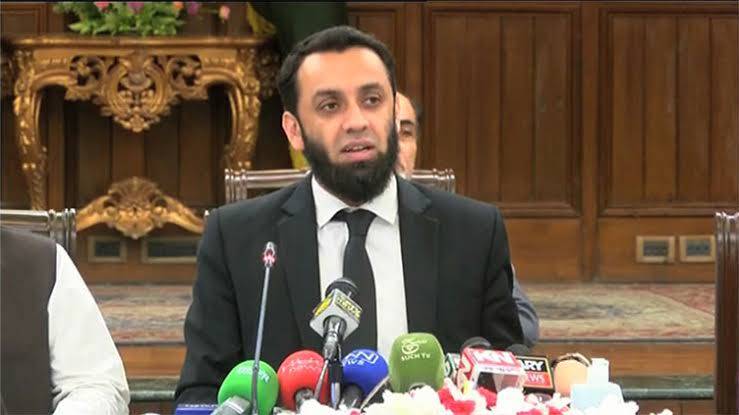
ISLAMABAD, Dec 18 (APP):Minister for Information and Broadcasting Attaullah Tarar on Thursday cautioned that fake news circulating on social media has become the greatest challenge of the digital era.
He emphasized that in today’s world, it is vital to use social media responsibly and to strike a balance in the face of rapidly evolving technologies.
Speaking at the closing session of the National Cyber Security Seminar, the minister underscored that a grasp of cybersecurity must start with demographic realities.
Pakistan’s digital landscape, he noted, encompasses more than 117 million internet users, 148 million mobile broadband subscribers, and upwards of 79 million active social media accounts.
He said, digital life today is split along a generational fault line. On one side are the digital immigrants—those who stepped into the online world later in life, adapting to its rapid evolution. On the other are the digital natives—a generation born into cyberspace, fluent in its language from the start.
Speaking on the divide between generations, he noted that digital natives tend to navigate technology instinctively, while digital immigrants are still learning to use social media responsibly.
He emphasized that there is no one-size-fits-all approach to cybersecurity awareness, stressing that effective outreach must be tailored to different audiences through diverse channels, strategies, and language.
The Federal Minister highlighted the rapid evolution of Pakistan’s cyberspace over the past four decades. Reflecting on the media landscape, he pointed to a gradual and systematic shift from traditional platforms to electronic media, describing it as a natural progression.
He noted that print media has undergone a complete transformation, evolving into electronic formats through a comprehensive process of change.
He noted that during this period, editorial oversight existed, boards of directors were in place, and in the early 2000s, the Pakistan Electronic Media Regulatory Authority (PEMRA) was established, introducing a formal regulatory framework.
He said this structured process enabled the evolution of media. However, the subsequent shift from electronic to digital media was an unnatural transition for which no one was prepared.
This change arrived suddenly, and it was accepted as it came. He added that due to the rapid pace of this evolution, there was a lack of an adequate regulatory framework, limited awareness, and the main reason was a lack of understanding, as it took significant time to grasp cyberspace, cybersecurity, and its realities.
Digital literacy and responsible online behavior continue to lag, underscoring the need for greater awareness of what constitutes responsible conduct. Speaking on the issue, he emphasized that cybersecurity and the responsible use of social media stand among the most pressing challenges of our era.
At the World Economic Forum, global leaders were asked to name the greatest challenges of our time. Surprisingly, neither nuclear war nor climate change topped the list. Instead, the threat they singled out was misinformation and fake news.
Referring to the Bondi Beach tragedy in Sydney, he noted that social media was quickly flooded with false reports. Some outlets hastily alleged the attacker was from Pakistan—without evidence or credible information. He stressed that Pakistan, itself a victim of terrorism, was unfairly targeted by baseless claims repeated even by global media, despite the absence of any documentary proof, causing serious damage to the country’s image.
On December 16, as Pakistan commemorated the martyrs of the Army Public School Peshawar, false reports abroad wrongly linked an overseas attack to Pakistan.
He warned that such baseless claims put Pakistanis in Australia, Europe, and the United States at risk. The contradiction was stark: while the nation honored children who sacrificed their lives against terrorism, international media outlets spread unfounded allegations, with consequences witnessed worldwide.
Later, the attacker’s identity and documents, along with an Indian police statement and press release, revealed a different chain of events. The Federal Minister lauded the fact-checking tool iVerify, saying he regularly uses it to confirm news and effectively counter misinformation.
The Federal Minister for Information stressed the urgent need to boost digital literacy, noting that while the shift from print to electronic media was gradual and well-regulated, the rapid digital revolution has left critical gaps. He affirmed that immediate measures are required and the government is fully committed to addressing them.
He said that with this approach, Pakistan’s first Digital Communication Department was established, as no formal digital department existed when he took charge of the Ministry of Information. He added that the ministry now has its own fact-check unit and has established connections with media organizations to verify and curb fake news, but further measures are still needed.
The Federal Minister for Information lauded TikTok’s move to add AI labels, noting it helps users identify content generated through artificial intelligence.
He said this is a small step that should be adopted by all other platforms. He added that advertisements are also being generated using AI, affecting many professions such as content creators, directors, graphic designers, and actors, putting their livelihoods at risk, which is a matter of concern.
He stressed the need for balance, noting that no single awareness policy fits all. Each social media platform requires tailored approaches, he said, acknowledging the challenge but voicing optimism that with initiatives like today’s and collaboration among PTA, UNDP, and the Government of Pakistan, the right strategy can overcome it.