ISLAMABAD, Sep 30 (APP):Federal Minister for Information and Broadcasting Attaullah Tarar on Wednesday said Pakistan would not allow India to weaponise water, describing the Indus waters as a fundamental and basic right of the country's 240 million people. Addressing the launching ceremony of a special report titled “Weaponizing Waters: Historical, Legal, & Strategic Dimensions of IWT Suspension” at the Institute of Strategic Studies Islamabad (ISSI), the minister said Pakistan was …
Tarar says Pakistan will not allow India to weaponise water
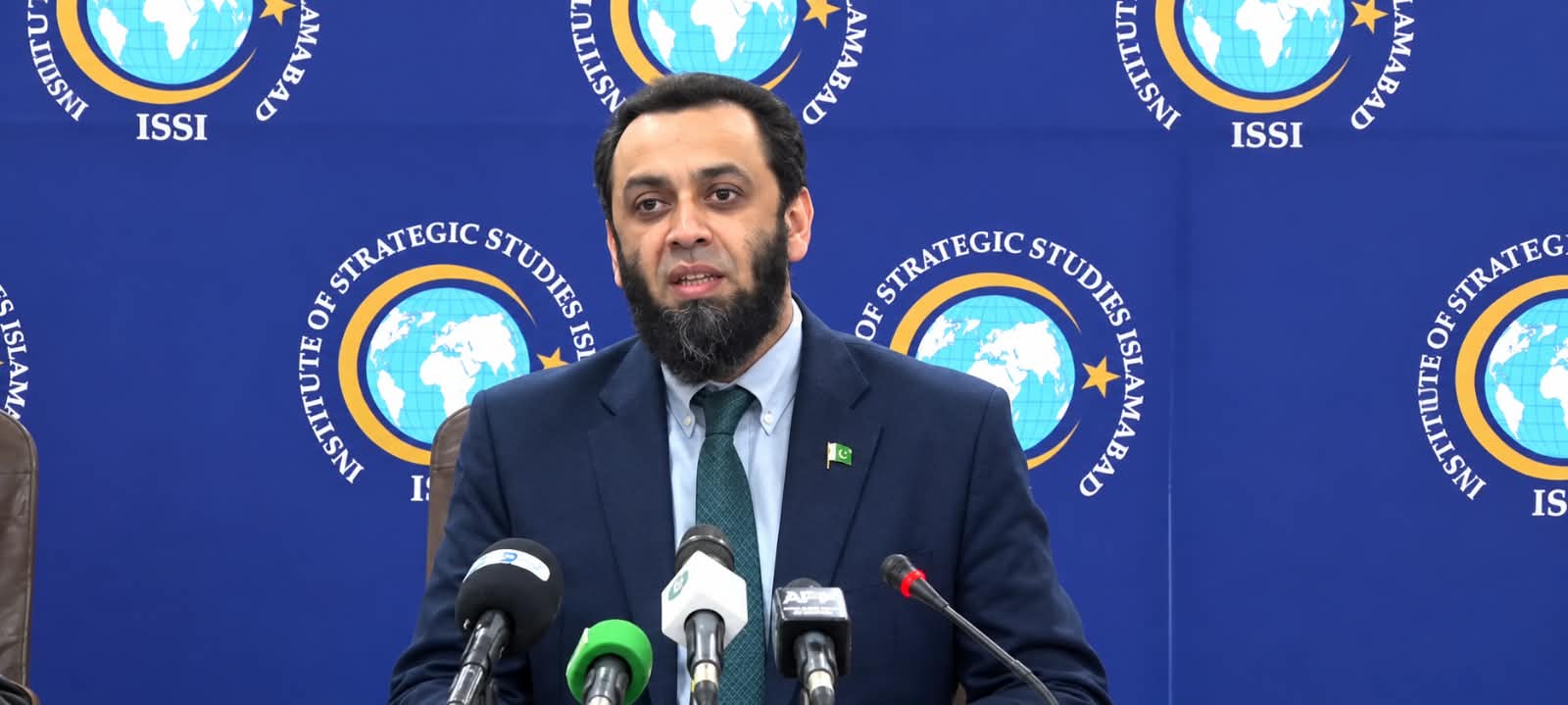
ISLAMABAD, Sep 30 (APP):Federal Minister for Information and Broadcasting Attaullah Tarar on Wednesday said Pakistan would not allow India to weaponise water, describing the Indus waters as a fundamental and basic right of the country’s 240 million people.
Addressing the launching ceremony of a special report titled “Weaponizing Waters: Historical, Legal, & Strategic Dimensions of IWT Suspension” at the Institute of Strategic Studies Islamabad (ISSI), the minister said Pakistan was a peaceful nation that believed in peace but would continue to defend its vital national interests in accordance with international law.
Highlighting Pakistan’s historical connection with the Indus River, Tarar said the country’s identity was deeply rooted in the Indus Valley Civilization. He said Pakistanis took pride in identifying themselves as people of the Indus Valley Civilization, whose lives and identity were connected with the banks and tributaries of the mighty River Indus.
He said the framers and signatories of the Indus Waters Treaty (IWT) had not envisaged that, decades after its signing, India would take steps that legally ignorant, morally bankrupt and devoid of ethics.
Tarar said the treaty was a legal instrument that defined the terms and conditions agreed upon by both parties and was legally enforceable and binding once signed. He said the treaty did not permit either party to unilaterally alter, rescind or revoke it, or hold it in abeyance.
He emphasised that both parties were required to adhere to the treaty’s terms and conditions even in the event of a dispute. Referring to the Court of Arbitration’s decision in August 2025, he said it had upheld Pakistan’s position, lending legitimacy and strength to its argument against unilateral attempts to change the treaty’s status.
The minister said the Government of Pakistan had approached the matter diplomatically by engaging the international community and presenting its legal and diplomatic position as a nation-state that respected the rights of others.
Referring to the 81st session of the United Nations General Assembly, Tarar recalled that Prime Minister Shehbaz Sharif had described the Indus waters as the lifeblood of the people and the region, warning that any attempt to usurp this right would be treated as an act of war.
He said the Foreign Office and the Ministry of Information and Broadcasting had been engaging international organisations as well as countries in the region, stressing that the Indus Waters Treaty was an instrument of peace and stability for the region.
Referring to the observations of ISSI Director General Ambassador Moin-ul-Haq, the minister said India used allegations of cross-border terrorism as a pretext to defend its actions concerning the treaty.
He said Pakistan had sacrificed 100,000 lives in the war against terrorism and suffered economic losses exceeding $150 billion over several decades. He added that the sacrifice of every Pakistani citizen in the fight against terrorism not only made Pakistan safer but also contributed to making the world a safer place. Pakistan had remained at the forefront of this struggle, he said.
In contrast, Tarar said, India, which had attempted to alter the status of the treaty unlawfully, had faced allegations at the international level of transnational repression and transnational assassinations of minorities, including Sikhs, in Canada and other countries.
He said the attempt to weaponise water and create controversy around the Indus Waters Treaty was highly condemnable and could not be justified on legal, diplomatic or moral grounds.
The minister said Pakistan’s position on the treaty had received support from several countries, which had endorsed its stance. He said Pakistan’s legal position had also been clear whenever the matter was referred to international legal forums, given the treaty’s provisions concerning alteration, rescission, revocation and the suspension of its operation.
“We are a peaceful nation. We believe in peace. But we will not allow India to weaponize water, because that is a fundamental and basic right of the 240 million people of Pakistan,” he said.
Tarar said the international community must recognise the wider implications of allowing a state to unilaterally place a binding international water treaty in abeyance despite established dispute-resolution mechanisms.
He warned that such a precedent could affect transboundary water governance worldwide and have implications for other countries that had treaties governing the sharing of water resources.
Highlighting the role of research institutions, the minister said ISSI had an important responsibility to examine developments surrounding the treaty from historical, legal and strategic perspectives and provide policymakers and the international community with evidence-based analysis.
He said the special report being launched that day contributed to the discussion by examining the history of the Indus Waters Treaty, the legal dimensions of India’s decisions, developments in upstream water infrastructure, and the strategic implications for Pakistan and the wider region.
Reiterating the government’s commitment, Tarar said Pakistan would continue to engage the international community and defend its vital national interests in accordance with international law.
“Countries which do not adhere to international law cannot progress, and their intent can be seen by the world at large,” he said, adding that the embarrassment India had faced before the Court of Arbitration had been witnessed by all and sundry.
The minister commended ISSI for preparing the report and acknowledged the presence of former federal minister for defence, commerce and foreign affairs Engineer Khurram Dastagir Khan, Dean Faculty of Contemporary Studies at National Defence University Islamabad Professor Dr Arshi Saleem Hashmi, ISSI Chairman Board of Governors Ambassador Khalid Mahmood, ISSI Director General Ambassador Moin-ul-Haq and Dr Khurram Abbas.