Senator Sherry Rehman on Tuesday emphasised the need for stronger regional connectivity, sustained diplomatic engagement and economic cooperation to address growing geopolitical uncertainty, saying nations could no longer insulate themselves from the consequences of conflicts and global disruptions.
Stronger regional connectivity key to stability amid global geopolitical uncertainty: Sherry Rehman
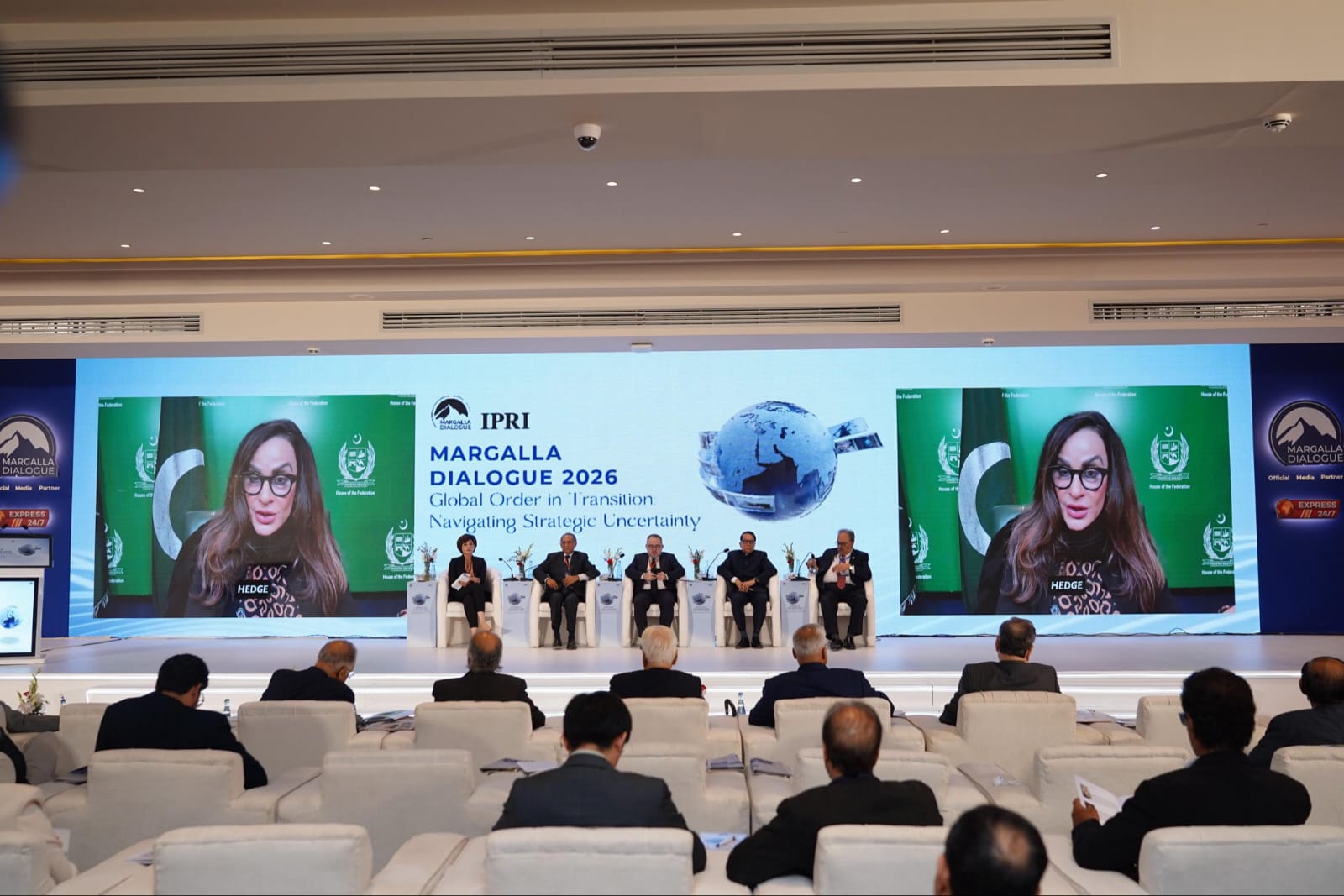
ISLAMABAD, Nov 10 (APP): Senator Sherry Rehman on Tuesday emphasised the need for stronger regional connectivity, sustained diplomatic engagement and economic cooperation to address growing geopolitical uncertainty, saying nations could no longer insulate themselves from the consequences of conflicts and global disruptions.
Addressing Forum B, titled “West Asia-South Asia: Geopolitics of Connectivity and Competition”, at the Margalla Dialogue 2026, themed “Global Order in Transition: Navigating Strategic Uncertainty”, she said the international order, which had traditionally relied on rules, institutions and economic interdependence, was facing increasing pressure.
Chairperson of the Senate Standing Committee on Climate Change and Environmental Coordination, Senator Sherry Rehman, said conflicts were expanding rather than subsiding, great-power competition remained intense, and traditional alliances were being tested amid the emergence of new and often fluid strategic alignments.
She observed that geopolitical uncertainty had become a defining feature of the contemporary international environment, from the battlefields of Europe to the flashpoints of West and South Asia.
She said the weakening of multilateralism had also undermined the mechanisms designed to maintain global stability and regulate emerging challenges, including armed conflicts, artificial intelligence and climate change.
However, she pointed out that despite political divisions, geographical realities and economic necessities continued to bring countries closer together.
“No country can insulate itself from the consequences of conflict,” she said, referring to energy shocks, disrupted supply chains, climate emergencies and growing vulnerabilities in global trade.
She maintained that connectivity could not be reversed and that the real challenge was to determine how countries could develop mutually beneficial connections while managing geopolitical risks.
She described regional connectivity as a strategic advantage and an economic necessity rather than merely an economic ambition, arguing that countries capable of building bridges across political divides and maintaining dialogue between competing powers would have greater relevance in the changing international system.
She said Pakistan’s evolving role as a connecting middle power was particularly significant in this context, given its geographical position and relationships with countries across West Asia, the Gulf, Türkiye, China, Iran and Central Asia.
Referring to Pakistan’s engagement with West Asia, she said the country had been pursuing opportunities to turn regional challenges into avenues for cooperation while seeking to prevent the spread of conflicts.
Senator Rehman said traditional approaches to international relations needed reconsideration as geopolitical, cyber and physical security challenges increasingly overlapped.
She noted that nearshoring and friendshoring were emerging as important trends in global trade and economic organisation and were also becoming increasingly relevant to security partnerships.
She stressed that Pakistan needed to move beyond a relationship with Gulf countries based mainly on imported fuel and labour towards diversified energy cooperation, exports, investment, industrial collaboration and technology partnerships.
Referring to diplomatic engagement among regional countries, she said deterrence and diplomacy were not necessarily contradictory and could complement each other in preventing conflicts.
The senator identified three important considerations for navigating the changing geopolitical environment: conventional rivalries should not be treated as permanent; face-to-face diplomatic engagement would remain essential despite technological advancements; and regional hubs would continue to protect against economic, security, climate and cyber shocks.
She said emerging regional arrangements in West Asia would ultimately be assessed not only on their defence capabilities but also on their ability to prevent conflicts, protect commercial activities and maintain relationships among traditional strategic partners.
Turning to South Asia, Senator Rehman highlighted the economic costs of longstanding regional rivalries, saying the region of nearly two billion people possessed enormous human resources, markets and cultural potential but remained far from achieving meaningful economic integration.
She said the region’s economic potential continued to be constrained by political divisions and unilateral approaches, depriving its people of opportunities for employment, development and greater prosperity.
Senator Rehman said Pakistan consistently advocated dialogue, respect for international law and peaceful resolution of disputes, while retaining the ability to respond to security challenges.
She criticised Indian Prime Minister Narendra Modi’s approach towards Pakistan, adding that the use of confrontational narratives and water-related measures had contributed to regional tensions.
She said the costs of confrontation extended beyond bilateral relations and affected the wider region, including the people of India.
Referring to the May 2025 military conflict between Pakistan and India, she said the episode had demonstrated how rapidly tensions could escalate between two nuclear-armed neighbours.
She warned that in a region with multiple security flashpoints, no country should assume that a limited confrontation would necessarily remain limited.
The senator said recurring tensions were pushing South Asia further away from the economic integration, social development and climate resilience urgently needed by its people.
“We cannot build an Asian century on the foundations of permanent South Asian hostility,” she said.
She also expressed concern over India’s decision to place the Indus Waters Treaty in abeyance, saying such a move threatened confidence in international law and the credibility of treaties as instruments for managing disputes between countries.
She stressed that regional stability required sustained diplomatic engagement, respect for international agreements and a collective commitment to connectivity, economic cooperation and peaceful coexistence.