Allama Iqbal Open University (AIOU) organized a programme on Seerat-un-Nabi (PBUH), in which speakers highlighted the teachings of the Holy Prophet (PBUH) and the importance of adopting Islamic values as a source of complete guidance and positive change in society.
Speakers at AIOU highlight importance of Islamic Values, urge their adoption for positive change in society
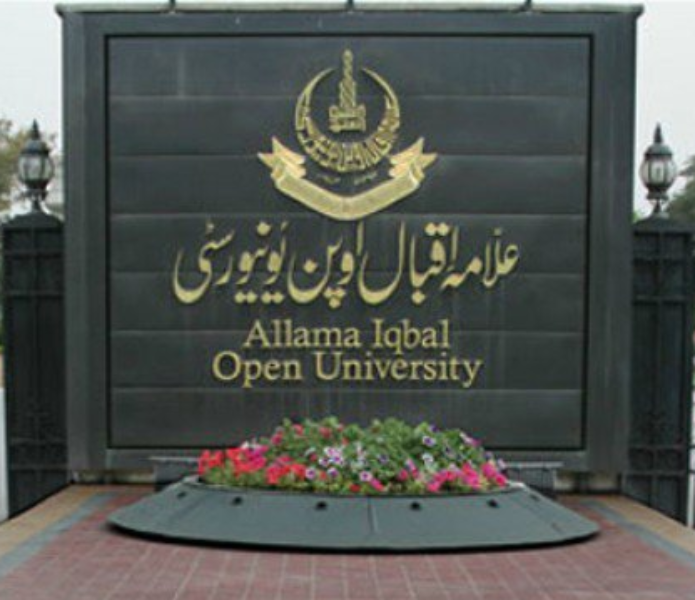
ISLAMABAD, Aug 27 (APP): Allama Iqbal Open University (AIOU) organized a programme on Seerat-un-Nabi (PBUH), in which speakers highlighted the teachings of the Holy Prophet (PBUH) and the importance of adopting Islamic values as a source of complete guidance and positive change in society.
The event was attended by Chief Justice of the Federal Shariat Court of Pakistan, Justice Dr Syed Muhammad Anwar, attend the program as chief guest. Vice Chancellor (VC) AIOU, Prof. Dr Nasir Mahmood, chaired the event. A large number of faculty members, officers, employees and students attended the event.
In his address, Syed Muhammad Anwar said, “Pakistan was established as an ideological state, and its future lies in following the teachings of the Qur’an and Sunnah. ‘La Ilaha Illallah is our goal, and Muhammad-ur-Rasool-Allah (PBUH) is the path to achieve it.”
He said among 57 Islamic countries, only a few have incorporated Islamic principles into their constitutions, adding that the life of the Holy Prophet (PBUH) offers complete guidance for social, economic, political and judicial matters.
He underscored that the State of Madina was built on the foundations of justice, equality, human rights, tolerance and the rule of law. These values must be adopted to bring meaningful change in society.
VC AIOU, said that the Holy Prophet (PBUH) set a practical example of tolerance, justice and compassion.
He stressed the importance of ensuring dignity, justice and equal opportunities for all citizens, and particularly emphasized the welfare of underprivileged and marginalized communities in the light of Islamic teachings.
Prof. Dr Shah Mohyuddin Hashmi, Dean, Faculty of Arabic and Islamic Studies, and Dr Shah Moeen-ud-Din Hashmi, Chairman, Department of Seerat Studies, also spoke on the occasion.