
- Advertisement -
ISLAMABAD, Dec 03 (APP): Bangladesh High Commissioner, Iqbal Hussain Khan, Wednesday opined that the South Asia development future rested in shared wellbeing enhanced through trade and connectivity cooperation amid propitious role of the New Generation Leadership, the youth that brought revolution in the East against redundant governance systems not fulfilling their needs as in Bangladesh, Nepal and Sri Lanka.
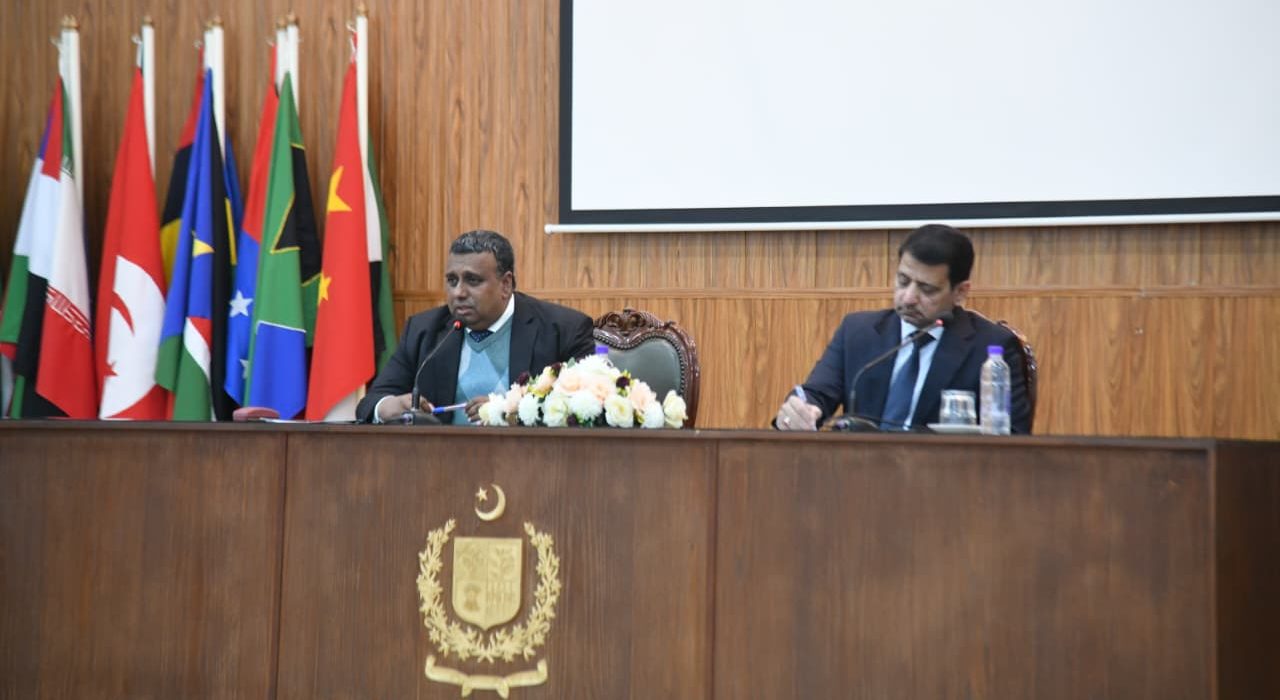
The Bangladeshi envoy called for deeper regional cooperation, expanded bilateral trade and greater people-to-people exchanges during his special address here at the Foreign Service Academy (FSA).
Speaking to the new batch of probationary officers, the envoy underscored the immense but under-utilised potential of Pakistan–Bangladesh relations and said South Asia’s future lies in shared development rather than isolation.
High Commissioner Khan said the two countries already enjoy a strong trade base, particularly in raw materials and textiles. Pakistan, he noted, is rich in minerals and supplies significant quantities of cotton and dolomite to Bangladesh’s thriving ready-made garments industry, one of the world’s largest. He also highlighted Pakistan’s export of rice to Bangladesh, stating that up to 100 million metric tons had been imported over the years to meet demand.
In return, Bangladesh remains a major global exporter of jute, pineapple and garments, he said, adding that both sides have opportunities to diversify trade. “Pakistanis are increasingly visiting Bangladesh for business, and Bangladeshis are now looking toward Pakistan. This two-way flow needs to be scaled up,” he remarked.
The envoy said that South Asia’s long-standing connectivity routes, from the historic Grand Trunk Road linking Kabul to Chittagong and onward to Myanmar, to rail lines laid during the British era, show the deep cultural and historical ties binding the region. “Our new generations are more educated, informed, and aspirational. They demand better lives, and political systems must respond to these expectations,” he added.
Referring to Bangladesh’s recent political developments, he said the 2024 shift in governance came from youth demanding accountability and opportunity. The upcoming elections, he added, aim to create a platform for “new leadership grounded in youth.”
Khan also cited examples from Sri Lanka and Nepal, saying political change across South Asia reflects rising public expectations. “We share a history of freedom from colonial rule, and with the same vision we can move forward together.”
Sharing insights from his recent travel across Pakistan, Khan noted the production of Surma in Sukkur, widely consumed in India but traded through third countries due to limited direct channels. He also discussed the long supply chain of Pashmina shawls produced in Indian Illegally Occupied Jammu & Kashmir (IIOJK), routed through Dubai, and then reaching Pakistan. “Healthy cooperation can fix these gaps. Currently, middlemen benefit the most while regional producers lose out.”
He stressed that many Pakistani products entering global markets are labeled as Indian due to existing trade routes, calling it a loss of identity and economic value for Pakistan. “Improved education and public awareness can transform public opinion and policymaking,” he said.
Responding to questions, Khan acknowledged that SAARC has struggled to deliver because India and Pakistan, the two major stakeholders, remain unable to resolve key issues. He said regional groupings in the East, such as the Bangladesh-India-Thailand-Myanmar (BIMSTEC) mechanism, emerged from this gap and have advanced cooperation based on cultural affinities.
He added that in the West, ECO offers a model of strong coordination built on cultural and religious ties. “Artificial barriers still exist, but people on both sides of borders are waiting for the right moment to embrace each other. SAARC will revive when the region is ready.”
The High Commissioner underscored that South Asia is highly vulnerable to natural disasters, calling for joint action and regional preparedness. “Borders cannot be excuses when catastrophe strikes. Germany’s post-war resilience was built on public education and our region must prioritise this as well.”
He also noted that Bangladesh’s public sentiment toward India is similar to Pakistan’s, shaped by geography and economic disparities. India’s per-capita income, he said, remains lower than Bangladesh’s despite its size. “If populations are not empowered through education and development, leaders often fabricate issues that divert attention from real challenges,” he warned.
High Commissioner Khan echoed this sentiment, expressing confidence that the new generation better informed, globally aware, and ambitious will steer the region toward greater connectivity, cooperation, and prosperity.
In his vote of thanks, Director General of the Foreign Service Academy Dr. Syed Ali Asad Gillani welcomed the envoy, acknowledging the “difficult but shared history” of Pakistan and Bangladesh. He praised the contributions of Bengali leaders to the creation of Pakistan and highlighted the cultural bond between the two peoples.
“Bangladeshis are a brave and resilient nation. Our relationship is rooted in common history, and we must not be hostage to the past. Instead, we should move forward with friendship and strength,” Dr Gillani said.