
Minister of State for Finance Bilal Azhar Kayani on Tuesday said expanding exports, improving access to finance for small and medium enterprises (SMEs), enhancing productivity and addressing structural bottlenecks were essential for achieving sustainable economic growth.
SME financing, export diversification key to sustainable economic growth: Bilal Kayani
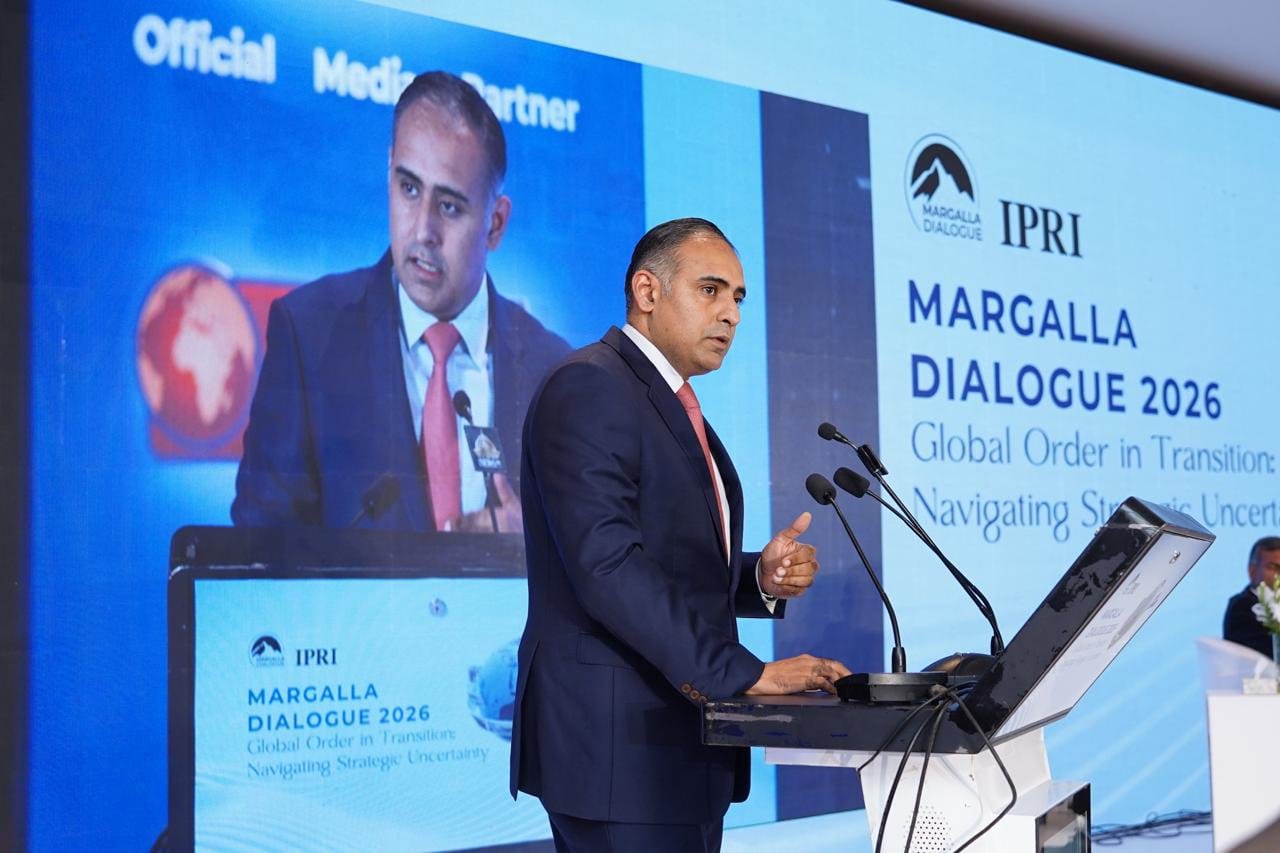
ISLAMABAD, Nov 10 (APP):Minister of State for Finance Bilal Azhar Kayani on Tuesday said expanding exports, improving access to finance for small and medium enterprises (SMEs), enhancing productivity and addressing structural bottlenecks were essential for achieving sustainable economic growth.
Addressing a special forum on “Economic Security: Pakistan’s Economic Bottlenecks – Diagnosis and Prescription”, he said exports remained the only sustainable source of earning foreign exchange and stressed the need to diversify export products, explore new markets and strengthen existing export sectors.
Referring to the Export Facilitation Scheme (EFS), he described it as an effective mechanism for supporting exporters by allowing duty-free imports of inputs used in goods meant for export.
However, he said the scheme’s outreach remained limited, as fewer than 1,000 out of an estimated 10,000 SMEs were benefiting from it.
He said the government was working to simplify procedures and remove regulatory hurdles that prevented a wider range of businesses from accessing existing export support facilities.
Sharing the findings of consultations with around 50 SME exporters, held on the Prime Minister’s direction, Bilal Azhar Kayani said most participants had identified access to finance, rather than energy costs, as their major concern.
He said these were established exporters, some of whom had been operating for years, but continued to face difficulties in obtaining financing that was already available under existing schemes.
He said the Prime Minister had made improving access to finance a priority and was engaging banks to assess their performance in extending credit to SMEs, small farmers and low-cost housing projects.
Emphasising the importance of private-sector consultation, he said policymaking should not be conducted in silos and that businesspeople who dealt with regulatory and operational challenges on a daily basis should be involved in designing economic policies.
He said recommendations from private-sector-led working groups had contributed to several tax measures announced in the recent budget, including the elimination of super tax for businesses earning between Rs150 million and Rs500 million, a two per cent reduction for businesses earning above Rs500 million and the removal of super tax on exporters.
He added tax relief had also been provided to salaried individuals.
Referring to reforms in the Export Development Fund, he said the government had accepted recommendations to place its management under private-sector leadership and abolish the export development surcharge.
He said the fund’s board was now led by exporters, with 89 exporters represented on it.
The minister also stressed the need for better coordination between federal and provincial governments to improve the utilisation of development funds, saying combined federal and provincial development spending exceeded Rs4 trillion.
Highlighting the link between education and economic productivity, he said improvements in the education system were necessary to develop a skilled workforce and achieve long-term economic gains.
He also underscored the importance of empowering local governments, saying decisions and resources should be available closer to citizens to address local issues effectively.
Bilal Kayani said better governance required improving the capacity and quality of public officials, ensuring respectful and informed interaction with citizens and reducing discretionary powers in the implementation of policies and government schemes.
