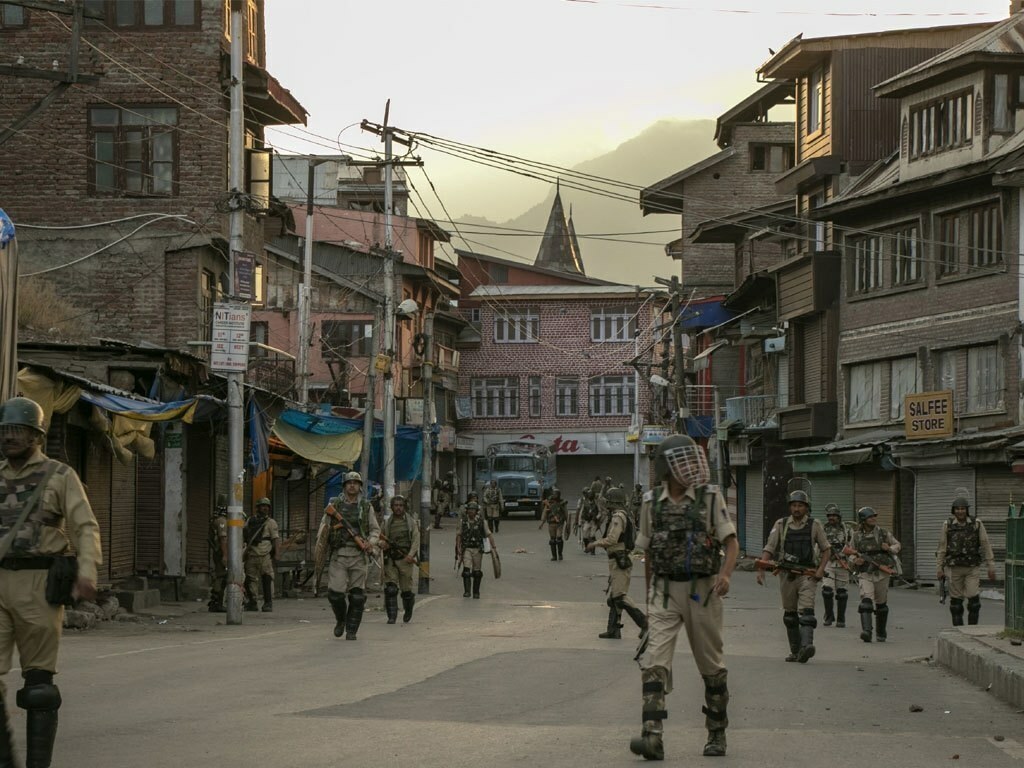
Analysts underscored that IIOJK remains one of the world’s most militarized regions, where Cordon and Search Operations (CASOs), mass detentions, and surveillance are routine, alongside grave human rights concerns regarding custodial deaths, fake encounters, and arbitrary arrests under PSA, UAPA, and AFSPA.
Seven years post-Article 370: IIOJK ground realities shatter India’s claims of peace, development
ISLAMABAD, Aug 05 (APP): Despite the passage of seven years since the abrogation of Articles 370 and 35A, India’s narrative framing the move as a historic achievement of peace and integration is utterly unmasked by severe economic distress, rising unemployment, relentless political unrest, heavy militarization, and demographic engineering.
According to defence and foreign policy analysts, mere economic statistics or selective tourism figures cannot hide the real issues of Indian Illegally Occupied Jammu and Kashmir (IIOJK).
They emphasised that sustainable peace and stability are only possible when civil and political rights are restored, human rights violations are held accountable, meaningful dialogue is initiated, and a solution to the Jammu and Kashmir dispute is sought in accordance with international laws, UN resolutions, and the aspirations of the Kashmiri people.
Evaluating India’s claims of progress ahead of Youm-e-Istehsal, annually observed on August 5, analysts highlighted that ground realities starkly contradict official claims of development. India projects tourist numbers as proof of normalcy, yet the sector remains volatile and security-dependent—further exposed by a sharp decline following the 2025 Pahalgam attack—leaving thousands in tourism and handicrafts without livelihoods.
Similarly, claims of GSDP growth fail to obscure severe economic distress, where youth and female unemployment remain elevated, and key sectors like horticulture, handicrafts, and MSMEs face heavy financial losses alongside controversial land policies and unfulfilled job promises.
In education, despite rising literacy and enrollment figures, continuous internet shutdowns, institutional closures, teacher shortages, and pervasive insecurity have deeply affected students and the youth.
Analysts underscored that IIOJK remains one of the world’s most militarized regions, where Cordon and Search Operations (CASOs), mass detentions, and surveillance are routine, alongside grave human rights concerns regarding custodial deaths, fake encounters, and arbitrary arrests under PSA, UAPA, and AFSPA.
Furthermore, unilateral alterations to land, domicile, and voting rights serve as a systematic effort to alter the Muslim-majority demographic structure, violating UN Security Council resolutions which mandate a free plebiscite.
Interferences in religious leadership, Islamic institutions, Auqaf affairs, and local culture further threaten Kashmir’s heritage.
Rather than suppressing resistance, these policies have unified mainstream parties, civil society, and religious leadership under the July 2026 movement for statehood restoration, proving that Kashmiri political aspirations remain unfulfilled and that true peace requires rights restoration, accountability, and meaningful dialogue under UN resolutions.