The Senate Standing Committee on Water Resources met at Parliament House on Friday under the chairmanship of Senator Jam Saifullah Khan to review the implementation of its previous recommendations, examine the Public Sector Development Programme (PSDP) allocations for the water sector, and receive a comprehensive briefing on the performance and mandate of the
Senate panel reveiws PSDP allocations, major water projects
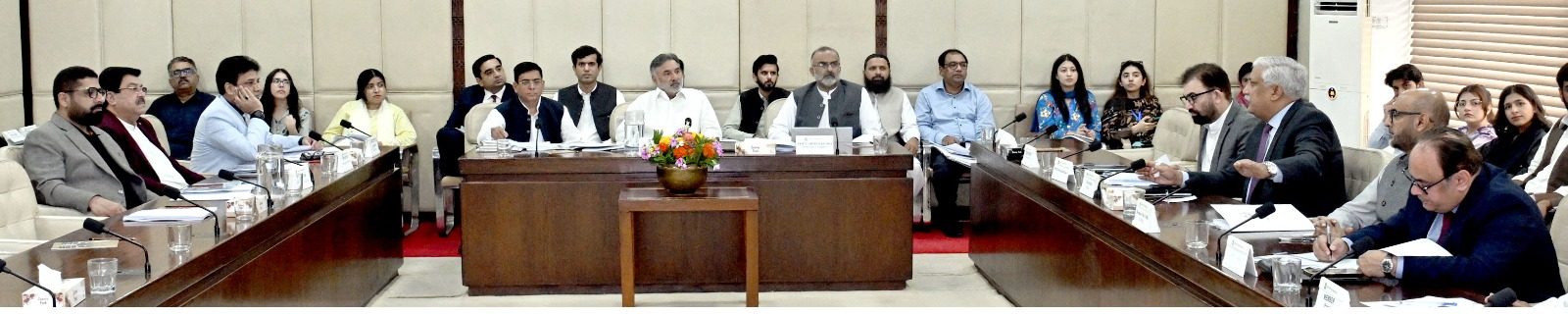
ISLAMABAD, Jul 10 (APP): The Senate Standing Committee on Water Resources met at Parliament House on Friday under the chairmanship of Senator Jam Saifullah Khan to review the implementation of its previous recommendations, examine the Public Sector Development Programme (PSDP) allocations for the water sector, and receive a comprehensive briefing on the performance and mandate of the Water and Power Development Authority (WAPDA).
The Committee emphasized the need for timely compliance by all concerned organizations.
While reviewing the compliance report, the Committee was informed that work on the river encroachment monitoring system is underway through satellite imagery.
The Committee noted that Khyber Pakhtunkhwa had reported 227 encroachment points, of which imagery had been obtained for only 18 locations, while Punjab had reported 2,737 encroachment points. WAPDA informed the Committee that provincial authorities were actively removing encroachments through district administrations.
Chairman Senator Jam Saifullah Khan underscored the need for greater use of modern technology in flood forecasting and river management. He directed that the Committee’s next meeting be dedicated to the use of satellite and other advanced technologies for flood management. He further proposed an in-camera meeting on the implications of the Indus Waters Treaty, future reservoir development in Pakistan, and national water security.
The Committee decided to invite representatives from the Ministry of Foreign Affairs, the World Bank, the National Disaster Management Authority (NDMA), the Federal Flood Commission (FFC), and provincial irrigation departments for detailed deliberations.
The Committee also reviewed the staffing position in the Federal Flood Commission. It was informed that the request for a No Objection Certificate (NOC) to fill vacant posts is pending with the Establishment Division. Taking serious notice of the matter, the Committee directed the Establishment Division to expedite the issuance of the NOC in view of the critical role of the Commission during the ongoing flood season.
The Committee was further informed that the draft Dam Safety Council Bill had been finalized and would soon be submitted to the Ministry of Water Resources. The Committee observed that dam safety is presently being managed through executive arrangements rather than a dedicated legal framework.
The Committee held a detailed discussion on groundwater depletion across the country. Members were informed that groundwater levels continue to decline in several districts of Punjab, including Okara, Vehari, Sahiwal, Multan and Lahore. Chairman Senator Jam Saifullah Khan emphasized the need to adopt international best practices for groundwater conservation, efficient irrigation techniques and sustainable water management to enhance agricultural productivity while protecting water resources.
During the meeting, Senator Muhammad Aslam Abro raised concerns regarding encroachments along the River Ravi. Punjab irrigation authorities informed the Committee that no critical encroachments currently exist. However, in response to questions regarding housing developments near the riverbanks, the Chairman Committee directed the concerned authorities to submit complete and verified information to the Committee and, if necessary, provide a detailed briefing in the next meeting under a separate agenda item.
The Committee also reviewed floodplain management mechanisms. The Ministry of Water Resources informed the Committee that provincial floodplain zoning systems are in place. The Chairman directed all provinces to present their floodplain zoning maps so that weaknesses could be identified and addressed. The Governments of Punjab and Sindh will be invited to participate in the next meeting for this purpose.
On groundwater management, Sindh irrigation authorities informed the Committee that approximately 80 percent of groundwater in the province is saline and that a provincial groundwater law is under preparation. The Chairman directed the Government of Sindh to provide the draft legislation to the Committee. Khyber Pakhtunkhwa informed the Committee that no comprehensive groundwater assessment has yet been conducted due to the absence of piezometer installations.
Balochistan officials reported that annual groundwater usage exceeds available resources, resulting in a significant deficit across 18 groundwater basins. Provincial authorities outlined plans for groundwater monitoring, construction of recharge dams and development of GIS-based decision support systems.
While discussing the Nai Gaj Dam Project, WAPDA informed the Committee that the original contractor had submitted a fake bank guarantee in 2009, causing a financial loss of approximately Rs.23 billion.
The contract was subsequently terminated, the contractor blacklisted and the matter is currently pending before the Supreme Court. The Committee endorsed the Ministry’s position and stressed the importance of ensuring accountability while expediting completion of the project, which has the potential to irrigate approximately 28,000 acres of land.
The Committee also received updates on several major water projects, including Hingol Dam, Harpo Dam, Kachhi Canal, RBOD-I and RBOD-III, and reviewed issues relating to waterlogging and drainage infrastructure.
While discussing the Neelum-Jhelum Hydropower Project, WAPDA informed the Committee that repairs to the damaged tunnel are progressing following the incident that occurred after commissioning.
It was further informed that nearly 80 percent of the project’s construction cost has already been recovered through electricity generation.
Chairman Senator Jam Saifullah Khan emphasized that the causes of tunnel failure and cost escalations must be investigated through a transparent and independent inquiry.
He assured that the Committee would fully support an impartial investigation to ensure accountability and safeguard future national infrastructure projects.
Reviewing PSDP allocations for the current financial year, the Committee expressed serious concern over the substantial shortfall in funding for both water and power projects. Members observed that inadequate allocations would adversely affect the timely completion of strategically important projects and called for enhanced financial support to the water sector.
During the briefing on WAPDA’s organizational structure and performance, the Committee was informed that the Authority’s primary mandate is now focused on the development and management of water reservoirs. WAPDA also briefed the Committee on its financial management system, internal audit mechanisms and institutional reforms.
Concluding the meeting, Chairman Senator Jam Saifullah Khan directed that a separate meeting be convened to comprehensively examine the Right Bank Outfall Drain (RBOD) projects and their operational challenges.
The Committee discussed 11 recommendations from previous meetings, while the remaining recommendations will be taken up in the next sitting.
The meeting was attended by Senators Khalil Tahir, Poonjo Bheel, Asad Qasim, Muhammad Aslam Abro, and senior officials from the relevant departments.