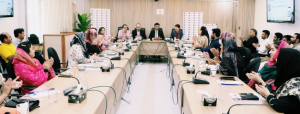
ISLAMABAD, Aug 4 (APP):Sustainable Development Policy Institute (SDPI) held a ceremony on Tuesday to mark the successful completion of the second phase of its Digital Financial Literacy Training (DFLT-II) programme under the Benazir Income Support Programme (BISP). The programme reached more than 255,000 beneficiaries nationwide. The initiative, supported by Deutsche Gesellschaft für Internationale Zusammenarbeit (GIZ) and the European Union in Pakistan, began in 2023 as a small pilot project before …

ISLAMABAD, Aug 4 (APP):Sustainable Development Policy Institute (SDPI) held a ceremony on Tuesday to mark the successful completion of the second phase of its Digital Financial Literacy Training (DFLT-II) programme under the Benazir Income Support Programme (BISP). The programme reached more than 255,000 beneficiaries nationwide.
The initiative, supported by Deutsche Gesellschaft für Internationale Zusammenarbeit (GIZ) and the European Union in Pakistan, began in 2023 as a small pilot project before expanding into a nationwide effort spanning all four provinces.
Dr Abid Qaiyum Suleri, Executive Director, SDPI, described the programme as a landmark in Pakistan’s digital payments history, particularly for its scale in training women. He said informal training and capacity building often carry more weight than formal education because they reach diverse groups with varied social backgrounds.
Dr. Fareeha Armughan, SDPI Research Fellow and Lead of the Center for Evidence Action and Research, who led the project, said the team stayed on target throughout the rollout, which ran from July 2024 and drew support from BISP offices across the country.
The training effort involved roughly 250 trainers, 40 implementation coordinators and a 30-member quality assurance team, Dr Armughan said, adding that all interviews conducted during the programme underwent complete audio audits, and that IT specialist Hammad managed a dataset covering more than eight million records. The programme concluded with an amicable close-out of the activity between SDPI and BISP, she maintained.
Dr Shafqat Munir, Deputy Executive Director (Policy), SDPI, praised the fieldwork behind the achievement, noting the difficulties faced by teams working directly with beneficiaries. He said the project would be featured prominently in the institute’s evidence-based influencing portfolio, calling it a strong example of the organization’s field-level impact.
Dr. Sajid Amin Javed, Deputy Executive Director (Research), SDPI, said the programme’s success reflected clarity of leadership and team commitment. He credited the project lead’s leadership since joining the institute and urged the team to continue sharing credit with colleagues involved in the effort.
The ceremony concluded with a cake-cutting celebration. Certificates were distributed by Dr. Abid Suleri to the team lead, senior consultant, provincial coordinators, field staff, implementation coordinators and members of the quality assurance team in recognition of their contributions to the programme.