The Supreme Court of Pakistan has ruled that a judicial officer found to have a tarnished reputation cannot continue serving in the judiciary even if a specific charge of corruption is not conclusively proved, restoring the penalty of removal from service and setting aside a tribunal’s decision that had converted the punishment into compulsory retirement.
SC restores removal of judicial officer, says judges must be beyond reproach
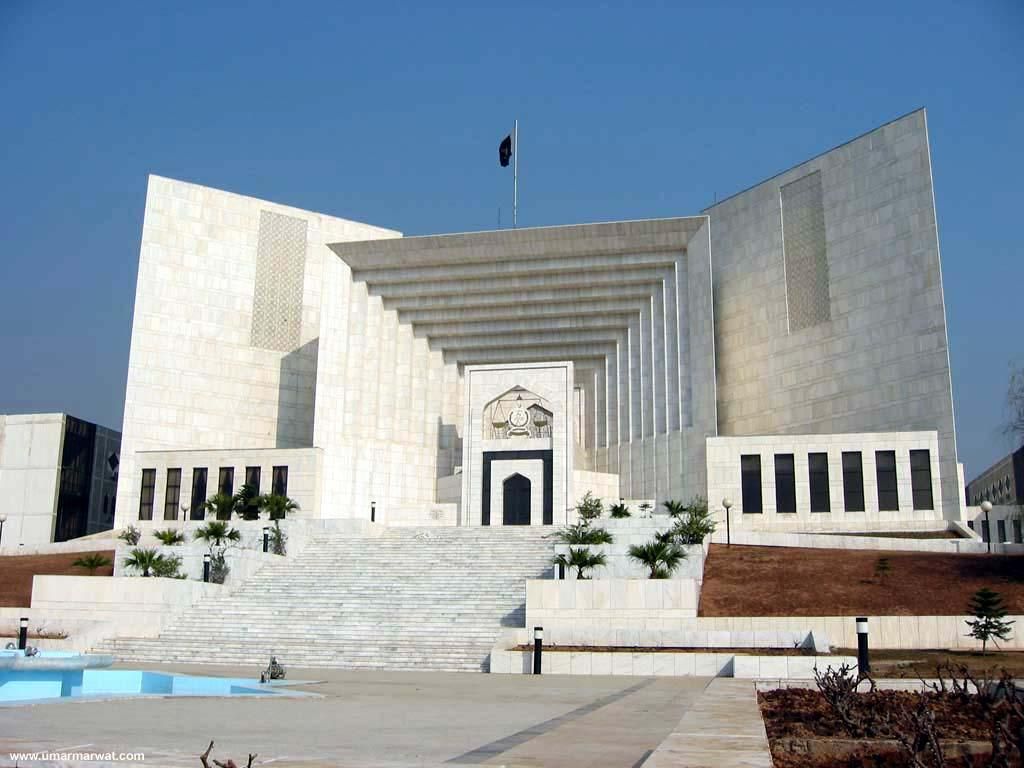
ISLAMABAD, Jun 19 (APP): The Supreme Court of Pakistan has ruled that a judicial officer found to have a tarnished reputation cannot continue serving in the judiciary even if a specific charge of corruption is not conclusively proved, restoring the penalty of removal from service and setting aside a tribunal’s decision that had converted the punishment into compulsory retirement.
A three-member bench comprising Justice Shahid Waheed, Justice Naeem Akhtar Afghan and Justice Muhammad Shafi Siddiqui announced the judgment while deciding three connected petitions arising from disciplinary proceedings against a former additional district and sessions judge.
The case originated from complaints alleging that the judicial officer had received illegal gratification for influencing judicial decisions while serving at Mailsi in district Vehari.
The Lahore High Court initiated disciplinary proceedings after receiving adverse reports and complaints regarding his conduct and reputation. Following an inquiry, the competent authority imposed the major penalty of removal from service in 2013.
The judicial officer challenged both the removal order and adverse remarks recorded in his Performance Evaluation Report (PER) before the Punjab Subordinate Judiciary Service Tribunal. In a consolidated judgment delivered in January 2025, the tribunal held that evidence was insufficient to prove allegations of illegal gratification and modified the punishment from removal to compulsory retirement.
The Lahore High Court challenged that decision before the Supreme Court, while the judicial officer sought complete exoneration, reinstatement in service and expunction of adverse remarks from his PER.
In its detailed judgment authored by Justice Shahid Waheed, the Supreme Court upheld the tribunal’s finding that there was insufficient evidence to establish the specific allegation of accepting illegal gratification. However, the Court maintained that the finding regarding the officer’s bad reputation and questionable integrity was supported by evidence and could not be disturbed.
The Court observed that a district and sessions judge, being the immediate superior officer, is best positioned to assess the conduct, performance and integrity of subordinate judicial officers. It noted that allegations of personal bias raised by the officer against his reporting judge were not substantiated during disciplinary proceedings.
The judgment emphasized that standards applicable to judges are fundamentally different from those governing ordinary civil servants. It stated that while competence can be assessed through judgments, integrity is judged through reputation, which forms the basis of public confidence in the judicial system.
“The standard for a judge is not merely ‘not guilty’ but ‘beyond reproach’,” the Court observed, adding that the authority of the judiciary rests on legitimacy derived from competence and integrity.
The bench further held that public confidence in the judiciary is indispensable and that the institution cannot retain a judge whose reputation has been seriously compromised. According to the judgment, judicial office requires not only actual integrity but also the appearance of integrity in the eyes of the public.
Drawing upon constitutional principles, judicial precedents and Islamic teachings, the Court observed that justice is a sacred trust and that judges must maintain the highest standards of moral character and impartiality.
The Supreme Court concluded that compulsory retirement was not an appropriate punishment in such circumstances because it would allow a judge of poor reputation to retire with benefits, thereby undermining accountability and public confidence.
Consequently, the Court converted the Lahore High Court’s petition into an appeal, partly allowed it, restored the original penalty of removal from service imposed in 2013, and dismissed the judicial officer’s petitions seeking reinstatement and expunction of adverse remarks. No order as to costs was made.