By Mudassar Iqbal ISLAMABAD, Jun 26 (APP):A media group owned and operated by the government of Russia is considering to establish a multi-purpose editorial center in Islamabad and a wider correspondent network across Pakistan. Director General of Rossiya Segodnya, Dmitry Kiselev in an interview with APP said plans were underway to launch Urdu-language social media platforms, while coverage was expected to focus on both international issues and developments within Pakistan. …
Russian media group plans to set up multi-purpose editorial centre in Islamabad: DG Rossiya Segodnya
By Mudassar Iqbal
ISLAMABAD, Jun 26 (APP):A media group owned and operated by the government of Russia is considering to establish a multi-purpose editorial center in Islamabad and a wider correspondent network across Pakistan.
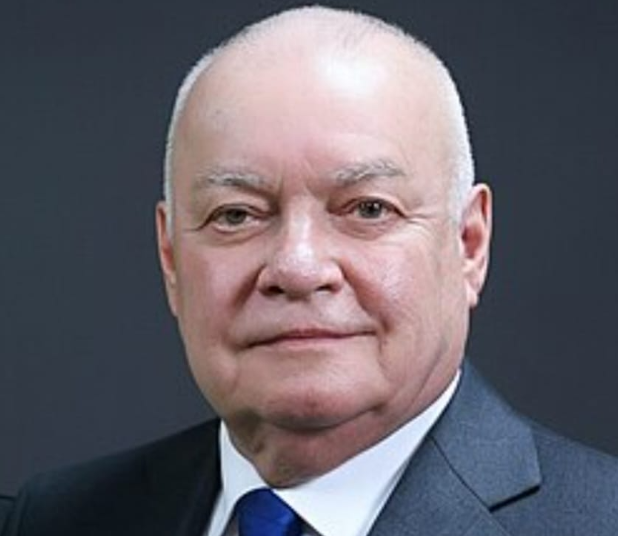
Director General of Rossiya Segodnya, Dmitry Kiselev in an interview with APP said plans were underway to launch Urdu-language social media platforms, while coverage was expected to focus on both international issues and developments within Pakistan.
The Director General said on its 85th anniversary currently going on, Rossiya Segodnya aimed to strengthen cooperation with Pakistani media organizations and serve as a platform for information exchange between the two countries in the years ahead.
He outlined the media group’s international priorities, expansion plans, and vision for stronger cooperation with Pakistan and planed to increase its presence in South Asia through new partnerships, multilingual content, and journalist exchanges.
The Director General described Pakistan as an important partner and said the organization gave particular attention to media relations with Pakistani institutions.
He pointed out Moscow-Islamabad Media Forum as an example of this cooperation, noting the participation of senior officials, diplomats, and policy experts from both countries.
He also highlighted existing Memorandum of Understandings (MoUs) with Associated Press of Pakistan, The Nation, and Pakistan Observer which were signed in Islamabad last year, as well as the presence of a permanent RIA Novosti correspondent in Pakistan and this would impact more on this field in future.
Regarding future initiatives, he identified several areas where cooperation could expand. These include direct exchanges of news content, greater access between newsrooms, media forums, expert conferences, and joint projects covering economic, scientific, and cultural subjects.
He also proposed press visits for Pakistani journalists to Russia and similar visits for Russian journalists to Pakistan to improve understanding of developments in both countries.
While discussing bilateral relations, he said cooperation between Russian and Pakistani media organizations should not be viewed solely through a strategic lens. Instead, he described it as part of a broader effort to encourage direct communication between countries and societies.
He said Rossiya Segodnya was an international media organization focused on providing coverage of global developments while presenting multiple viewpoints on major events.
The group operates through its main brands, RIA Novosti and Sputnik, with correspondents working in dozens of countries. Sputnik published content in 34 languages and provides news, radio, and multimedia services to audiences across several regions.
The organization, he said, had its international strategy increasingly focusing on Asia, Africa, the Middle East, and Latin America, where audience growth has continued in recent years.
Its network included hundreds of partner organizations, media outlets, universities, and research institutions across more than 100 countries.
According to the Director General, the media group’s role remained centered on producing news content and supporting access to information from different perspectives. Alongside this mission, the organization had increasingly focused on responding to misinformation and manipulated content, including deepfakes.
He said international media organizations face growing pressure to provide accurate information and that maintaining trust with audiences remained a key objective.
He said media group has continued to expand its international operations through new editorial centers, radio broadcasts, and correspondent offices.
Recent developments included the opening of an editorial hub in Ethiopia, modernization of operations in Beijing, and the launch of FM broadcasting in Beirut. Sputnik programming was also available through radio stations in several African countries, while new broadcasting initiatives had been introduced in Mongolia, Vietnam, Indonesia, Argentina, and Brazil. The organization was also exploring opportunities to establish additional offices across Africa and Asia.
The interview also covered educational and professional development programs. Since 2018, Rossiya Segodnya had operated SputnikPro, an international training initiative designed for journalists, media students, press officers, and digital content creators. The program included seminars, workshops, and lectures conducted by media professionals and experts.
According to the organization, SputnikPro has organized activities in numerous countries and attracted thousands of participants. Pakistani students had already taken part in webinars through the initiative, while a journalist from Associated Press of Pakistan recently attended a four-week training module in Moscow.
The organization expressed interest in expanding such opportunities with Pakistani media institutions in the future.
Looking ahead, the Director General identified South Asia as an important region because of its economic growth, population size, and expanding media market. He said multilingual journalism would be necessary to support trade, education, cultural exchanges, and broader cooperation between Russia and South Asian countries. Particular emphasis was placed on broadcasting in regional languages, including Urdu, Punjabi, Pashto, and Bengali. The launch of Urdu-language services was described as one of the organization’s main priorities in the region.