Federal Minister for Climate Change and Environmental Coordination Dr Musadik Malik has called on wealthy countries to share the financial burden of recycling in developing nations, arguing that poorer populations should not be made to pay for waste generated through consumption in richer economies.
By Abdul Samad Tariq
ANTALYA, Nov 18 (APP):Federal Minister for Climate Change and Environmental Coordination Dr Musadik Malik has called on wealthy countries to share the financial burden of recycling in developing nations, arguing that poorer populations should not be made to pay for waste generated through consumption in richer economies.
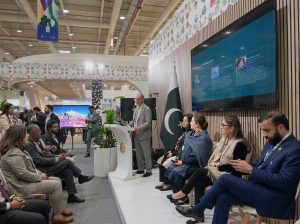
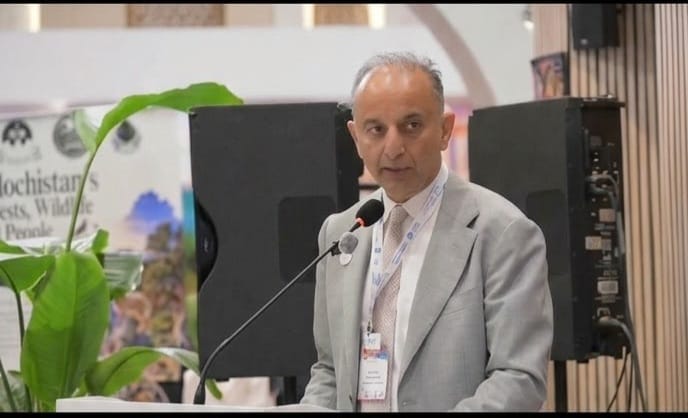
Speaking at an event titled From Collection to Circularity: Methane Reduction, MRV Waste Solutions for Pakistan at the Pakistan Pavilion during COP31, he said the transition towards a circular economy would remain inequitable unless developed countries provided financial support to countries handling the growing burden of waste.
“If you want us to process, you pay for it,” Malik said, pointing out that recycled materials were often more expensive than virgin materials, creating an additional cost for developing countries seeking to expand recycling.
He questioned the fairness of a system in which low-income consumers in poorer countries could end up paying more for recycled products, while wealthier consumers continued using cheaper virgin materials.
“Our poor people are not going to pay for it. Your rich people are going to use virgin products and our poor people are going to then consume the more expensive recycled products. Where is the justice in this?” he said.
The minister proposed establishing an international financing mechanism to support circular economy initiatives in developing countries, suggesting viability-gap funding and the introduction of recycling, plastic or circularity credits to make recycling economically sustainable.
He said financial assistance was necessary to prevent the costs of transitioning towards sustainable waste management from being transferred to vulnerable populations.
Malik also called for broadening the principle of Extended Producer Responsibility (EPR), arguing that accountability should extend beyond manufacturers to businesses and consumers that use and discard plastic products.
While supporting producer responsibility, he proposed an Extended Users’ Responsibility framework, saying waste pollution was not generated solely during production but also through consumption and disposal.
“Those who use and waste should be held responsible,” he said, adding that plastic waste generated through consumption often ended up in oceans and on the shores of developing countries.
He maintained that Pakistan was committed to recycling but wanted the sector to operate under strict environmental and public health standards.
The minister said the government would not allow Pakistan to become a dumping ground for foreign plastic waste, warning against the export of waste to developing countries by nations whose domestic regulations restricted its disposal.
He also opposed hazardous informal recycling practices, including burning large quantities of plastic to extract small amounts of copper, saying public health protection would remain the government’s primary consideration.
The event was organised by the Ministry of Climate Change and Environmental Coordination in collaboration with Islamic Relief and Waste Busters on the sidelines of COP31.