
ISLAMABAD, Jan 14 (APP):Strengthening Pakistan–Bangladesh academic ties and promoting regional cooperation in higher education, Rector COMSATS University Islamabad (CUI), Prof. Dr. Raheel Qamar, has offered faculty development scholarships to Bangladesh Medical University and the University of Rajshahi during a major South Asian higher education conference in Dhaka. Prof. Dr. Raheel Qamar is part of the Higher Education Commission (HEC) of Pakistan’s delegation of vice chancellors participating in SARCHE 2026 — …
Rector COMSATS offers faculty development scholarships to leading Bangladeshi universities
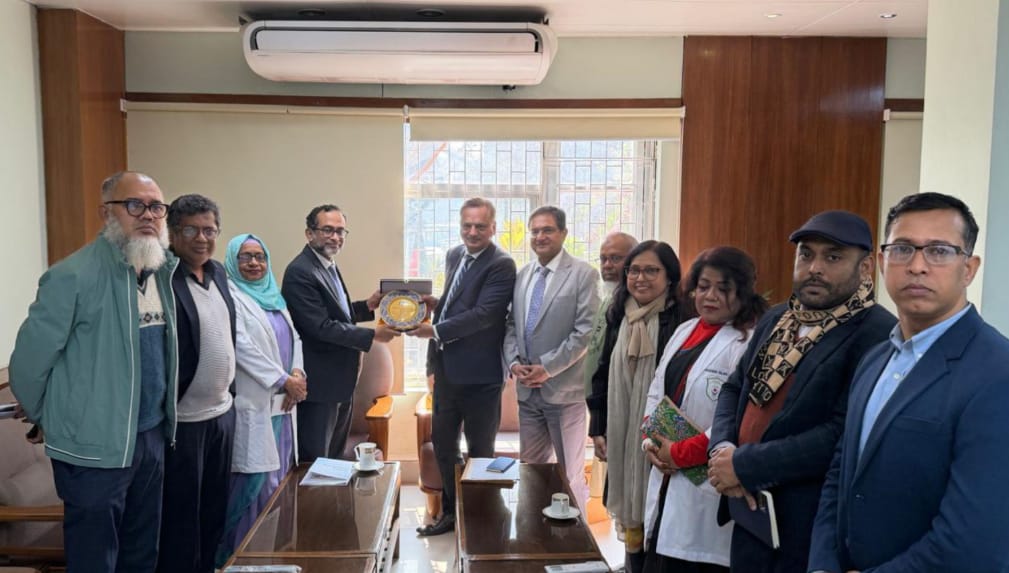
ISLAMABAD, Jan 14 (APP):Strengthening Pakistan–Bangladesh academic ties and promoting regional cooperation in higher education, Rector COMSATS University Islamabad (CUI), Prof. Dr. Raheel Qamar, has offered faculty development scholarships to Bangladesh Medical University and the University of Rajshahi during a major South Asian higher education conference in Dhaka.
Prof. Dr. Raheel Qamar is part of the Higher Education Commission (HEC) of Pakistan’s delegation of vice chancellors participating in SARCHE 2026 — the South Asian Regional Conference on Higher Education — which has brought together more than 30 international delegates, including senior representatives from Malaysia, Maldives, Nepal, Pakistan, Sri Lanka, the United Kingdom and other countries, along with officials from the World Bank.
On the sidelines of the conference, Prof. Qamar held separate meetings with Prof. Md. Shahinul Alam, Vice Chancellor of Bangladesh Medical University (BMU), and Prof. Dr. Saleh-Hasan-Naqib, Vice Chancellor of the University of Rajshahi.
The meetings focused on enhancing regional research collaboration, strengthening academic partnerships, and promoting faculty and student exchange programmes between leading institutions of Pakistan and Bangladesh.
During the discussions, Prof. Qamar extended COMSATS University Islamabad’s standing offer of ten postgraduate scholarships per university for faculty members of both Bangladesh Medical University and the University of Rajshahi, aimed at supporting faculty development and advanced research training.
It was also agreed that CUI’s commercialized biomedical products, KytoStat and KytoGraft, will be provided to Bangladesh Medical University for testing and evaluation under the Bangladeshi healthcare environment. This collaboration is expected to support improved healthcare outcomes while offering socio-economic benefits as a goodwill initiative from Pakistan.
The meetings further emphasized new models of joint research, particularly the use of artificial intelligence to map research gaps, optimize resource utilization and collaboratively address region-specific socio-economic and healthcare challenges.
Both sides expressed strong interest in developing data-driven research frameworks to enhance the quality, relevance and impact of research across South Asia.
The three-day SARCHE 2026 conference features eight thematic sessions. The first day focused on “The Current State of Higher Education in South Asia: Governance, Quality and Inclusion” and “Research, Innovation, Sustainability and Social Engagement.”
The second day includes sessions on artificial intelligence integration and digital transformation, industry–academia collaboration and graduate employability, future pathways of higher education through regional cooperation, stakeholder dialogue on higher education transformation, and a vice-chancellors’ dialogue in the context of the HEAT Project.
The final day will address gender issues in higher education, followed by the adoption of the “Dhaka Higher Education Declaration.”
The conference was inaugurated by Nobel Laureate Prof. Dr. Muhammad Yunus, Chief Adviser to the Government of Bangladesh.