
- Advertisement -
ISLAMABAD, Dec 23 (APP): Rapid population growth has emerged as a critical non-traditional security challenge for Pakistan, with far-reaching implications for governance, economic stability, and national resilience, experts emphasized at a high-level roundtable jointly organized by the Institute of Strategic Studies Islamabad (ISSI) and the Population Council Pakistan.
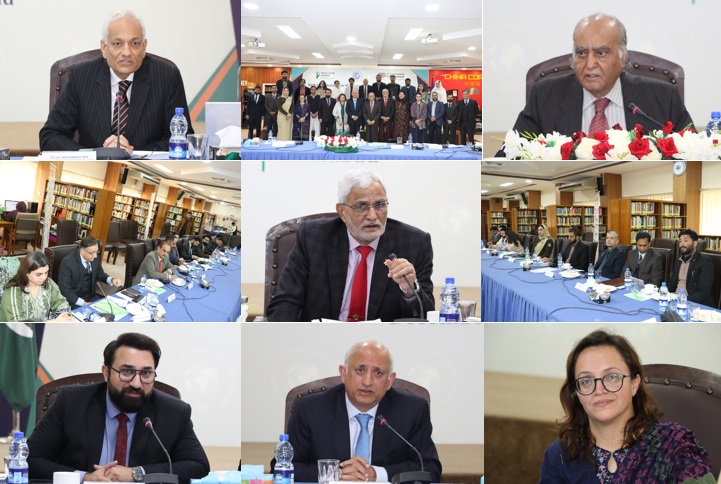
Titled “Rapid Population Growth and its Security Implications,” the roundtable brought together senior policymakers, security and public policy experts, academics, and development practitioners to examine how demographic pressures are reshaping Pakistan’s security landscape and straining state capacity, said a press release issued on Tuesday.
Opening the session, Dr. Ali Muhammad Mir, Senior Director, Programs and Research, Population Council Pakistan, welcomed the participants and underscored that population dynamics are no longer peripheral to national security thinking but central to it. He highlighted that Pakistan’s population has crossed 256 million in 2025, making it the fifth most populous country globally, with a growth rate exceeding 2.1 percent. Dr. Mir cautioned that the core challenge lies not merely in numbers but in the speed of population growth, which is outpacing the state’s capacity to provide health, education, employment, housing, water, and energy. He stressed that unchecked population growth risks turning Pakistan’s youth bulge into a demographic liability, eroding human capital, social cohesion, and governance capacity. Emphasizing that population policy is national security policy, he called for framing population balance as a strategic imperative grounded in rights, responsibilities, and resources.
In his inaugural remarks, Ambassador Khalid Mahmood, Chairman Board of Governors, ISSI, thanked the Population Council for partnering with the Institute and noted that demographic pressures have far-reaching implications for governance, resource management, and national resilience. He observed that rising demand for food, water, energy, and public services, coupled with rapid urbanization, is intensifying social and economic pressures. Drawing on international experiences from Asia, including Bangladesh, Indonesia, and Vietnam, Ambassador Khalid Mahmood noted that sustained investments in education, health, and family planning can help transform demographic challenges into opportunities. He emphasized the need to integrate population considerations into long-term planning frameworks to strengthen Pakistan’s stability, competitiveness, and international standing.
Ali Mazhar, Director Communications, Population Council Pakistan, outlined Pakistan’s key population trends, including high fertility rates, a large youth cohort, widespread out-of-school children, and low female labor force participation. While tracing the evolution of population policy and introducing the Tawazun (Balance) Narrative, Mazhar stated that this policy promotes informed and voluntary family decision-making, universal access to family planning, and alignment between population growth and available resources. He further noted that the roundtable is part of a broader consultative effort to integrate population issues into human and national security frameworks. Placing these dynamics within contemporary security literature, Dr. Neelum Nigar, Director, Centre for Strategic Perspectives, ISSI, emphasized that population growth functions as a risk multiplier. She further stated that when governance capacity lags behind, it intensifes human security pressures, undermining state legitimacy, and contributing to internal instability, particularly in peripheral regions. Dr Nigar also acknowledged that Pakistan’s National Security Policy adopts a human-centric approach, however persistent implementation gaps, policy incoherence, and institutional constraints are key challenges in its implementation. She further stated that identified priorities such as risk-based demographic assessments, whole-of-government alignment, strategic foresight, and addressing policy paradoxes are key to address the persistent population growth.
The moderated panel discussion featured Air Marshal (Retd.) Farhat Hussain and Haroon Sharif, Chairman, Pakistan Regional Economic Forum, with Dr. Saima Zubair serving as moderator. Air Marshal Farhat Hussain described rapid population growth as one of the most serious threats to Pakistan’s national security, warning that large numbers of out-of-school and unemployed youth undermine human development and increase vulnerability to instability and extremism. He emphasized that people-centric policies, prioritizing education, health, and livelihoods, must form the core of national security. Haroon Sharif offered a political economy perspective, noting the growing mismatch between Pakistan’s demographic pressures and its economic capacity. He highlighted declining growth rates, constrained fiscal space, rising debt servicing, and limited job creation for millions entering the labor market annually. Stressing the need for governance reform, he argued for depoliticized, evidence-based policymaking, innovative financing mechanisms for youth employment, and a shift towards skills, technology, and knowledge-based growth to harness demographic potential.
Participants from academia, policy institutions, civil society, and research organizations further enriched the discussion by sharing a wider perspective on the issues. They underscored the need to address population growth through a comprehensive human security lens, linking it to water scarcity, food security, climate vulnerability, urbanization, and irregular migration. Participants stressed that fragmented policymaking, weak implementation mechanisms, and insufficient investment in health and education undermine long-term stability. They called for stronger data systems, institutional coordination, and sustained engagement with religious leaders, media, and youth to advance a balanced, rights-based population discourse. Several speakers emphasized that integrating the Tawazun (balance) narrative into national security thinking, development planning, and public communication is essential for building consensus and enhancing resilience in the face of Pakistan’s demographic challenges.
Concluding the dialogue, participants agreed that rapid population growth significantly amplifies Pakistan’s existing security, governance, and development challenges. The roundtable underscored the need for renewed commitment, institutional coordination, and strategic foresight to embed population management within Pakistan’s national security framework. The discussions reinforced that demography is not destiny; rather, policy choices will determine whether Pakistan’s population becomes a source of stability and strength or a driver of risk.