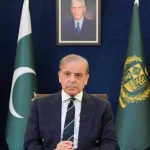
President Asif Ali Zardari has reaffirmed Pakistan’s commitment to eliminating all forms of violence against women and girls, emphasizing that safeguarding women’s rights is essential to upholding human rights as a whole.
President Zardari reaffirms resolve to end violence against women

ISLAMABAD, Nov 24 (APP): President Asif Ali Zardari has reaffirmed Pakistan’s commitment to eliminating all forms of violence against women and girls, emphasizing that safeguarding women’s rights is essential to upholding human rights as a whole.
In a message on the International Day for the Elimination of Violence against Women and the 16 Days of Activism, being observed on November 25, he said the day also marked the beginning of the 16 Days of Activism, which conclude on Human Rights Day, December 10.
“Together, these observances remind us that the protection of women’s rights is fundamental to the protection of human rights,” he added.
The president said the Constitution of the Islamic Republic of Pakistan provides a clear foundation for this responsibility. Article 14 guarantees the dignity of every person, Article 25 establishes equality before the law and Article 34 directs the State to ensure the full participation of women in all spheres of national life.
As a State Party to the Convention on the Elimination of All Forms of Discrimination against Women (CEDAW), Pakistan has also undertaken international obligations to protect women from discrimination and violence and to ensure that those responsible are held accountable, he added.
“This commitment also has an important place in our political and constitutional history. The Constitution of 1973, adopted under the leadership of Shaheed Zulfikar Ali Bhutto, established equality before the law and called for the full participation of women in national life,” President Secretariat Media Wing, in a press release, quoted President Zardari, as saying.
Shaheed Mohtarma Benazir Bhutto carried this principle forward and gave practical expression to it through initiatives such as the establishment of the First Women Bank and women police stations, aimed at expanding women’s economic opportunities and improving their access to public services, he added.
The president observed that their contributions remind them that equal rights must be reflected in the opportunities available to women and in their ability to seek protection and justice.
He further mentioned that Pakistan had taken important steps to strengthen its legal and institutional framework in this regard. Legislation addresses workplace harassment, acid attacks, offences committed in the name of honour, rape and anti-women practices, adding Pakistan has taken steps to strengthen its legal and institutional response to violence against women.
However, he opined, legislation must be matched by effective implementation, timely action on complaints and adequate support for survivors. Emerging forms of abuse, including technology-facilitated violence, also require appropriate safeguards and institutional responses.
He further said preventing violence must remain a shared responsibility, supported by public awareness, education and the active participation of men.
The National Action Plan for Human Rights 2026 includes specific commitments for the protection of women, while the national human rights helpline 1099 provides access to legal advice and referral services across the country, he added.
The president said violence against women has consequences that extend into every aspect of daily life. It can prevent a girl from attending school, make it difficult for a woman to continue her employment or restrict her ability to move freely and access essential services.
Families and communities also bear the consequences. Every woman must be able to pursue her education, earn a livelihood and participate in public life without fear of harassment, abuse or violence, he added.
The president stressed that the State has a central responsibility to ensure that laws are implemented, complaints are addressed and survivors receive protection and access to justice.
“This responsibility must be supported by families, educational institutions, religious scholars, the media and community leaders. Men and boys, in particular, must recognise their role in challenging attitudes and practices that perpetuate violence against women,” he added.
On the occasion, the president paid tribute to the courage of survivors and recognise the efforts of all those working to protect the rights and safety of women and girls.
He emphasized that their laws and institutions must give practical effect to the constitutional guarantee of equality and dignity. “No woman or girl should have to live with the fear of violence or be denied the opportunity to realise her potential,” he said.