
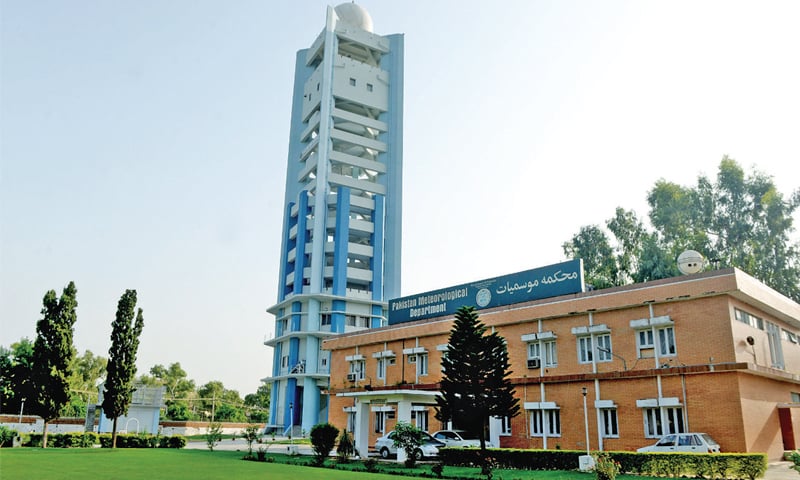

ISLAMABAD, Feb 23 (APP): The Pakistan Meteorological Department (PMD) has warned that above-normal temperatures across Gilgit-Baltistan during February 2026 may accelerate glacier melt and increase the risk of Glacial Lake Outburst Flood (GLOF) events in downstream valleys.
The PMD in a advisory stated that rainfall and snowfall in northern Pakistan remained below normal during the winter season.
Reduced precipitation and persistent clear-sky conditions have resulted in stable atmospheric patterns and elevated temperatures across Gilgit-Baltistan during the first 22 days of February 2026.
Daytime temperatures were recorded 3–5 C above normal, while nighttime temperatures remained 1–3.5 C above the 1981–2010 climatological average. The highest warming was observed in Gilgit and Bunji, while Chilas and Bunji also showed notable increases in minimum temperatures.
The PMD noted that the above-normal temperatures are accelerating snow and glacier melt, particularly at mid to lower altitudes. Reduced nighttime cooling is enhancing meltwater runoff into glacial lakes, increasing the likelihood of Glacial Lake Outburst Flood (GLOF) events in downstream valleys.
The PMD’s outlook for February–April 2026 indicates a high probability of above-normal temperatures continuing over northern Pakistan, including Gilgit-Baltistan and Kashmir. If the warming trend persists, the risk of glacier melt acceleration and potential GLOF occurrences may increase in areas such as Gilgit, Ghizar, Hunza, Bunji, Chilas, and Astore.
PMD continues to monitor temperature trends, glacier melt conditions, and hydrometeorological parameters, and will issue timely advisories to relevant authorities and communities.