
ISLAMABAD, Dec 08 (APP):Federal Minister for National Health Services and Regulation and Coordination Mustafa Kamal on Monday informed the National Assembly that Phase-II of the Pakistan Institute of Medical Sciences (PIMS) would be inaugurated in June next year. Replying to various supplementary questions during question hour, the minister said the project’s cost has increased to Rs 15 billion due to the rise in equipment prices and currency devaluation. He said …
PIMS Phase-II to be inaugurated in June: NA told
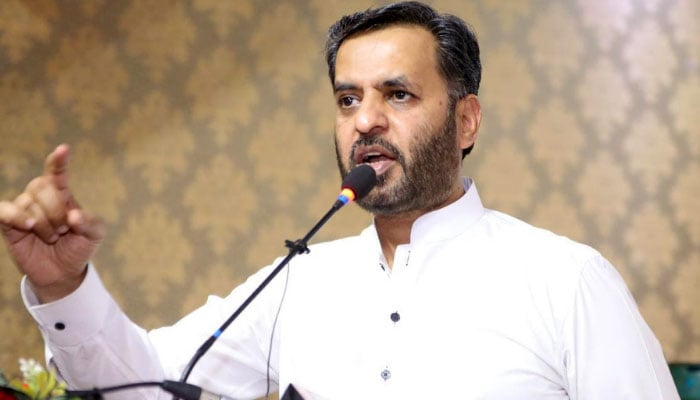
ISLAMABAD, Dec 08 (APP):Federal Minister for National Health Services and Regulation and Coordination Mustafa Kamal on Monday informed the National Assembly that Phase-II of the Pakistan Institute of Medical Sciences (PIMS) would be inaugurated in June next year.
Replying to various supplementary questions during question hour, the minister said the project’s cost has increased to Rs 15 billion due to the rise in equipment prices and currency devaluation.
He said the upgraded block—initially a 200-bed facility—had been expanded further, and procurement delays caused by global price fluctuations were being addressed.
He said that the revised PC-1 had been submitted and that the ministry aimed to make the Ground Floor and First Floor functional by June, while full operations would be ensured by the end of the year.
Responding to another question, the Minister said the primary healthcare system had collapsed, resulting in an excessive burden on tertiary hospitals.
He said 70 percent of patients visiting PIMS and Polyclinic. 30 Basic Health Units (BHUs) in Islamabad—many of which had long been non-functional—were now being activated and would form a proper referral system, he said.
To another question, the minister said Pakistan lacked a unified national registry because hospitals did not share data.
He said that the government was introducing a Universal Medical Record (UMR) system in collaboration with NADRA, under which every citizen’s CNIC would function as their medical record number nationwide.
He said more than 5,000 Pakistani women die annually from cervical cancer and that Pakistan had, after two decades, finally succeeded in securing the HPV vaccine, which had now become the 13th vaccine in the national immunisation programme.
The Minister said DRAP had completed its investigation into the medicine she flagged and the product was found satisfactory.
He said that Pakistan was launching a major reform to curb counterfeit drugs by introducing 2D barcodes on all medicines, enabling citizens to verify authenticity, expiry date and retail price by scanning the code on their mobile phones.
“Even slow internet will detect fake medicine better than our inspector,” he remarked.
He said he had contacted all four provincial health ministers—along with those in Gilgit-Baltistan and AJK—immediately after assuming office to ensure strong coordination in vaccination drives and implementation of national policies.
He said the federal government controlled only ICT, AJK and GB, while the majority of implementation rested with the provinces, making close cooperation essential.
Responding to a query, he said Pakistan still lacked a consolidated medical-data system and that the upcoming UMR platform would finally create a unified national disease registry.
Mustafa Kamal said he would examine the matter in detail but stressed again that “building hospitals alone cannot fix the system unless primary and preventive care are strengthened first.”