Federal Minister for Petroleum Ali Pervaiz Malik has announced a series of reforms to open the liquefied petroleum gas (LPG) sector to competition, ensure transparent pricing, eliminate cartelisation and provide relief to vulnerable consumers.
Petroleum Minister commits to open LPG sector to competition, ensure transparent pricing and protect consumers
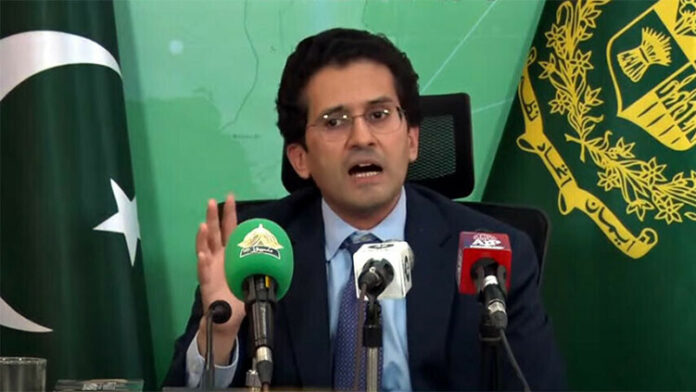
ISLAMABAD, Nov 3 (APP):Federal Minister for Petroleum Ali Pervaiz Malik has announced a series of reforms to open the liquefied petroleum gas (LPG) sector to competition, ensure transparent pricing, eliminate cartelisation and provide relief to vulnerable consumers.
He was addressing a press conference Tuesday evening here. Federal Minister for Information, Broadcasting and National Heritage Attaullah Tarrar also accompanied him during the press conference.
The petroleum minister said the government aimed to ensure the availability of natural gas through pipeline networks wherever possible, while providing LPG at affordable prices to households not connected to the gas network.
Explaining the international pricing mechanism, the minister said Saudi Aramco’s monthly Contract Price (CP), based on propane and butane, served as an international benchmark for LPG, much like Platts provided a benchmark for petroleum products. The Saudi Aramco CP stood at $540 per tonne in March but had recently increased to $756 per tonne, prompting the Oil and Gas Regulatory Authority (OGRA) to revise domestic prices accordingly.
He said Pakistan currently met around 70 per cent of its LPG requirements through imports, while domestic production stood at approximately 2,200 to 2,500 tonnes per day. The existing free-on-board (FOB) pricing mechanism did not adequately account for import-related costs, encouraging the growth of informal and grey-market channels.
The government had therefore decided to introduce competition in the sector and encourage public and private companies to import LPG from international markets at competitive prices.
The minister said Pakistan State Oil (PSO), Sui Southern Gas Company and Pakistan LNG Limited, along with other state-owned entities, had been directed to arrange bulk LPG supplies through government-to-government and business-to-business arrangements. These companies would publicly disclose monthly cost components, including Saudi Aramco’s CP, premiums, freight charges and other expenses, on their websites to ensure transparency.
He said private-sector companies would also be encouraged to import LPG, while increased competition and supply would help bring prices down.
Announcing an end to the existing quota-based distribution mechanism, the minister said domestic LPG production would be auctioned in transparent lots of five to ten tonnes among OGRA-licensed companies. Auction results would be made public, with the process monitored by the Petroleum Secretary and OGRA chairman.
To protect consumers in remote and hard areas, he said the government would ensure proper utilisation of the 10 per cent LPG quota allocated under the policy. State-owned companies would procure this quota directly from producers and distribute it fairly among designated districts in consultation with provincial chief secretaries.
He said additional revenue generated through the auction mechanism would be channelled into a price stabilisation fund and a vulnerable consumers’ protection fund. These funds would help provide LPG at subsidised rates to deserving consumers identified under criteria to be developed in consultation with the Benazir Income Support Programme and provincial governments.
The minister said the Competition Commission had also been asked to take measures against cartelisation and anti-competitive practices, while OGRA would strengthen its licensing and audit mechanisms to prevent hoarding and profiteering. The National Explosives Department would oversee safety standards, including the quality and testing of LPG cylinders and transportation bowsers.
Referring to prevailing international market conditions, he said LPG was trading at a premium of $300 to $400 per tonne over the Saudi Aramco CP. Taking all costs into account, the prevailing spot-market price was estimated at Rs450 to Rs500 per kilogram. The government would disclose the relevant pricing details publicly and welcome any importer capable of bringing the product at a lower price.
The minister said the new arrangements were expected to become fully operational before winter. He added that the current crisis should also serve as an opportunity to strengthen Pakistan’s energy infrastructure, develop storage and import facilities and make the country more resilient to future supply disruptions.
He said the ultimate objective was to establish a transparent and competitive LPG market that ensured affordable fuel, improved consumer services and protection for the most vulnerable sections of society.