
- Advertisement -
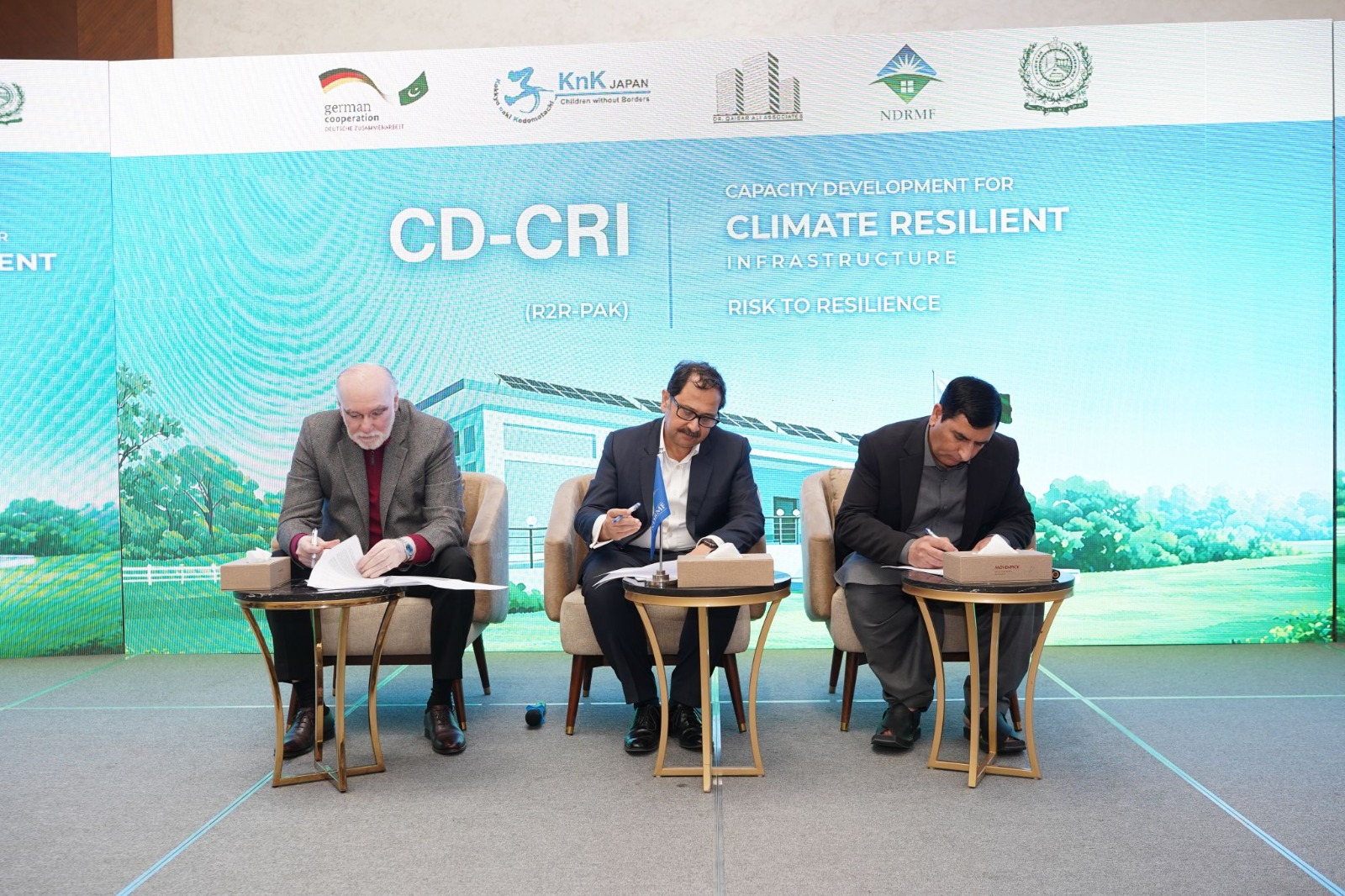
ISLAMABAD, Feb 02 (APP):The Pakistan Engineering Council (PEC), in collaboration with KnK Japan–Pakistan, the National Disaster Risk Management Fund (NDRMF), and GIZ Pakistan, has launched a pioneering Structural Health Assessment (SHA) system at the Capacity Development for Climate-Resilient Infrastructure (CD-CRI) event in Islamabad.
The digital platform will support engineers in assessing and strengthening public infrastructure such as schools, hospitals, and other essential infrastructure, particularly those vulnerable to climate change impacts and disaster risks.
The SHA system enables data-driven decision-making to reduce structural vulnerabilities and enhance resilience against climate-induced hazards and disasters.
By transforming risk-prone structures into resilient assets, the initiative represents a significant step toward safer infrastructure and sustainable development across Pakistan.
A Memorandum of Understanding (MoU) was signed between PEC, NDRMF, and KnK Japan–Pakistan to ensure nationwide adoption and long-term sustainability of the system.
Speaking on the occasion, Chairman PEC, Engr. Waseem Nazir said, “Resilience is not merely a project outcome; it is a national commitment. Through this initiative, PEC is equipping engineers with modern tools to safeguard lives, infrastructure, and communities against escalating climate and disaster risks.”
PEC acknowledged the support of NDRMF and GIZ Pakistan and appreciated the leadership of Bilal Anwar (CEO NDRMF), Dr. Nicolai Dellmann (GIZ), Alex Forbes (UNRCO), and Dr. Qaisar Ali and Associates. The CD-CRI project is funded by the German Federal Ministry for Economic Cooperation and Development (BMZ) and supported by GIZ GmbH, underscoring strong international cooperation for climate-resilient infrastructure in Pakistan.