
ISLAMABAD, Dec 17 (APP):Minister for Planning, Development and Special Initiatives Professor Ahsan Iqbal on Wednesday said Pakistan’s development challenges stemmed not from a lack of policies or ideas but from the absence of political stability, continuity and sustained investment in children, warning that without addressing these gaps the country could not compete in the 21st century. Addressing a conference titled “Shaping Policy through Evidence: Strengthening Systems for Children in Pakistan,” …
Pakistan’s progress depends on stability, investment in children, not just policies: Ahsan Iqbal
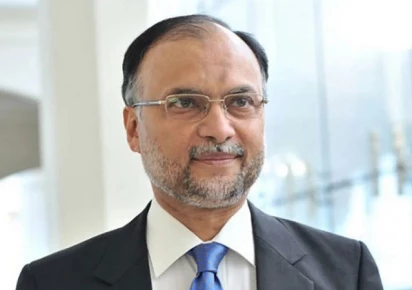
ISLAMABAD, Dec 17 (APP):Minister for Planning, Development and Special Initiatives Professor Ahsan Iqbal on Wednesday said Pakistan’s development challenges stemmed not from a lack of policies or ideas but from the absence of political stability, continuity and sustained investment in children, warning that without addressing these gaps the country could not compete in the 21st century.
Addressing a conference titled “Shaping Policy through Evidence: Strengthening Systems for Children in Pakistan,” he said physical infrastructure alone could not deliver meaningful progress.
“No matter how much investment you make in physical infrastructure, it is worth no more than cement and steel if the socio-economic platform is fractured,” he said, describing Pakistan’s development base as uneven and unstable.
Ahsan Iqbal said successive national visions, including Vision 2010 and Vision 2025, placed continuity at the centre of planning, but political instability prevented implementation.
“In our political history, no economic plan was allowed continuity. Programs were repeatedly disrupted, and as a result, we failed to achieve the desired outcomes,” he deplored.
He described the current period as a decisive moment for the country. “This is not a delicate mode, it is a decisive mode. We must decide whether we want to repeat the mistakes of the last 78 years or choose a different path,” he told participants, urging policymakers and opinion leaders to draw lessons from successful economies.
The minister compared public policy to a seed, saying that even the best-designed policies could not yield results without a supportive environment.
“Policies are like seeds. A seed alone does not guarantee a harvest. It needs the right soil, moisture, weather and stability,” he said, adding that Pakistan’s failure lay in not creating such an enabling environment.
Outlining international experience, Ahsan Iqbal identified four pillars underpinning sustainable development including peace, political stability, long-term policy continuity and continuous reform.
“There is no progress without peace and no progress without political stability,” he said, stressing that policies required at least ten years to mature. “If a policy is disrupted midway, it returns to ground zero.”
He cited India, Bangladesh, Malaysia and Singapore as examples where long periods of stable governance allowed consistent policies to transform economies.
However, he cautioned that stability must be accompanied by reform, adding “If there is no continuous reform and modernization, stability only strengthens the status quo.”
The minister said Pakistan did not suffer from a shortage of ideas or technical knowledge, pointing to numerous reports produced by international donors and consultants. Instead, he highlighted what he termed a “knowing-doing gap.”
Referring to research by Stanford University professors Jeffrey Pfeffer and Robert Sutton, he said successful organizations are those that translate knowledge into action. “A sick organization knows everything but cannot act because its systems and incentives block change,” he added.
He said the same pattern existed in public institutions. “If you go to any ministry, you will find excellent presentations on what should be done. But when you ask about action, the picture is disappointing,” he said, adding that entrenched interests and fear of risk hinder reform.
Turning to human development, the minister said education and child welfare must be treated as national priorities.
He said while Pakistan’s economic indicators resembled those of middle-income countries, its social indicators lagged far behind. “You cannot build a stable structure if half the platform is weak,” he said.
Citing the 2023 census, Ahsan Iqbal said population growth has started rising again, reaching about 2.55 percent annually, with more than 6.5 million children born each year. He questioned whether the country has adequate resources to ensure their education, health and well-being.
He expressed serious concern over child stunting, saying Pakistan has remained stuck at around 40 percent for the past four decades. “This means 40 percent of our children are physically weak and mentally underdeveloped. In an era where creativity, innovation and brain power determine success, we cannot compete like this.”
The minister called for urgent and sustained investment in children.“To secure our future, we must end stunting and unlock the physical and mental potential of our children,” he said, adding that only stability and policy continuity would allow reforms to deliver lasting results.