
ISLAMABAD, Jan 29 (APP):Foreign Office Spokesperson, Ambassador Tahir Andrabi, on Thursday said Pakistan’s decision to join the Gaza Board of Peace (BoP) was taken in good faith to help consolidate a ceasefire, support reconstruction in Gaza and advance a just and lasting solution to the Palestinian Issue. The Foreign Office spokesperson during an extensive question-and-answer session during his weekly briefing at the Foreign Office responded to a series of questions …
Pakistan’s entry into Gaza Board of Peace to help consolidate ceasefire: FO Spox
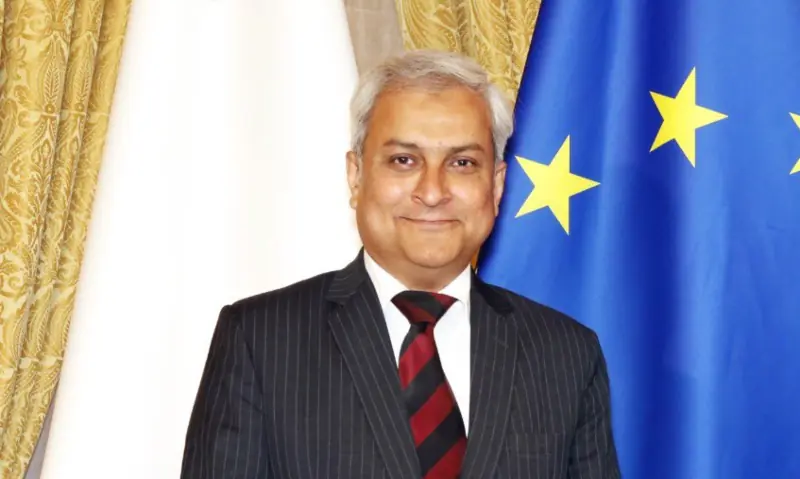
ISLAMABAD, Jan 29 (APP):Foreign Office Spokesperson, Ambassador Tahir Andrabi, on Thursday said Pakistan’s decision to join the Gaza Board of Peace (BoP) was taken in good faith to help consolidate a ceasefire, support reconstruction in Gaza and advance a just and lasting solution to the Palestinian Issue.
The Foreign Office spokesperson during an extensive question-and-answer session during his weekly briefing at the Foreign Office responded to a series of questions from journalists on Pakistan’s participation in the Board of Peace.
Ambassador Andrabi said the initiative should be viewed as a collective effort by eight Arab and Islamic countries, Pakistan, Saudi Arabia, Türkiye, Egypt, Jordan, the UAE, Indonesia and Qatar, aimed at promoting peace in Gaza under the mandate of United Nations Security Council Resolution 2803.
He emphasized that the Board of Peace offered a glimmer of hope at a time when other international mechanisms had failed to stop the suffering and destruction in Gaza.
The spokesperson categorically rejected speculation linking Pakistan’s participation in the Board of Peace to the Abraham Accords or any dilution of Pakistan’s principled stance on Palestine.
“Pakistan’s position remains unchanged,” he said, reiterating Islamabad’s long-standing support for the Palestinian people’s right to self-determination and the establishment of an independent, sovereign Palestinian state based on pre-1967 borders with Al-Quds Al-Sharif as its capital.
He also clarified that the Board of Peace did not replace the United Nations but was designed to complement the UN system.
Ambassador Andrabi explained that Pakistan’s decision to join the Board of Peace was taken after consultations among all relevant stakeholders and in accordance with the Rules of Business of the federal government. He clarified that membership of the Board did not imply any commitment to contribute troops to an international stabilization force.
Earlier in the briefing, the spokesperson gave an overview of Pakistan’s recent diplomatic engagements, including Prime Minister Muhammad Shehbaz Sharif’s participation in the 56th Annual Meeting of the World Economic Forum in Davos-Klosters, Switzerland, from January 20 to 22. He said the Prime Minister led a high-level delegation and held multiple engagements, including participation in the Informal Gathering of World Economic Leaders, meetings with IMF Managing Director Kristalina Georgieva and outreach events at the Pakistan Pavilion.
He said Pakistan, along with seven other Arab and Islamic countries, issued a joint statement on joining the Board of Peace during the WEF, underscoring their collective resolve to support the Gaza Peace Plan.
The spokesperson also highlighted President Asif Ali Zardari’s official visit to the United Arab Emirates, during which he met UAE President Sheikh Mohamed bin Zayed Al Nahyan to discuss the expansion of bilateral cooperation in trade, investment, energy, infrastructure and technology, and exchanged views on regional and international developments.
Briefing the media on the engagements of Deputy Prime Minister and Foreign Minister Senator Mohammad Ishaq Dar, Ambassador Andrabi said the DPM/FM held meetings with several foreign ministers on the sidelines of the WEF and maintained extensive telephonic diplomacy with counterparts from the EU, Iran, Saudi Arabia, Türkiye, Egypt, Indonesia, Qatar and Bangladesh, focusing on regional peace, stability and economic cooperation.
Responding to a question on the updated US travel advisory, the spokesperson said it was not a downgrade but an update, adding that Pakistan remained open, safe and secure for international travel. On regional tensions, particularly concerning Iran, he reiterated Pakistan’s consistent policy of advocating peace and diplomacy and opposing the use of force and sanctions, stressing that the region could not afford further conflict or instability.
He added that Pakistan would continue to engage actively with international partners to promote peace, humanitarian relief and sustainable development, while safeguarding its national interests and principled foreign policy positions.