

- Advertisement -
Dushanbe, Dec 29 (APP):First Deputy Minister of health of the Republic of Tajikistan, Salomatdin Jabbor Yusufi, stated that Pakistani medical students in Tajik universities play a vital role in fostering bilateral health sector cooperation and people-to-people contacts.
Universities like Avicenna Tajik State Medical University (ATSMU) in Dushanbe host around 450 Pakistani students, offering modern facilities that meet international standards, he said.
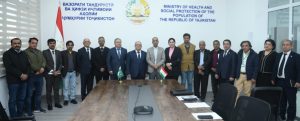
Officials from both nations aim to formalize academic and faculty exchanges through a memorandum of understanding (MoU).
Yusufi made these remarks during an interactive session with an eight-member Pakistani media delegation, led by Dr. Muhammad Abbas Mahar, CEO of MBBS Abroad Consultancy Pvt Ltd and the delegation included representatives from print and electronic media outlets.
The session was also attended by Muhiddin Nuriddin Davlatali, Rector of ATSMU; rectors from the Medical Social Institute of Tajikistan and other universities; Ms. Ibodzoda Zarina Habibulo; and high officials from the Ministry of Health.
The minister highlighted Tajikistan’s ambition to become a regional hub for affordable, high-quality medical education by attracting students from Pakistan and neighboring countries.
He emphasized vast prospects for expanding medical education and science collaboration, including institutional partnerships.
Key areas for bilateral cooperation include clinical services, pharmaceuticals and devices, health IT, telemedicine, insurance, and public health initiatives, supported by management, research, and wellness programs.
Yusufi invited Pakistan’s private sector to establish clinics, hospitals, and joint ventures with local partners.
Tajikistan boasts 36 medical colleges—20 government-owned and 16 private—with state-of-the-art facilities producing doctors and physicians to international standards.
The minister noted the emerging private medical sector and urged closer ties with Pakistan’s private sector players.
Looking ahead to 2026, both countries plan to expand opportunities in medical education exchanges, medical tourism, and joint ventures. Recent high-level meetings and 2025 discussions have advanced MoUs in medical education, pharmaceuticals, and health frameworks via intergovernmental commissions.
In Tajikistan, medical treatment is free, with comprehensive insurance coverage for all citizens. The minister invited Pakistan’s insurance sector to enhance local systems for better health facilities. He urged Pakistani media to raise awareness and strengthen ties, particularly in medical tourism.
Dr. Muhammad Abbas Mahar, the exclusive admission partner for international students at ATSMU, echoed these sentiments.
He highlighted the potential of medical tourism to transform bilateral relations, boost economies, and provide trade opportunities.
With Pakistan’s youth seeking quality education, ATSMU is positioning Tajikistan as a hub for world-class medical training, he concluded.