
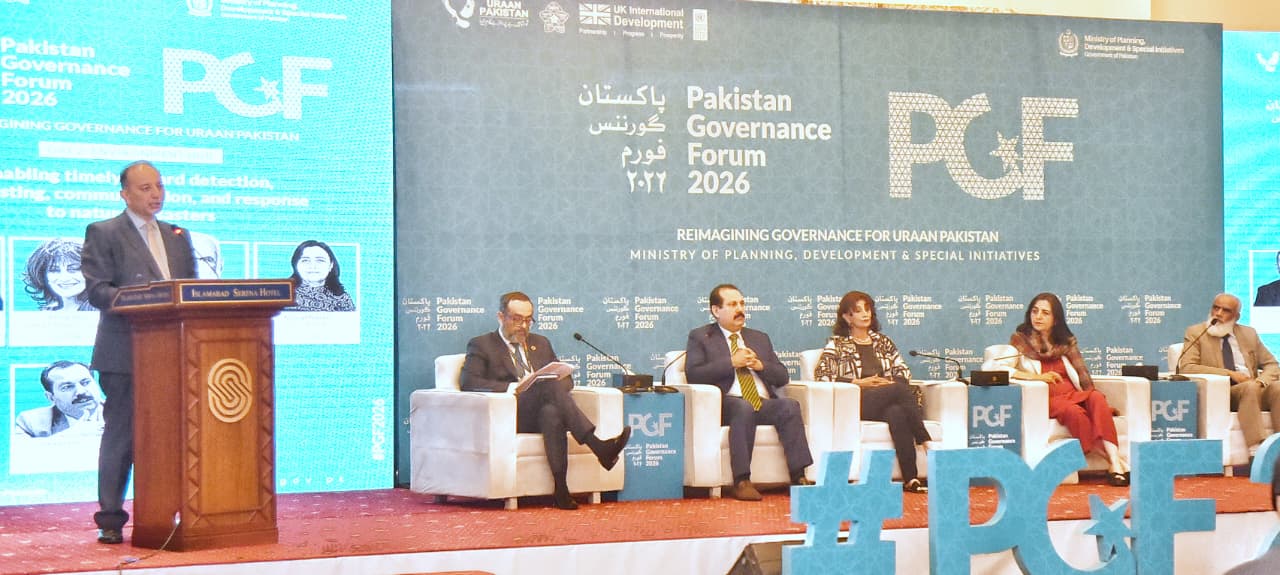

ISLAMABAD, Feb 26 (APP): Federal Minister for Climate Change and Environmental Coordination Musadik Malik on Thursday said Pakistan has yet to deploy operational artificial intelligence (AI) agents but is expected to see their emergence within the next few years, stressing that technological advancement must remain inclusive — particularly in the face of growing climate risks.
Speaking at the Pakistan Governance Forum 2026 held at a local hotel in Islamabad, the minister said the prime minister had provided clear policy direction on technological development and that related proposals had been consolidated accordingly.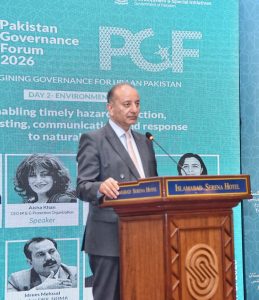
He noted that countries such as Japan, Singapore and China were already actively developing AI agents, while Pakistan was working toward building capacity in the field.
Musasik Malik said the primary technical challenge surrounding AI deployment was currently one of efficiency, which he expected would improve over time.
However, he emphasised that the more critical concern for policymakers was ensuring inclusivity so that technological change does not widen existing socio-economic disparities.
“Policies must keep the poorest segments of society at their core so they are not left behind during technological transitions,” he said, adding that the government was working on integration strategies aimed at addressing the “last-mile problem” to ensure services and reforms effectively reach citizens.
Linking technology policy with climate vulnerability, the minister noted that recent floods had demonstrated the severe impact of climate change across villages, cities and mountainous regions, disproportionately affecting poor communities, farmers and children.
He reiterated that Pakistan contributes relatively little to global carbon emissions but faces significant climate-related risks, including glacier melt, erratic rainfall patterns and extreme weather events.
Musadik Malik said natural disasters could not be entirely prevented but their effects could be mitigated through better planning, early warning systems and the effective use of modern technology.
He stressed that future policymaking must prioritise vulnerable populations, particularly children and marginalised communities, to ensure sustainable and equitable development outcomes.