ISLAMABAD, Aug 21 (APP):Friday sermons were delivered across Pakistan on “Rights of Non-Muslims in Islam in the Light of Seerah of the Holy Prophet Muhammad (Peace Be Upon Him)” on the appeal of the Pakistan Ulema Council and its allied organizations, in line with the objectives of the National Paigham-e-Aman Committee. The nationwide initiative marked another positive and constructive step towards promoting peace, interfaith and intra-faith harmony, religious tolerance, respect …
Pakistan Ulema Council, allied organizations advance National Paigham-e-Aman Committee’s peace, harmony, tolerance agenda
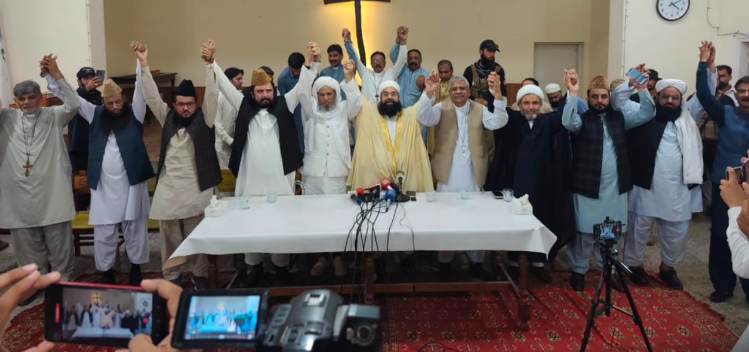
ISLAMABAD, Aug 21 (APP):Friday sermons were delivered across Pakistan on “Rights of Non-Muslims in Islam in the Light of Seerah of the Holy Prophet Muhammad (Peace Be Upon Him)” on the appeal of the Pakistan Ulema Council and its allied organizations, in line with the objectives of the National Paigham-e-Aman Committee.
The nationwide initiative marked another positive and constructive step towards promoting peace, interfaith and intra-faith harmony, religious tolerance, respect for human dignity and peaceful coexistence, said a press release.
The religious scholars and leaders associated with the National Paigham-e-Aman Committee, the Pakistan Ulema Council and its allied organizations addressed gatherings at mosques across the country.
Among those were National Paigham-e-Aman Committee Coordinator and Pakistan Ulema Council Chairman, Hafiz Muhammad Tahir Mehmood Ashrafi, Mufti Abdul Rahim, Syed Ziaullah Shah Bukhari, Allama Arif Wahidi, Dr. Asif Mir, Mufti Muhammad Karim Khan, Allama Tauqeer Abbas, Allama Muhammad Hussain Akbar, Maulana Zahid Mansoor, Maulana Zubair Faheem, Maulana Yousuf Kashmiri, Maulana Abu Bakr Sabri, Tahir Aqeel, Maulana Nauman Hashir, Ashfaq Pitafi, Aslam Siddiqui, Maulana Tayyab Qureshi, Mufti Nauman Naeem, Maulana Samiullah Baloch, Mufti Umar Farooq and Maulana Zulfiqar Ahmad, among others.
They said the Quran, Sunnah and Seerah of the Holy Prophet Muhammad (PBUH) provide clear guidance on peaceful coexistence, protection of human life and dignity, religious freedom and respect for the rights of people of all faiths.
They stressed that Islam is a religion of peace, love and tolerance and neither permits forced conversion nor forced marriage, emphasizing that matters of faith and marriage must be based on consent and respect for individual rights.
The religious scholars and leaders said non-Muslim citizens of Pakistan are an integral part of the national community and that protection of their lives, property, honour, rights and places of worship is a shared religious, moral, national and constitutional responsibility.
They emphasized that the message of Rahmatul-lil-Alameen (PBUH) requires Muslims to demonstrate mercy, justice, tolerance, brotherhood and respect for humanity through their conduct.
They also called for the message to be conveyed through Mimbar and Mehrab, particularly to the younger generation, to promote an authentic, moderate and balanced understanding of Islam and peaceful religious coexistence.
They stressed that no individual or group had the right to take the law into its own hands, attack an innocent person, spread religious hatred or damage a place of worship.
They called for collective efforts to counter extremism, sectarianism, religious prejudice and hate speech and to ensure that citizens of all faiths could live with security, dignity and mutual respect.
They said the true spirit of commemorating the life and message of the Holy Prophet Muhammad (PBUH) lies in translating his teachings of mercy, justice, peace, brotherhood, tolerance and respect for humanity into practical conduct.
The religious scholars and leaders expressed confidence that the collective message from mosques across Pakistan would help strengthen social harmony, protect the rights of all citizens and promote a culture of peaceful coexistence.
They described the nationwide observance as another meaningful step in advancing the National Paigham-e-Aman Committee’s peace and harmony agenda, underscoring the important role of religious leadership in strengthening social cohesion.