
ISLAMABAD, Nov 05 (APP):Federal Minister for Water Resources, Muhammad Mueen Wattoo on Thursday reaffirmed Pakistan's resolve to safeguard its rights under the Indus Waters Treaty through lawful and peaceful means, rejecting India's unilateral decision to hold the treaty in abeyance and calling upon the international community to ensure compliance with its provisions and the binding arbitration award. Addressing the closing session of the five-day Sixth Pakistan Water Week 2026 international …
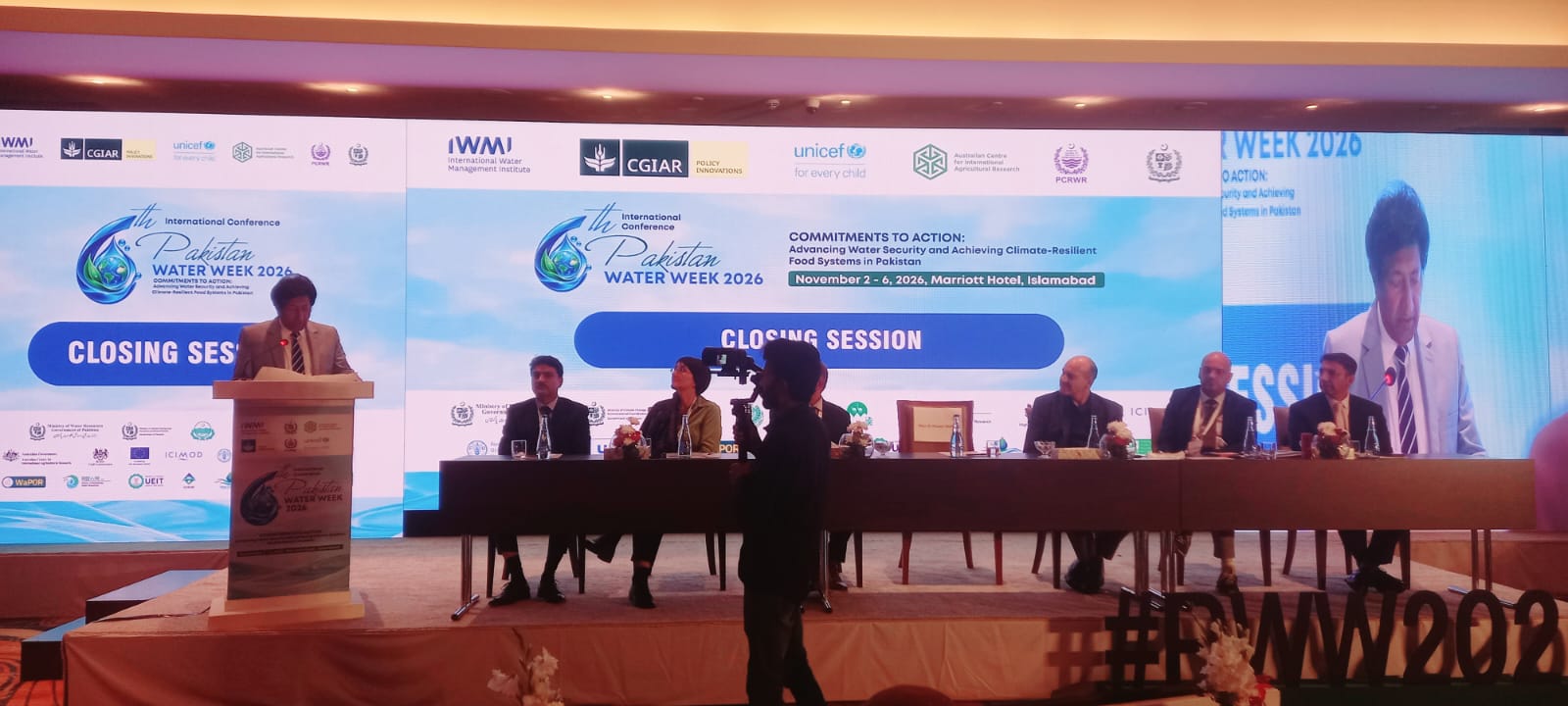
ISLAMABAD, Nov 05 (APP):Federal Minister for Water Resources, Muhammad Mueen Wattoo on Thursday reaffirmed Pakistan’s resolve to safeguard its rights under the Indus Waters Treaty through lawful and peaceful means, rejecting India’s unilateral decision to hold the treaty in abeyance and calling upon the international community to ensure compliance with its provisions and the binding arbitration award.
Addressing the closing session of the five-day Sixth Pakistan Water Week 2026 international conference as the chief guest, the minister said the Court of Arbitration, constituted under the treaty, had delivered its unanimous award on August 31, 2026, confirming that India’s decision to hold the treaty in abeyance was not permissible under the treaty or applicable rules of international law.
He emphasised that the Indus Waters Treaty remained fully in force and had neither been terminated nor suspended, adding that India continued to be bound by its obligations under the agreement.
The minister said Pakistan rejected India’s unilateral announcement of April 23, 2025, and its subsequent actions, describing the move as unlawful and destabilising.
He stressed that Pakistan would continue pursuing its treaty rights through peaceful and lawful channels and urged international partners to support respect for the treaty and compliance with the binding award, underscoring that reliable water cooperation was essential for regional security and stability.
Highlighting the importance of translating water policies and infrastructure investments into tangible public benefits, Wattoo said water security must ensure dependable supplies for households, productive agriculture and stronger protection against floods and droughts.
“For a farmer, water security means receiving water when the crop needs it, while for a family it means confidence that the water they drink is safe,” he said, adding that downstream communities also depended on the protection of rivers and ecosystems for their livelihoods.
The minister identified four key priorities for strengthening Pakistan’s water sector, including clearly defining institutional responsibilities for policy implementation, assessing water infrastructure based on its performance throughout its lifecycle, linking water investments directly with agricultural productivity and farmers’ incomes, and protecting water quality through integrated management of surface and groundwater resources.
He said the conference had highlighted important questions regarding the implementation of water policies and the need to secure sustainable benefits from infrastructure development.
Emphasising the need for effective coordination, the minister said national water-related initiatives required a dependable framework for cooperation among federal and provincial institutions, particularly in addressing shared water challenges.
Calling for practical follow-up to the conference recommendations, he urged organisers and participating institutions to develop an action-oriented programme identifying responsible institutions, required resources and measurable targets for each priority.
He proposed reviewing progress over the next 12 months against agreed commitments, with federal and provincial institutions working jointly and development partners extending support to sustainable initiatives.
The next assessment, he said, should focus on whether water services had become more reliable, farmers were benefiting from improved water management and vulnerable communities were better protected.
He also called for including flood preparedness, drainage systems and timely early-warning mechanisms in the assessment framework.
The minister expressed appreciation to the organisers, participating institutions and delegates for their contributions, expressing hope that the conference recommendations would translate into concrete decisions and improvements in the country’s water sector.

