ISLAMABAD, Feb 12 (APP): Minister for Power Sardar Awais Ahmad Khan Leghari on Thursday informed the National Assembly that Pakistan will become a 90 percent clean energy country in terms of power generation by 2034. Responding to a calling attention notice moved by Sharmila Faruqui in the National Assembly regarding the recently notified Prosumer Regulations — replacing net metering with net billing, he said that 55 percent of the electricity …
Pakistan to become 90% clean energy country by 2034: Awais Leghari
ISLAMABAD, Feb 12 (APP): Minister for Power Sardar Awais Ahmad Khan Leghari on Thursday informed the National Assembly that Pakistan will become a 90 percent clean energy country in terms of power generation by 2034.
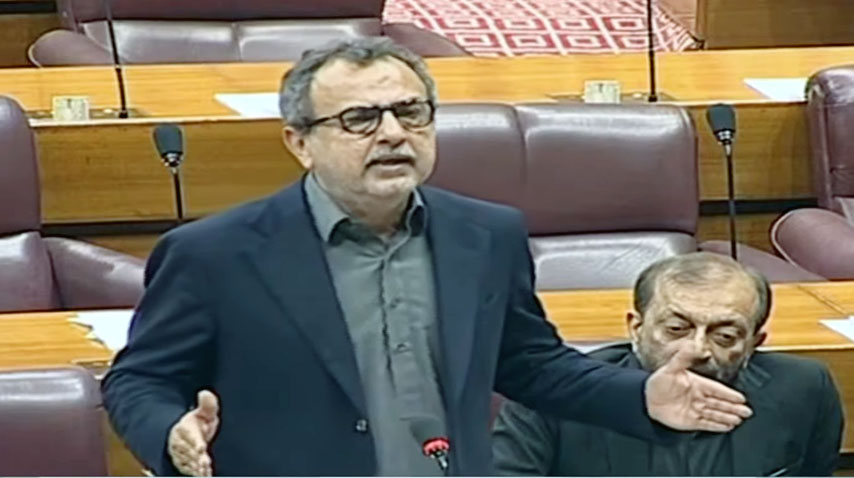
Responding to a calling attention notice moved by Sharmila Faruqui in the National Assembly regarding the recently notified Prosumer Regulations — replacing net metering with net billing, he said that 55 percent of the electricity generated in 2024–25 came from clean energy sources.
He further said that under international commitments, Pakistan is required to increase its clean energy share to 60 percent by 2030, expressing confidence that this target will be achieved this year.
He said the recent amendments to net metering regulations have been under discussion for the past several months and were made in accordance with the legal authority of the regulator.
The minister said the issue had been circulating on social media and in sections of the media for the past 25 days. He said that a resolution had also been presented in this regard in the Senate, which was ultimately rejected.
Leghari clarified that the matter was not new and had first emerged around nine to ten months ago, when formal discussions began in Pakistan.
During deliberations, the proposal was taken to the Economic Coordination Committee (ECC), which approved it. However, when the matter was presented before the federal cabinet for ratification, the prime minister directed that the proposal be reconsidered, providing an opportunity to review its basis before proceeding further.
The minister recalled that the net metering system was introduced in 2017 during the Pakistan Muslim League-N government.
He added that he himself was overseeing the ministry at the time and that the initial regulations were introduced during his tenure.
Since then, he said, the regulator has amended the net metering regulations four to five times, exercising its constitutional authority.
He explained that it is within the regulator’s legal powers to revise regulations, while the government retains the right to file an appeal or seek a review if it deems the changes inappropriate. The latest amendment, he said, is likely the fourth or fifth revision since 2017.
Addressing criticism, Leghari said the changes had triggered debate over the past few days, with some describing them as anti-public and harmful to consumers’ income and expenses.
Others argued that frequent policy shifts undermine investor confidence and amount to a breach of commitments made to the public.
He said that members from various political parties, including some from within the ruling party, had expressed concern in Parliament and on electronic media, calling for the reversal of the amendments.
Leghari maintained that the amendments fall within the regulatory framework and emphasized that the government is reviewing all stakeholder concerns as part of the ongoing policy process.
He said that only a small portion of Pakistan’s total solar energy capacity falls under the net metering system, clarifying that recent regulatory changes will not affect the majority of solar users across the country.
The minister said distributed solar generation currently stands at approximately 20,000 to 22,000 megawatts (MW) nationwide. This figure, he said, is based on scientific analysis and satellite-based assessments.
Out of the total estimated solar capacity, around 6,000 to 7,000 MW is connected to the net metering system. The remaining 12,000 to 14,000 MW consists of off-grid or self-consumption installations set up by households, small shopkeepers, farmers, and commercial users for their own electricity needs.
Leghari explained that within the 6,000–7,000 MW net metering capacity, about 2,200 MW has been installed by industrial units, while approximately 4,800 MW is attributed to commercial and domestic consumers.
“The recent regulatory amendments apply only to the 6,000–7,000 MW net metering segment,” he said, adding that nearly 466,000 consumers are registered as net metering users across Pakistan.
He rejected the perception that the new regulations would impact all solar users or disproportionately burden low-income households. “It is incorrect to suggest that every poor household or the entire public will face higher costs because of these changes,” he added.
Leghari said that only about 8 to 10 percent of the country’s total solar capacity is associated with net metering, reiterating that the policy changes are limited in scope and do not affect the broader expansion of solar energy in Pakistan.
He added that the government remains committed to promoting solar energy through zero taxes and supportive policies, encouraging wider adoption across residential, commercial, and agricultural sectors.
Responding to a question, he said the prime minister has ordered that the net billing system should not apply to existing consumers for now and has directed the Power Division to challenge the regulator’s decision.