ISLAMABAD, Aug 04 (APP):Federal Minister for Power Sardar Awais Ahmad Khan Leghari on Tuesday announced that Pakistan is preparing its first ever Integrated National Energy Plan while inviting Chinese companies to invest in battery manufacturing and value addition, saying the country's clean energy transition has been driven by its people despite receiving little international financial support. Addressing an international conference on renewable energy, the minister said the government is consulting …
Pakistan seeks Chinese investment in battery manufacturing
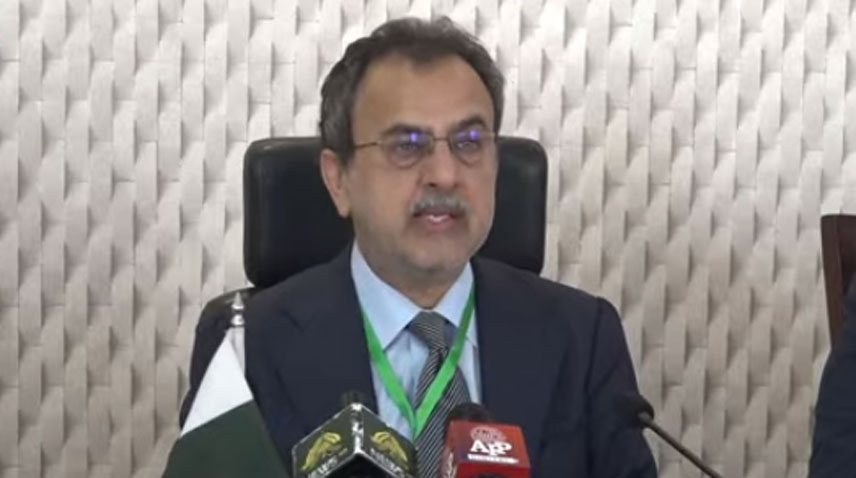
ISLAMABAD, Aug 04 (APP):Federal Minister for Power Sardar Awais Ahmad Khan Leghari on Tuesday announced that Pakistan is preparing its first ever Integrated National Energy Plan while inviting Chinese companies to invest in battery manufacturing and value addition, saying the country’s clean energy transition has been driven by its people despite receiving little international financial support.
Addressing an international conference on renewable energy, the minister said the government is consulting all key stakeholders to finalise a comprehensive five-year national energy plan by next year.
The strategy will integrate the power, petroleum, transport, industrial and provincial sectors under a unified roadmap to accelerate electrification, improve energy security and reduce dependence on fossil fuels.
Responding to questions from international delegates, Leghari said Pakistan had already demonstrated one of the world’s fastest people led solar adoption drives, creating significant demand for solar panels and battery storage.
He urged Chinese manufacturers to establish battery value addition and assembly facilities in Pakistan, noting that nearly 6,000 megawatt hours of batteries had been imported during the past 30 months.
The minister said discussions had been held with leading Chinese battery manufacturers during the Prime Minister’s visit to China.
While some companies believed Pakistan’s current market size is insufficient for large scale battery cell production, although downstream manufacturing and assembly remained commercially viable.
Minister Leghari said the government would encourage local value addition through supportive industrial policies while creating an enabling environment for domestic and foreign investors.
Highlighting workforce development,Sardar Awais said Pakistan had already developed thousands of skilled solar technicians and would now expand technical training programmes for battery storage and advanced energy systems through vocational institutions.
He added that he would recommend including battery technologies in the government’s national skills development programme.
The minister also disclosed that the government is pursuing a time of use electricity tariff that would allow cheaper daytime electricity based on marginal generation costs.
He argued that such pricing would encourage battery storage, improve renewable energy utilisation and enhance grid stability but said implementation had been constrained under Pakistan’s IMF programme.
Minister further noted that the government is simultaneously launching an ambitious grid digitisation programme, including digital metering and transformer based business units, to better manage electricity flows and integrate renewable energy.
Calling for greater global climate justice, Federal minister criticised developed countries for failing to support Pakistan’s clean energy transition despite the country’s minimal contribution to global emissions.
He said Pakistan’s solar revolution had been financed largely by its own citizens without meaningful international green financing.
The minister further said the government is overhauling the electricity subsidy regime to ensure assistance reached genuinely low income households while eliminating misuse of subsidies.
He said the reforms would substantially reduce electricity costs for millions of commercial and middle income consumers within the next two years.
Concluding the session, Leghari reaffirmed the government’s commitment to modernising Pakistan’s energy sector through integrated planning, renewable energy expansion, targeted subsidies and stronger international investment partnerships.