
ISLAMABAD, Feb 09 (APP): The Pakistan Reforms Report 2026 was launched in Islamabad on Monday, documenting more than 600 governance reforms carried out across 135 federal ministries, divisions and affiliated institutions during 2025, according to the organisers. Prepared by Mishal Pakistan — the country partner institute of the World Economic Forum — the report is the second annual edition of what is described as Pakistan’s first systematic documentation of governance …
Pakistan Reforms Report 2026 launched, documents over 600 governance reforms
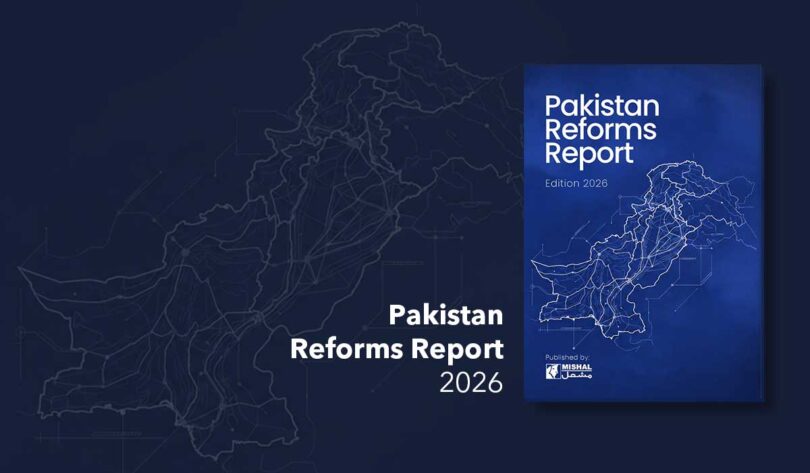
ISLAMABAD, Feb 09 (APP): The Pakistan Reforms Report 2026 was launched in Islamabad on Monday, documenting more than 600 governance reforms carried out across 135 federal ministries, divisions and affiliated institutions during 2025, according to the organisers.
Prepared by Mishal Pakistan — the country partner institute of the World Economic Forum — the report is the second annual edition of what is described as Pakistan’s first systematic documentation of governance reforms. It notes a fivefold increase in reform activity compared to the previous year.
The report indicates a shift in policy focus from crisis stabilisation toward strengthening long-term state capacity. The energy sector accounted for roughly 40 per cent of the recorded reforms, followed by law and justice, and digital governance and IT, highlighting an emphasis on structural and digital transformation.
More than 200 reforms were implemented through digital platforms aimed at improving transparency and reducing administrative discretion. Fiscal and energy sector measures, including renegotiated independent power producer contracts, are projected to generate about Rs1.4 trillion in power-sector savings.
The report also notes progress in natural resource development, including the $6 billion Reko Diq copper-gold project and new tight gas and offshore exploration policies targeting around $5bn in potential investment.
Federal Minister for Climate Change and Environmental Coordination Dr Musadik Malik, who attended the launch as chief guest, stressed the importance of credible documentation in strengthening public trust and improving Pakistan’s standing among international partners and investors.
He said transparent, fact-based reporting helps shift public discourse from policy announcements to implementation and outcomes.
Mishal Pakistan Chief Executive Officer Amir Jahangir said the report aims to create an institutional memory of governance reforms, enabling year-to-year comparison and long-term analysis.
Co-founder Puruesh Chaudhary said the initiative focuses on documenting reforms that improve access, transparency and trust, particularly in digital governance, justice delivery and citizen services.
According to the report, a significant proportion of reforms align with Sustainable Development Goal 16 — peace, justice and strong institutions — indicating a policy emphasis on institutional strengthening, rule of law, accountability, regulatory modernisation and public access to information.
The report places these developments within the broader national context of 2025, marked by fiscal pressures, security challenges and geopolitical tensions, but notes that reform momentum continued, particularly in digitisation and regulatory modernisation.
Organisers emphasised that the report is not a performance evaluation or political ranking exercise but a documentation effort intended to assist researchers, policymakers, investors and international partners in understanding Pakistan’s evolving governance landscape.
The full report has been made available online by Mishal Pakistan.