Spokesperson to the President, Murtaza Solangi on Wednesday said Pakistan was pursuing a policy of strategic balance with regional neighbours and proactive diplomacy to safeguard its national interests amid a rapidly transforming geopolitical environment.
Pakistan pursuing strategic balance, proactive diplomacy amid evolving global order: Solangi
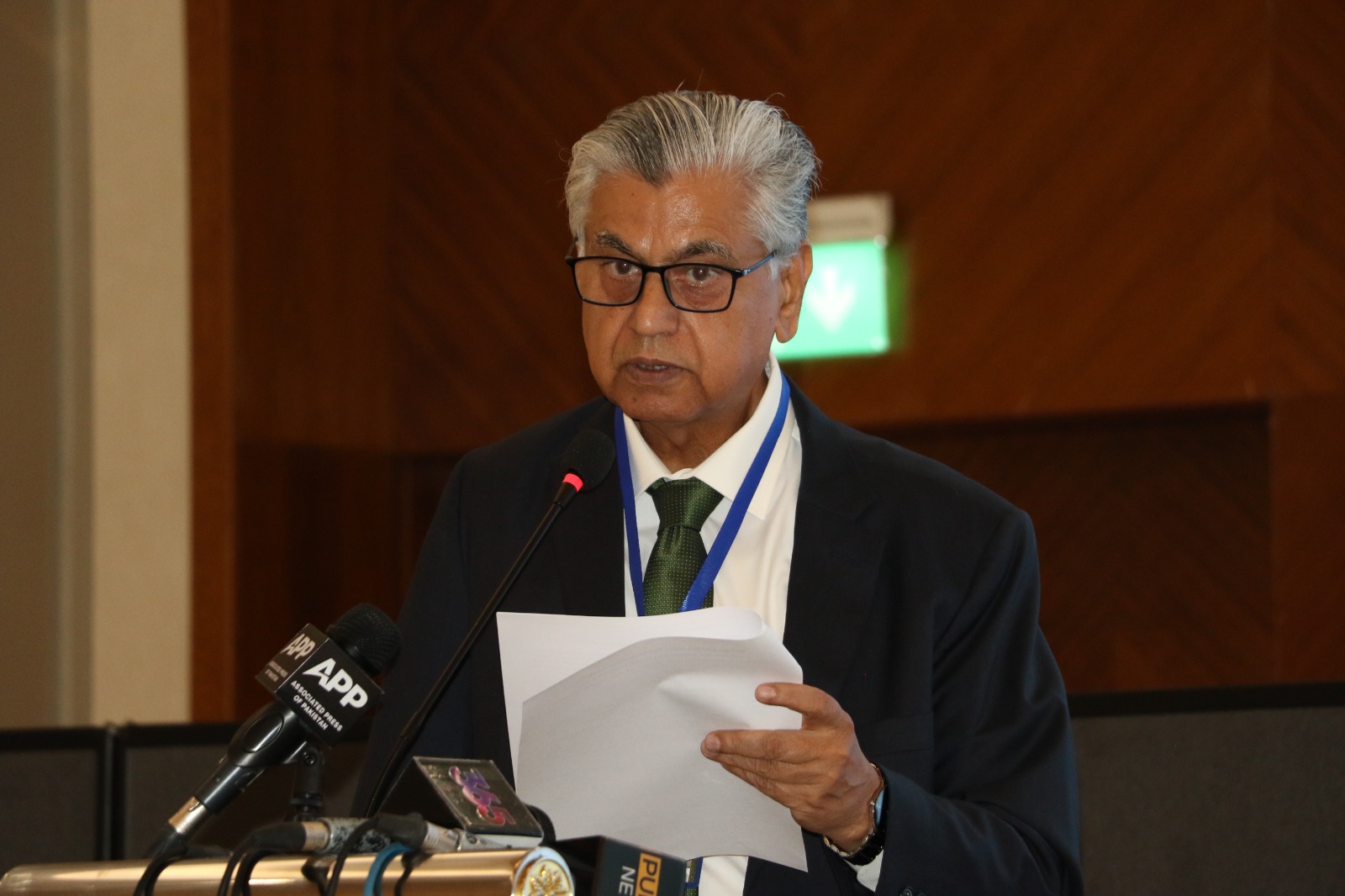
ISLAMABAD, Jul 15 (APP): Spokesperson to the President, Murtaza Solangi on Wednesday said Pakistan was pursuing a policy of strategic balance with regional neighbours and proactive diplomacy to safeguard its national interests amid a rapidly transforming geopolitical environment.
Addressing a one-day international conference titled “Pakistan in a Transforming Geopolitical Environment,” jointly organized by the Centre for Afghanistan, Middle East and Africa (CAMEA) of the Institute of Strategic Studies Islamabad (ISSI) and Friedrich-Ebert-Stiftung (FES), Solangi termed the event timely and significant for bringing together scholars and policy experts from around the world at a critical juncture in international affairs.
He said the world was witnessing a historic transition from a unipolar to a more contested multipolar order, said a news release issued here.
He said the international order established after the Second World War was facing unprecedented challenges, with multilateral institutions becoming increasingly ineffective and power politics replacing the rule-based international system.
Solangi said Pakistan currently stood at the intersection of three major geopolitical transitions, including evolving relations with Afghanistan, the changing strategic landscape in West Asia, and the emergence of a multipolar global order.
He said the years 2025-26 had been among the most consequential for Pakistan’s external environment, citing conflict with India, tensions along the western border, developments in West Asia and evolving regional dynamics. He said Pakistan had sought to maintain strategic balance by strengthening its longstanding partnership with China, sustaining constructive ties with the Gulf Cooperation Council (GCC) countries, preserving working relations with the United States, and positioning itself as a bridge-builder rather than aligning with competing blocs.
Solangi said Pakistan was promoting regional peace by utilizing Gwadar Port and the China-Pakistan Economic Corridor (CPEC) as alternative connectivity and transshipment routes to enhance regional trade and economic integration.
Referring to Afghanistan, Solangi said Pakistan desired peaceful, stable and cooperative relations with its western neighbour based on mutual respect for sovereignty and non-interference.
He said Pakistan’s primary concern remained cross-border terrorism originating from Afghan territory, which posed a direct threat to its civilians and security personnel.
He welcomed mediation and facilitation efforts by China, Qatar, Saudi Arabia, Türkiye and the United Arab Emirates aimed at achieving a durable security understanding between Pakistan and Afghanistan.
Solangi also called for realistic frameworks for counter-terrorism cooperation, border management and the dignified return of refugees, while stressing the importance of expanding regional connectivity with Central Asia through trade and energy corridors.
Discussing Pakistan’s relations with Gulf countries, he said Islamabad enjoyed deep-rooted religious, cultural and economic ties with the region, while maintaining expanding security cooperation, particularly with Saudi Arabia.
Highlighting emerging security challenges, Solangi said climate change, water scarcity, food security, energy security, pandemics, cyber threats and irregular migration had become major components of national security.
He termed climate change a first-order national security challenge, calling for regional cooperation on water management, early warning systems and disaster response to prevent resource-related conflicts.
He also stressed the need for greater cooperation in artificial intelligence governance, cybersecurity and countering information manipulation in the era of hybrid warfare.
Concluding his address, Solangi said Pakistan’s foreign policy was anchored in strategic balance with its neighbours, constructive regional engagement and proactive diplomacy aimed at promoting peace, stability and economic cooperation.