
ISLAMABAD, Apr 08 (APP):Energy experts, economists and academicians on Wednesday called for urgent and decisive action to secure Pakistan's energy independence, warning that the ongoing global turmoil triggered by the Strait of Hormuz crisis has laid bare the country's dangerous exposure to international fossil fuel markets and supply shocks. The call was made at a high-level consultative dialogue, “Beyond the Barrel: Making Pakistan Energy Secure in an Era of Geopolitical …
Pakistan must pivot to renewables, storage to shield economy from global energy shocks, Experts urge
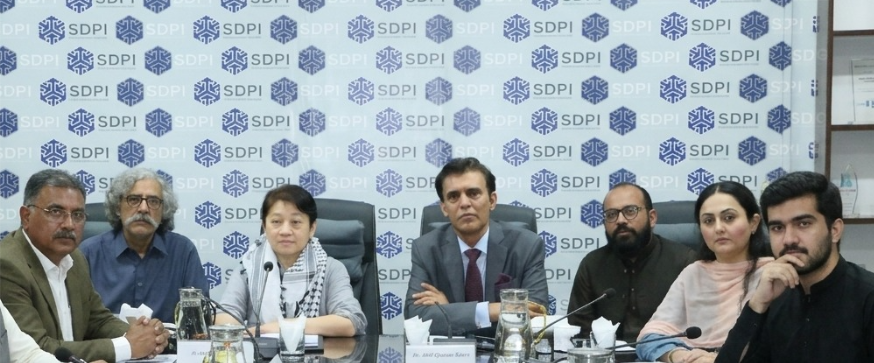
ISLAMABAD, Apr 08 (APP):Energy experts, economists and academicians on Wednesday called for urgent and decisive action to secure Pakistan’s energy independence, warning that the ongoing global turmoil triggered by the Strait of Hormuz crisis has laid bare the country’s dangerous exposure to international fossil fuel markets and supply shocks.
The call was made at a high-level consultative dialogue, “Beyond the Barrel: Making Pakistan Energy Secure in an Era of Geopolitical Shocks,” convened by the Pakistan Renewable Energy Coalition (PREC) in collaboration with the Alliance for Climate Justice and Clean Energy (ACJCE) and the Sustainable Development Policy Institute (SDPI), said a press release.
Speakers unanimously stressed that Pakistan can no longer afford to treat energy security as a question of fuel imports alone and must urgently redirect public resources towards renewables, storage and grid modernisation.
Delivering the opening remarks, Dr Abid Qaiyum Suleri, Executive Director of SDPI, cautioned that successive energy shocks are intensifying inflationary pressures and eroding the fragile gains made under the ongoing IMF programme.
He warned that if international oil prices breach US$105 per barrel, domestic inflation could once again surge into double digits, squeezing household budgets and social safety nets. Dr Suleri strongly opposed any move to impose fresh taxes on solar panels and batteries, arguing that such measures would penalise the very consumers who have cushioned the national economy against global volatility. “Taxing solar panels and batteries at this juncture would undermine both energy security and consumer protection,” he said.
Framing the geopolitical backdrop, Engr Ubaid ur Rehman Zia, Head of the Energy Unit at SDPI, noted that the global energy system was built on a silent assumption that shipping lanes, terminals and supply chains would always hold. The closure of the Strait of Hormuz, he said, has shattered that assumption and exposed the fragility of an economy heavily reliant on imported fossil fuels. He observed that rising international fuel prices are not only pushing up generation costs but also feeding directly into the cost of essential services, transport and food, with the heaviest burden falling on low-income households.
Presenting the case for renewables as a strategic shield, Ms Nabiya Imran of Renewables First said that solar energy has already delivered Pakistan a structural edge against global price volatility. Since 2018, she noted, the country’s people-led solar revolution has helped avoid an estimated US$12 billion in oil and gas imports, simultaneously protecting the balance of payments and strengthening national energy security. She urged policymakers to institutionalise this momentum through consistent policy signals, enabling regulation and investment in storage and flexibility resources.
Offering a legal and industrial perspective, Muhammad Abdul Rafe of the Alternative Law Collective pointed out that rising gas prices have already pushed a significant segment of Pakistan’s industry towards self-generated solar power, reducing demand for imported LNG. He urged the government to reopen domestic gas fields previously shut in due to take-or-pay obligations and to rationally redirect available gas supplies towards non-solarised industries and the power sector.
Dr Omais Abdur Rehman, Lead Coordinator of PREC, presented a concise Charter of Demands to strengthen Pakistan’s energy independence. He called for prioritising clean, indigenous resources over imported fossil fuels projects, removing taxes and duties on solar equipment. He further urged the government to enhance grid flexibility to integrate Pakistan’s vast untapped renewable potential and to localise the manufacturing of solar panels, inverters and batteries to secure long-term, indigenous energy independence.
Delivering the special remarks, Ms Lidy Nacpil, Coordinator of the Asian Peoples’ Movement on Debt and Development (APMDD), said that several Asian economies are today grappling with the twin burden of sovereign debt and capacity payments locked into legacy power purchase agreements. Ms Nacpil also underlined the need for Pakistan to renegotiate existing power purchase agreements in order to ease the mounting capacity payment burden on consumers and the national exchequer.
Delivering the vote of thanks, Mr Muhammad Badar Alam, CEO of the Policy Research Institute for Equitable Development (PRIED), thanked the participants and reaffirmed civil society’s commitment to support an evidence-based, just and resilient energy transition.
He stressed that the recommendations emerging from the dialogue would feed directly into advocacy around the FY2026–27 federal budget, ensuring that immediate fiscal measures are aligned with Pakistan’s long-term goals of energy security, affordability and climate resilience.
The dialogue concluded with a shared consensus that Pakistan must move decisively beyond reactive fuel cost adjustments and commit to a proactive, indigenous and renewables-led energy security framework that protects the economy from external shocks, safeguards consumers, and positions the country for a cleaner and more sovereign energy future.