ISLAMABAD, Feb 14 (APP):The Pakistan National Council of the Arts (PNCA), in partnership with the Indus Cultural Forum, hosted the second day of the Pakistan Mother Languages Literature Festival, featuring an extraordinary gathering of poets, scholars, translators, and performers. The day's events included thought-provoking panel discussions, book launches, documentary screenings, theatrical performances, and a grand multilingual mushaira. Federal Minister for National Heritage and Culture Aurangzeb Khichi attended as chief guest. …
Pakistan Mother Languages Literature Festival celebrates literary excellence, cultural heritage, linguistic diversity
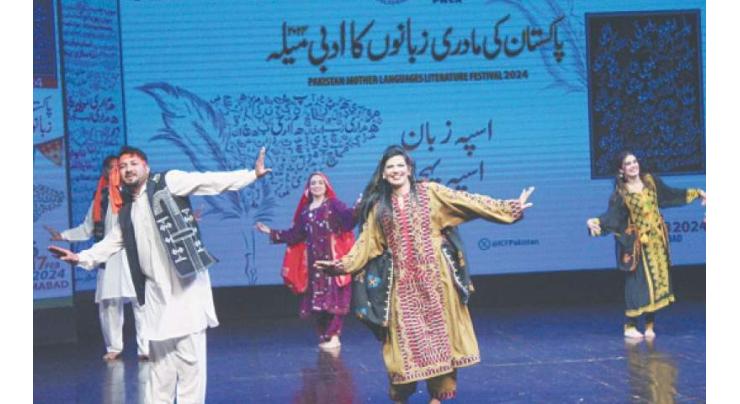
ISLAMABAD, Feb 14 (APP):The Pakistan National Council of the Arts (PNCA), in partnership with the Indus Cultural Forum, hosted the second day of the Pakistan Mother Languages Literature Festival, featuring an extraordinary gathering of poets, scholars, translators, and performers. The day’s events included thought-provoking panel discussions, book launches, documentary screenings, theatrical performances, and a grand multilingual mushaira.
Federal Minister for National Heritage and Culture Aurangzeb Khichi attended as chief guest.
Now in its 11th year, the festival is organized by the Indus Cultural Forum—a collective of cultural advocates dedicated to celebrating Pakistan’s linguistic diversity.
This edition marks a significant milestone in the organization’s decade-long commitment to preserving and promoting mother languages across the nation. Building on the momentum of the opening day, the second day deepened the conversation around literary heritage, cultural preservation, and contemporary creative expression in Pakistan’s rich tapestry of mother languages.
The day opened with two consecutive sessions celebrating the lives and contributions of five literary giants who received lifetime achievement awards on Day One: Ayaz Gul (Sindhi), Rai Muhammad Khan Nasir (Punjabi), Ashiq Khan Buzdar (Seraiki), Dr. Abdul Saboor Baloch (Balochi), and Tahira Ahsas Jattak (Brahui). Moderated by Usman Qazi and Humaira Ishfaq, these sessions explored the writers’ profound literary contributions, their thematic preoccupations, and the evolving role of regional languages in Pakistan’s intellectual landscape.
A highlight of the second day was the launch of nearly 50 books spanning 15 Pakistani languages—a testament to the country’s vibrant literary production. The collection included 10 novels, nine translations from Pakistani languages and international literature, nine research and non-fiction works covering diverse topics from psychology to literary criticism, and 18 poetry collections introduced during a multilingual mushaira.
The translations segment emphasized cross-cultural literary exchange, featuring works translated from English, Pothohari, Pashto, and Sindhi into various Pakistani languages. Participants underscored translation’s crucial role as a bridge connecting diverse literary traditions and making world literature accessible to regional audiences.
The afternoon program addressed the urgent need to protect Pakistan’s endangered cultural heritage.
A documentary screening on the Boreendo, supported by UNESCO, sparked conversation about vanishing art forms. A distinguished panel featuring Jawad Sharif, Salman Tahir, Sonya Rehman, Dr. Qasim Sodhar, Raaziq Faheem, and Gulzar Gichki—moderated by Naz Sahito—discussed the threats facing Pakistan’s traditional arts, musical instruments, and crafts. Speakers called for a comprehensive, multi-pronged approach to preservation, combining documentation, education, and community engagement.
In the main auditorium, a compelling theatrical performance explored climate change through the lens of indigenous and regional languages.
The production demonstrated how environmental challenges resonate more powerfully when articulated through local linguistic and cultural frameworks, making global issues personally relevant to communities.
The day concluded with a mesmerizing performance by the Nizam ensemble, featuring Wajeh Nizami and Rubaya Pirzada.
Their innovative fusion of guitar, sitar, and tabla brought traditional Sufi melodies into conversation with contemporary musical forms, creating a transcendent auditory experience that captivated the audience.
Throughout the day, participants reaffirmed the essential role of mother languages in shaping cultural identity, fostering creative expression, and enriching intellectual discourse.
Through dialogue, performance, and scholarship, the Pakistan Mother Languages Literature Festival continues to strengthen the movement for linguistic inclusion and cultural preservation, ensuring that Pakistan’s diverse voices remain vibrant for generations to come.