ISLAMABAD, Aug 17 (APP):Pakistan has made significant strides in Gender Responsive Budgeting (GRB) though it ranks last on gender parity globally, said experts at a session, which examined the country's fiscal gender gaps, policy framework and implementation bottlenecks. The session, organized by the Gender Working Group, was held at the Sustainable Development Policy Institute (SDPI) here, said a press release. In her keynote speech, Dr Fareeha Armughan, co-chair of the …
Pakistan leads on gender responsive budgeting though ranks last on gender gap index: Experts
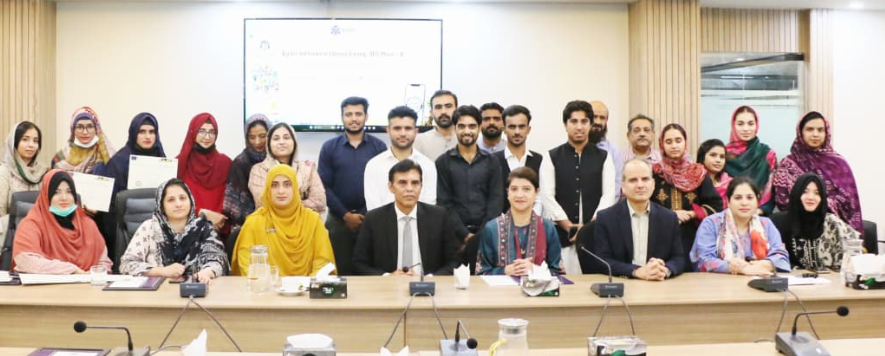
ISLAMABAD, Aug 17 (APP):Pakistan has made significant strides in Gender Responsive Budgeting (GRB) though it ranks last on gender parity globally, said experts at a session, which examined the country’s fiscal gender gaps, policy framework and implementation bottlenecks.
The session, organized by the Gender Working Group, was held at the Sustainable Development Policy Institute (SDPI) here, said a press release.
In her keynote speech, Dr Fareeha Armughan, co-chair of the Gender Working Group and Head of Center for Evidence Action Research, SDPI said Pakistan is ahead of its time on gender responsive budgeting and, despite persistent stereotypes, is outperforming several Western countries in this area. She highlighted the contradiction at the heart of Pakistan’s position, i.e. women comprise 49.3 per cent of the population, yet the country ranked 148th out of 148 on the Global Gender Gap Index 2025. Pakistan has achieved 56.7 per cent parity across economic, educational, health and political indicators, she said.
She clarified that GRB is not a segregated budget for women but is built on three pillars such as gender analysis, responsive allocation and accountability and includes women’s participation in budget consultations. The approach draws legal backing from Articles 25, 34 and 37-A of the Constitution, alongside Pakistan’s national and international commitments on gender equality, she said.
Dr. Armughan identified six thematic pillars of GRB: gender-based violence, women’s economic empowerment, social protection, climate change, social services and policy design, anchored by the National Gender Policy Framework 2022. Institutional oversight includes a parliamentary caucus of women legislators and a parliamentary standing committee.
Presenting Pakistan’s fiscal gender gap, Dr. Armughan cited stark figures: women own just 1.5 to 2 per cent of agricultural land, while female labour force participation stands at 22.7 to 25 per cent. Gender budget statements show only 8 percent of PSDP allocations and 9 per cent of the current budget directed toward women.
On the FY2026-27 budget, Armughan said social safety, education and infrastructure received the largest share of women-focused spending. She cited a female literacy rate of 54 percent against 73 percent for males, and noted the government had removed taxes on women’s hygiene products. She called for building an ecosystem of mentoring and institutional networks, alongside fiscal support for incubation, financial literacy and capacity-building through gender-sensitive fiscal and regulatory measures.
Dr. Kashif Majeed Salik, Research Fellow, SDPI, drawing on his doctoral research on migration, said empirical evidence shows women who earn income spend proportionally more on their families than men do, a pattern most pronounced among migrant women workers. He argued this establishes a clear policy rationale that investing in women’s economic empowerment directly strengthens family welfare.
He proposed that the working group build a gender lens into SDPI’s ongoing research portfolio and flag findings that may reflect externally driven narratives rather than local realities.
She argued that raising female labour force participation requires investment in care infrastructure.
She cited Pakistan’s 25th Constitutional Amendment and earlier engagement with German federal and parliamentary counterparts on gender-sensitive policymaking as examples of sustained institutional advocacy, noting that women continue to lead much of this work despite limited resources.