ISLAMABAD, Feb 4 (APP): Prime Minister Shehbaz Sharif on Wednesday offered Pakistan's deep-sea ports at Gwadar and Karachi as a vital trade outlet for Central Asian states, saying that this could change fate of entire region. Emphasizing plans to rapidly expand rail and road links via Turkmenistan and Afghanistan, the prime minister reaffirmed a strong commitment to a landmark connectivity project, terming it a potential game-changer that could transform economic …
Pakistan extends Gwadar, Karachi ports’ access to Central Asian States to boost regional trade
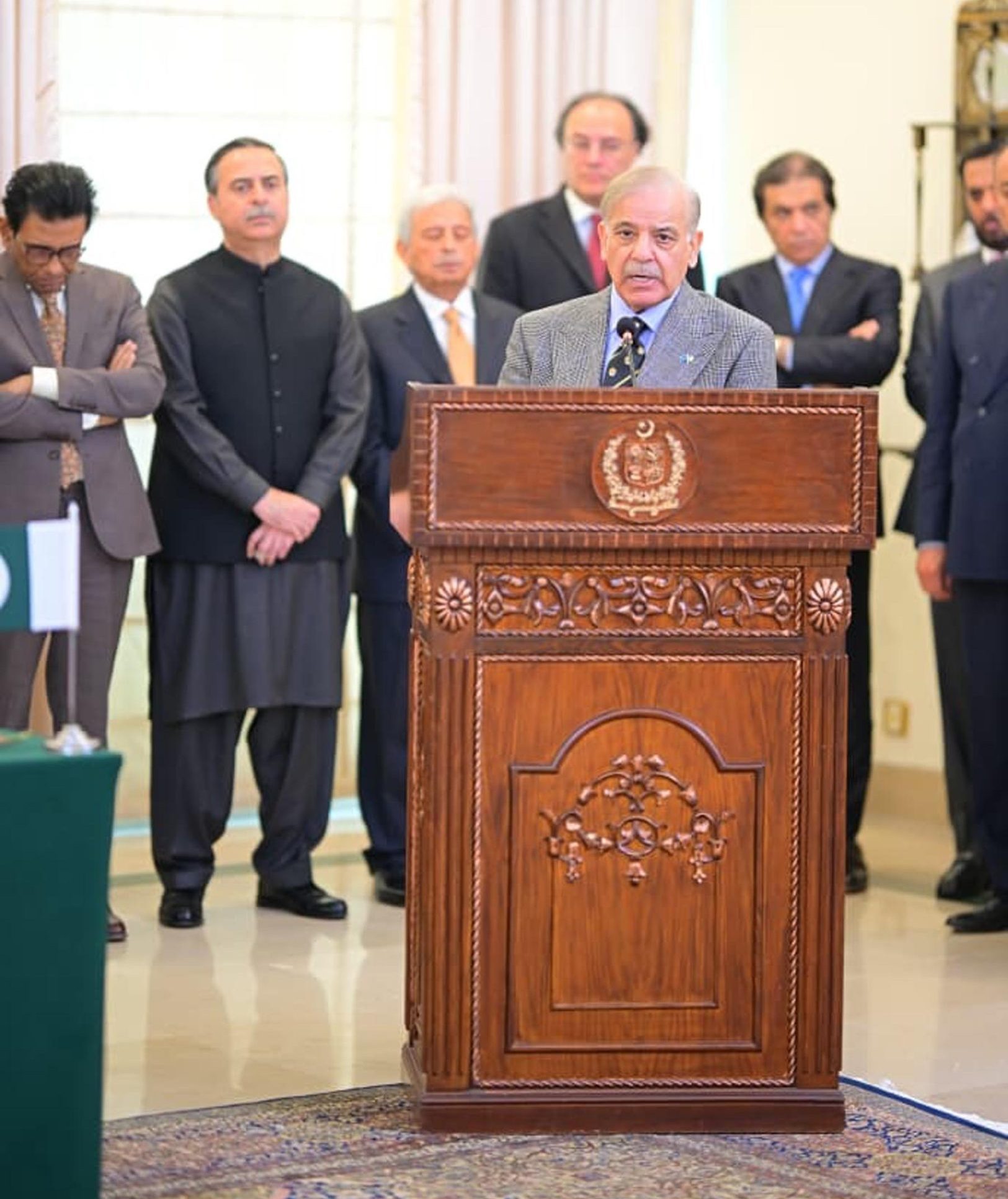
ISLAMABAD, Feb 4 (APP): Prime Minister Shehbaz Sharif on Wednesday offered Pakistan’s deep-sea ports at Gwadar and Karachi as a vital trade outlet for Central Asian states, saying that this could change fate of entire region.
Emphasizing plans to rapidly expand rail and road links via Turkmenistan and Afghanistan, the prime minister reaffirmed a strong commitment to a landmark connectivity project, terming it a potential game-changer that could transform economic integration between Pakistan, Kazakhstan and the entire Central Asian region.
“Pakistan is fully committed to participate and contribute meaningfully in undertaking this project, as it will be a game-changer not only between our two countries, but this will change the landscape economically in the entire region,” PM Shehbaz Sharif said while addressing Pakistan–Kazakhstan Business Forum here.
He said Pakistan’s state-owned logistics entities are fully prepared to facilitate the movement of goods from Central Asia to Pakistani ports and onward to international destinations.
He said Pakistan and Kazakhstan had agreed to significantly enhance bilateral trade, investment and connectivity, setting an ambitious target of increasing trade volume to $1 billion within the next two years.
The prime minister said both sides held extensive discussions on expanding cooperation in key sectors, including agriculture, information technology, minerals, pharmaceuticals, engineering, manufacturing and connectivity.
He described regional rail and road connectivity, particularly the Kazakhstan–Turkmenistan–Afghanistan–Pakistan corridor, as a potential game-changer for the entire region.
Despite strong political ties and fraternal relations, the prime minister noted that current bilateral trade stands at around $250 million, which does not reflect the true potential of the two countries. He said both sides have resolved to convert friendly relations into strong commercial partnerships.
He also announced the formation of a joint working group aimed at preparing a five-year roadmap to enhance trade, commerce and bilateral investment. He appointed Planning Minister Ahsan Iqbal as head of the Pakistani side, while Kazakhstan nominated its Deputy Prime Minister to lead its delegation. He said that the roadmap was expected to be finalized and signed during his visit to Kazakhstan later this year.
Highlighting the signing of 37 memoranda of understanding, PM Shehbaz Sharif said the agreement on the development of the Kazakhstan–Turkmenistan–Afghanistan–Pakistan rail and road network and enhanced port cooperation would help optimize regional transit potential.
He also welcomed Kazakh President Kassym-Jomart Tokayev’s visit to Pakistan, the first by a Kazakh president in 23 years, calling it a reflection of Kazakhstan’s commitment to strengthening bilateral ties.
Addressing the forum, President Kassym-Jomart Tokayev said his state visit marked a turning point in Pakistan-Kazakhstan relations, adding that a joint declaration had elevated ties to the strategic partnership level. He said the business forum resulted in more than 30 commercial agreements worth around $200 million.
President Tokayev said trade turnover between the two countries nearly doubled last year and over 200 Pakistani companies are currently operating in Kazakhstan in sectors including construction, agriculture and food processing. He expressed confidence that bilateral trade could reach $1 billion in the coming years.
He outlined four priority areas for cooperation: transport and logistics, agriculture and food security, digitalization, and education. He welcomed Pakistan’s participation in regional transit corridors and highlighted Kazakhstan’s role as a major hub for Eurasian trade.
The president also officially invited PM Shehbaz Sharif for a state visit to Kazakhstan later this year.
Speaking on the occasion, Minister for Commerce Jam Kamal Khan said Pakistan attached great importance to trade relations with Kazakhstan, which is Pakistan’s largest export destination in Central Asia.
He said Pakistan’s exports to Kazakhstan, including rice, fruits, vegetables, oilseeds, meat and textile products, increased by 47 percent last year, while bilateral trade had doubled over the past three years.
He said the signing of the transit trade agreement marked a landmark milestone in strengthening economic and regional connectivity between the two countries.