By Abdul Samad Tariq ISLAMABAD, Oct 26 (APP):Federal Minister for Climate Change Dr Musadik Malik on Monday called for international cooperation in glacier and mountain research, warning that the impacts of climate change on mountain regions could provide critical insights into risks facing other parts of the world in the coming years. Addressing a pre-COP31 dialogue, Dr Musadik Malik said that the world needed joint scientific research and coordinated efforts …
Pakistan calls for joint global research on glaciers and mountain risks
By Abdul Samad Tariq
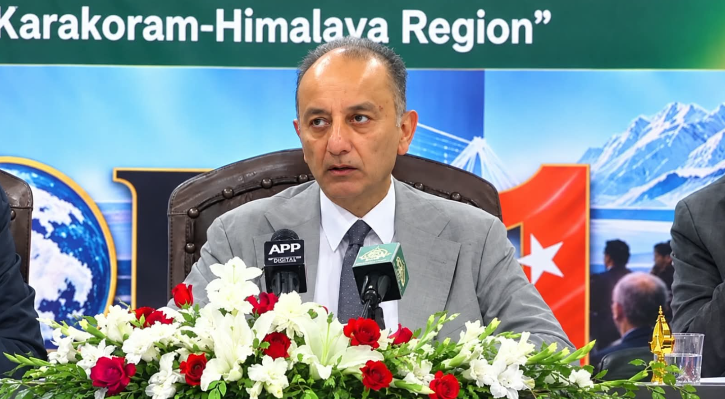
ISLAMABAD, Oct 26 (APP):Federal Minister for Climate Change Dr Musadik Malik on Monday called for international cooperation in glacier and mountain research, warning that the impacts of climate change on mountain regions could provide critical insights into risks facing other parts of the world in the coming years.
Addressing a pre-COP31 dialogue, Dr Musadik Malik said that the world needed joint scientific research and coordinated efforts to understand changes in glaciers, mountain ecosystems and the global ice system.
“The first hit is taken by the mountains,” the minister said, inviting the international community to collaborate with Pakistan on mountain research to better understand the consequences of climate change.
He said that studying changes in mountain regions could help scientists anticipate potential impacts on plains and polar regions, including the Arctic, and prepare communities before they were exposed to similar risks.
Musadik Malik proposed the establishment of a virtual Green University to facilitate international collaboration and research. He said Pakistan had already reached agreements with two countries and was seeking to expand the initiative through further international partnerships.
The proposed research, he said, should extend beyond the physical and scientific aspects of climate change to examine its social, economic and human consequences, including displacement, infant and child mortality, and maternal mortality.
Highlighting the risks posed by melting glaciers and glacial lake outburst floods, the minister recounted the destruction caused by the Shishper glacier-related disaster in Hasanabad, Hunza, where a long-established community suffered extensive losses.
He cited the experience of a resident, Zahra, whose family escaped the disaster, but lost livestock and essential community infrastructure. Recalling the account of a child whose childhood, she said, lay buried beneath the rubble of her home, Malik said glacier-related disasters could destroy livelihoods and disrupt entire communities.
He said that Pakistan had identified around 13,500 glaciers and was working to assess risks associated with glacial lakes and potential outburst floods. He referred to ongoing cooperation with Italy on glacier research and other partnerships with international organizations and countries, including Germany, France and the United Kingdom.
The minister said that the global ice system was interconnected, encompassing glaciers in mountain regions and ice in the polar areas and the Arctic, making international cooperation essential to understanding and addressing climate-related changes.
He also highlighted the disparity between countries contributing to greenhouse gas emissions and those suffering the consequences of climate change, arguing that vulnerable countries needed greater access to climate finance.
Musadik Malik said that rising temperatures, driven by greenhouse gas emissions, were accelerating glacier melt and increasing the risks faced by communities living in mountain regions.
He stressed that countries needed to work together on research, risk assessment and preparedness to better understand the changing climate and reduce its impacts on vulnerable populations.