ISLAMABAD, Feb 11 (APP):With science and innovation positioned as pillars of sustainable development across the Muslim world, the 7th Meeting of the OIC Steering Committee on the Implementation of the STI Agenda 2026 commenced on Wednesday at the OIC-COMSTECH Secretariat, bringing together senior representatives of key OIC institutions to accelerate progress in the final phase of the landmark agenda. The two-day session aims to review achievements, address implementation challenges, and …
OIC drives final push on STI Agenda 2026 as high-level Steering Committee convenes in Islamabad
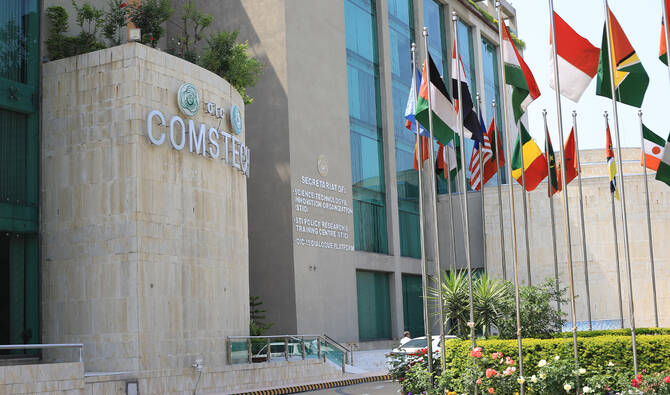
ISLAMABAD, Feb 11 (APP):With science and innovation positioned as pillars of sustainable development across the Muslim world, the 7th Meeting of the OIC Steering Committee on the Implementation of the STI Agenda 2026 commenced on Wednesday at the OIC-COMSTECH Secretariat, bringing together senior representatives of key OIC institutions to accelerate progress in the final phase of the landmark agenda.
The two-day session aims to review achievements, address implementation challenges, and shape strategic recommendations to ensure impactful delivery of the OIC Science, Technology and Innovation (STI) Agenda 2026.
Welcoming the delegates, Coordinator General OIC-COMSTECH, Prof Dr Muhammad Iqbal Choudhary, presented an overview of ongoing implementation efforts, highlighting priority areas and the collective OIC vision of leveraging science and innovation as engines of socio-economic growth.
He recalled that since its adoption at the First OIC Summit on STI in Astana in 2017, the agenda has provided a structured framework for cooperation, alignment of initiatives, and promotion of knowledge-based development across member states.
Reviewing progress since the 6th Steering Committee Meeting in April 2025, Prof. Choudhary noted significant advancements in capacity building, research collaboration, innovation support, and institutional strengthening, while also acknowledging challenges such as resource limitations and uneven implementation capacities.
He called for stronger coordination and joint programming among OIC institutions to enhance impact and avoid duplication, reaffirming COMSTECH’s continued commitment to supporting the OIC General Secretariat and partners in achieving the agenda’s objectives.
In his opening remarks, OIC Assistant Secretary-General for Science and Technology, Ambassador Aftab Ahmed Khokhar, underscored the central role of science, technology and innovation in driving sustainable development, economic resilience, and technological self-reliance across OIC countries.
He described the STI Agenda 2026 as a strategic and forward-looking roadmap for strengthening research cooperation, knowledge sharing, and innovation-led growth.
Ambassador Aftab Khokhar stressed the need for sustained political commitment, effective monitoring frameworks, and enhanced resource mobilization to ensure successful implementation, commending COMSTECH for its coordinating role and urging member states and institutions to intensify efforts during the remaining implementation period.
The meeting features a comprehensive review of progress, assessment of challenges, institutional presentations on actions taken since April 2025, and formulation of recommendations for inclusion in the draft final report of the STI Agenda 2026.
Progress reports will be presented by representatives of COMSTECH, COMCEC, the Islamic Development Bank Group (IsDB), Islamic Organization for Food Security (IOFS), ICESCO, SESRIC, Islamic World Academy of Sciences (IAS), Standards and Metrology Institute for Islamic Countries (SMIIC), Islamic University of Technology (IUT), Islamic University in Uganda (IUIU), King Faisal University (Chad), Turkic Academy, and the Union of OIC News Agencies (OIC-UNA).
Established under the Astana Declaration and Priority No. 12 of the OIC STI Agenda 2026, the Steering Committee is mandated to oversee and monitor implementation, with COMSTECH serving as the designated Secretariat coordinating efforts among member states and institutions.
The outcomes of the 7th Steering Committee Meeting are expected to play a critical role in strengthening institutional coordination and shaping a more impactful future for science, technology and innovation cooperation across the OIC region.