ISLAMABAD, Dec 13 (APP):The Chief Justice of Pakistan on Saturday chaired the 56th meeting of the National Judicial Policy Making Committee (NJPMC) at the Supreme Court of Pakistan, reiterating the judiciary’s commitment to strengthening institutional capacity, expediting access to justice and ensuring effective justice delivery. The meeting was attended by the Chief Justices of all High Courts, while the Chief Justice of the Federal Constitutional Court of Pakistan participated on …
NJPMC approves key judicial reforms
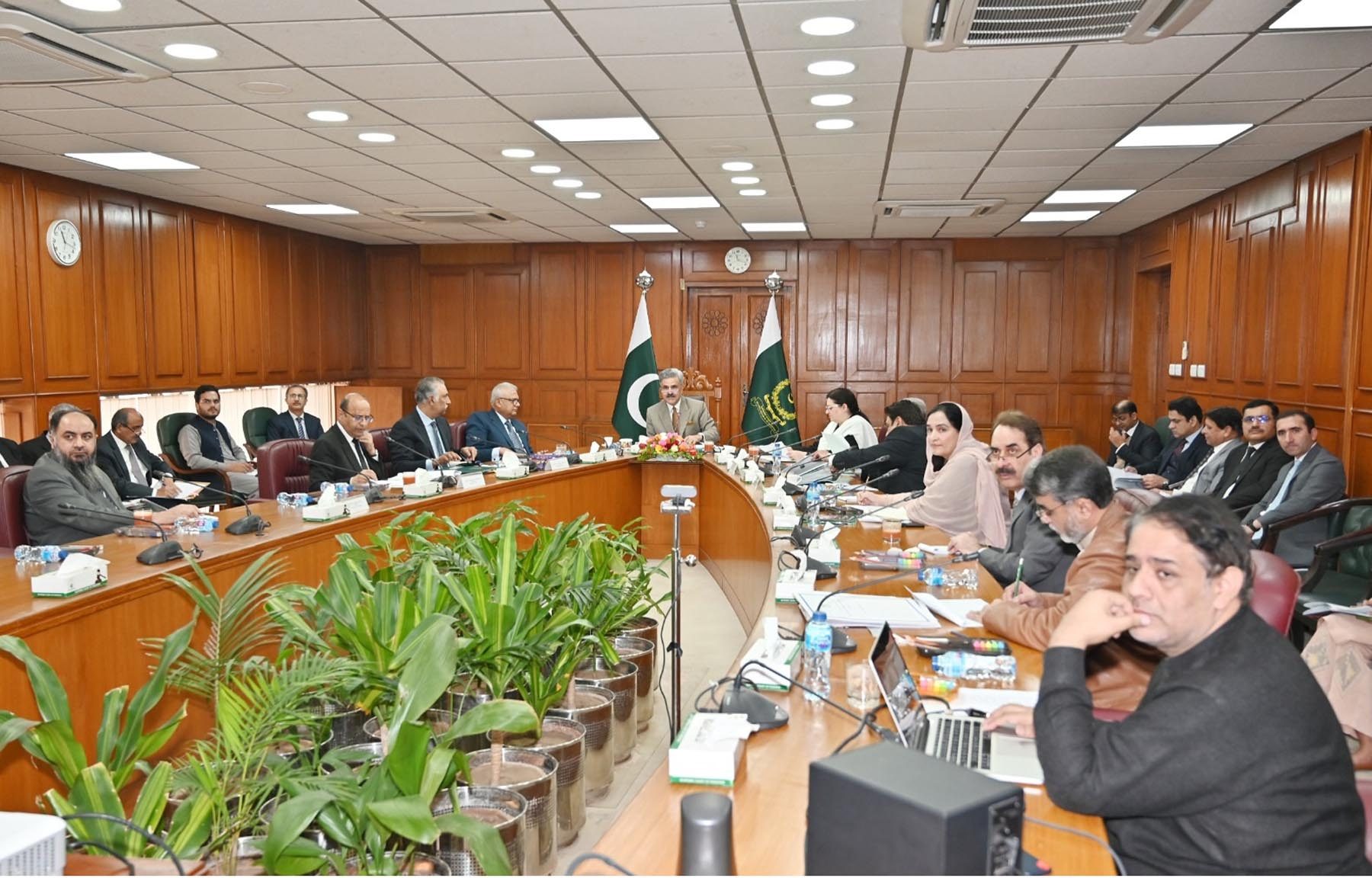
ISLAMABAD, Dec 13 (APP):The Chief Justice of Pakistan on Saturday chaired the 56th meeting of the National Judicial Policy Making Committee (NJPMC) at the Supreme Court of Pakistan, reiterating the judiciary’s commitment to strengthening institutional capacity, expediting access to justice and ensuring effective justice delivery.
The meeting was attended by the Chief Justices of all High Courts, while the Chief Justice of the Federal Constitutional Court of Pakistan participated on special invitation. The Chair thanked him for joining the forum and sharing his views.
The Committee reviewed the implementation of decisions taken in its 55th meeting and deliberated on key policy matters. Several decisions were taken unanimously.
On the issue of enforced disappearances, the Committee appreciated the steps taken by the government and decided that the Attorney General for Pakistan will present a comprehensive mechanism in the next meeting to address non-compliance with the legal requirement of producing detained persons before a magistrate within 24 hours.
The NJPMC also approved the recommendations of the Sub-Committee on the Commercial Litigation Corridor aimed at reducing prolonged commercial, revenue, and fiscal litigation. The reforms include dedicated benches, curtailment of frivolous cases, screening committees at the FBR level, improved tribunal structures, and avoidance of coercive revenue targets for state-owned enterprises.
The Law and Justice Commission of Pakistan (LJCP) was directed to share the recommendations with the FBR and seek the establishment of taxation and revenue case-management mechanisms in High Courts.
The Committee appreciated the disposal of 558,474 cases out of 1,253,425 specified cases within notified timelines during the last quarter. Special appreciation was recorded for the Lahore High Court for deciding 465,455 cases, while the Peshawar High Court was commended for prioritizing inheritance cases and introducing a double-docket system.
The NJPMC reaffirmed timelines for disposal of cases, including 12 months for inheritance disputes, six months for family suits and execution petitions, and two months for uncontested succession cases. High Courts were directed to decide all succession cases pending up to 2019 within 30 days.
The Committee praised the performance of Model Trial Courts in disposing of chronic civil and criminal cases, noting that the Lahore High Court led in case disposal, followed by the High Courts of Sindh, Peshawar, Balochistan, and Islamabad.
Regarding district judiciary reforms, the Committee of Chief Justices was asked to finalize its recommendations within 30 days, with the Chief Justice of the Lahore High Court directed to convene the meeting.
The NJPMC lauded the establishment of public facilitation and complaint redressal forums at High Court and district levels. On jail reforms, Chief Justices were directed to engage with provincial chief secretaries, while the Islamabad High Court will coordinate with the Interior Division.
Draft National Guidelines on the use of Artificial Intelligence in judicial institutions were appreciated, with the LJCP tasked to obtain feedback from High Courts within 30 days.
The Committee approved mandatory pre-trial mediation in principle and sanctioned the immediate launch of e-filing in all district courts as the first phase of the national e-courts project. It also approved, in principle, the establishment of integrated family and women facilitation centers, subject to funding.
The NJPMC reviewed projects under the Access to Justice Development Fund, noting that Rs2.58 billion has been released, and urged High Courts to ensure timely utilization of funds.
The meeting concluded with appreciation for the High Courts, the Attorney General’s Office, and the Law and Justice Commission of Pakistan for their efforts to strengthen the justice system.