
- Advertisement -
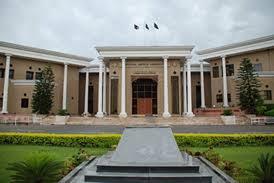
ISLAMABAD, Jan 27 (APP):The National Defence University (NDU) on Tuesday hosted a seminar titled “Hindutva Ideology in Pursuit of Hindu Rashtra,” where speakers discussed the rise of Hindutva thinking, the role of the RSS, and its impact on the region, including Pakistan.
Former Pakistani Ambassador Afrasiab Mehdi Hashmi Qureshi told the audience that the world is moving in a different direction and that fascist thinking is spreading globally, not only in South Asia.
He said Pakistan has an important role in the future and linked present developments to the formation of the Rashtriya Swayamsevak Sangh (RSS) on September 19, 1925, in Nagpur.
He described the RSS as the world’s largest fundamentalist organization, with more than seven million members.
Qureshi said the founders of the RSS held views that treated Muslims as enemies and saw Islam as a threat.
He referred to statements attributed to early RSS thinking in which Muslims were compared to dangerous creatures that must be eliminated. He said such views shaped the ideology later known as Hindutva.
Referring to a film shown at the seminar, Qureshi mentioned K.L. Gauba, a Hindu writer from Leiah in Southern Punjab, who later accepted Islam and wrote about the Prophet of Islam. According to Qureshi, Gauba described Hindutva ideology as imagining its territory stretching from Mecca to Indonesia and from Central Asia to Sri Lanka.
Qureshi said India today is no longer the India associated with Mahatma Gandhi. He said those in power now give importance to Nathuram Godse, who killed Gandhi.
He cited an account published by Pankaj Mishra in the New York Times, describing how Godse’s brother Gopal visited him in jail before his execution. According to that account, Godse asked that his ashes be scattered in the River Indus when it returns to what he called Bharat Mata.
He also recalled a meeting on May 1, 1947, when two officials from the US State Department met Quaid-e-Azam Muhammad Ali Jinnah. Qureshi said Jinnah told them that the creation of Pakistan was necessary to prevent the spread of Hindu imperialism toward the Middle East.
Senator Mushahid Hussain Sayed, addressing the seminar said young people would inherit Pakistan’s future. He referred to Indian writer Arundhati Roy and her article published in the New York Times on August 15, 2019.
He quoted her as saying that in today’s India, the RSS functions as the state and that an “architecture of fascism” is being built. He said developments since then have supported her warning.
Mushahid Hussain said Quaid-e-Azam had foreseen this mindset decades ago and believed Muslims could not coexist with an ideology that denied them equality. He shared a personal experience from his student days in the United States at Georgetown University. He recalled an incident during a trip with an Indian Brahmin colleague who refused to drink water from a glass touched by a Muslim, calling it impure. He said this experience helped him understand why Pakistan was created and recalled terms like “Hindu water” and “Muslim water.”
He said the RSS mindset sees Muslims, Dalits, and other marginalized groups as separate. He said India is now a state driven by Hindutva ideology, with the goal of “Akhand Bharat,” or Greater India. He said this idea includes territories such as Pakistan, Afghanistan, Bangladesh, Myanmar, Nepal, and parts of China and Tajikistan, and that a map reflecting this vision has been displayed in the Indian Parliament.
Mushahid Hussain outlined what he called a “3D strategy”: demonization, disinformation, and destabilization. He said this ideology now operates with the backing of a state. He also referred to Genocide Watch head Dr. Gregory Stanton, who has identified stages of genocide, beginning with labeling groups as “the other.”
Former national security adviser Dr Moeed Yusuf speaking on the importance of national ideology said every country needs a clear direction and that without it, progress is meaningless. He said fascist ideologies are based on claims of superiority, which eventually lead to decline.
He said Pakistan’s national security policy focuses on the dignity, security, and well-being of its most vulnerable citizens.
Dr Yusuf said his views on India changed after serving in office and that meaningful engagement is not possible with the current Indian leadership, which he described as ideological toward Pakistan. Indian politics now centers on the idea of Akhand Bharat and gains support through criticism of Pakistan, while most ordinary Indians continue to face hardship, he added.